Archive for the ‘books’ Category

Heart of the Matter

October 16, 2011


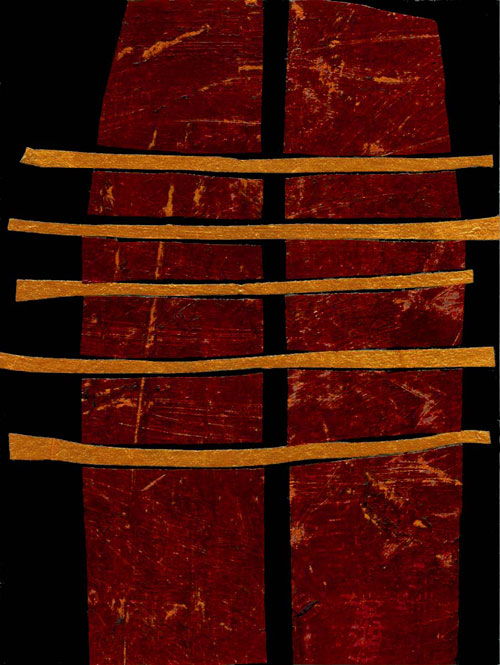
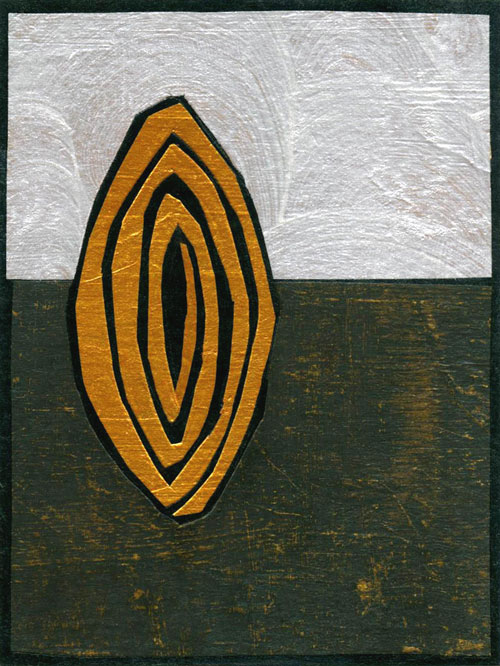
The Two Commandments © Jan L. Richardson

Reading from the Gospels, Year A, Proper 25/Ordinary 30/Pentecost +19: Matthew 22.34-46

I came home from a recent trip to the library with an armload of books from the art department. From Arts & Crafts of Morocco to The Art of Japanese Calligraphy to Medieval and Renaissance Art and beyond, the books are providing savory fare for my hungry eyes in this season of needing some new sustenance in my practice as an artist. Today at teatime, my book of choice was Shaker Design, a catalog from an exhibit cosponsored by the Whitney Museum of American Art and the Corcoran Gallery of Art in the 1980s.

June Sprigg, the author of Shaker Design, writes,

The Shakers were not conscious of themselves as “designers” or “artists,” as those terms are understood in modern times. But they clearly worked to create a visible world in harmony with their inner life: simple, excellent, stripped of vanity and excess. Work and worship were not separate in the Shaker world. The line between heaven and earth flickered and danced. “A Man can Show his religion as much in measureing onions as he can in singing glory hal[le]lu[jah],” observed one Believer. Thomas Merton attributed the “peculiar grace” of a Shaker chair to the maker’s belief that “an angel might come and sit on it.”

I am fascinated by the elegant simplicity that the Shakers brought to the work of their hands. The lines of Shaker design seem to emerge directly from their sense of what is most essential; follow the simple curve of a bowl, the uncluttered planes of a cupboard or dresser or table, the weave of a basket, and you can see how it has been created by someone who managed to strip away all that wasn’t necessary, who found the heart of the piece.

As an artist whose work has become increasingly spare the past few years, I am drawn to and challenged by such designs, curious about how others—in a variety of media—have found their way to the lines of their handiwork. Looking at a Shaker chair, a Japanese tea bowl, an Amish quilt, I wonder, What did their makers have to pare away in order to discover what was essential? How did they find their way to the heart of the matter?

It’s these kinds of questions that we see Jesus engaging in this Sunday’s gospel lection. “Teacher,” a lawyer from the religious establishment asks him, “which commandment in the law is the greatest?” Designed to test him, the question nonetheless prompts Jesus to lay out the lines that lie at the core of his life and teaching: “‘You shall love the Lord your God with all your heart, and with all your soul, and with all your mind,’” Jesus says to the lawyer and to the others within earshot. ‘And a second is like it: ‘You shall love your neighbor as yourself.’ On these two commandments hang all the law and the prophets.”

Firmly rooted in his Jewish heritage, Jesus gathers up the wisdom of his forebears and distills it into these two commandments that stand at the center of his history and of our own. He has found the heart of the matter, bringing to light what is most important, what is most crucial and essential in our life together.

Jesus knows that arriving at and living into what is essential is rarely easy. With these two commandments, Jesus extends a call that is compelling in its utter directness and seeming simplicity, yet the work of love—loving God and one another and ourselves, with all the artfulness and creativity this asks of us—can be wildly complicated. Jesus’ words this week get at something I continually experience at the drafting table: arriving at something that appears simple and basic is one of the hardest things to do.

Maybe someday, in one of these reflections, I’ll include a picture of the box of scraps from my drafting table—all those pieces that I pared away, that I chose against, that I let go of in order to find the final design, the essential line, the heart of the matter. In the meantime, I am here to ask you: How do you do this in your own life? Where is Christ’s call to love—this call that draws us into the deepest places in our own hearts, the heart of the world, the heart of God—taking you? How do you sort through all that competes for your attention, so that you can find what is most crucial? What are the challenges along the way, and where do you find the presence of beauty and delight in the lines of your emerging life?

May the heart of God draw you in this week, and may you know the grace and power and beauty that come in discovering the design that God desires for you. Blessings!

P.S. For a previous reflection on this passage, see Crossing the Country, Thinking of Love.

[To use the "Two Commandments" image, please visit this page at janrichardsonimages.com. Your use of janrichardsonimages.com helps make the ministry of The Painted Prayerbook possible. Thank you!]

A Blessing with Roots

July 5, 2011


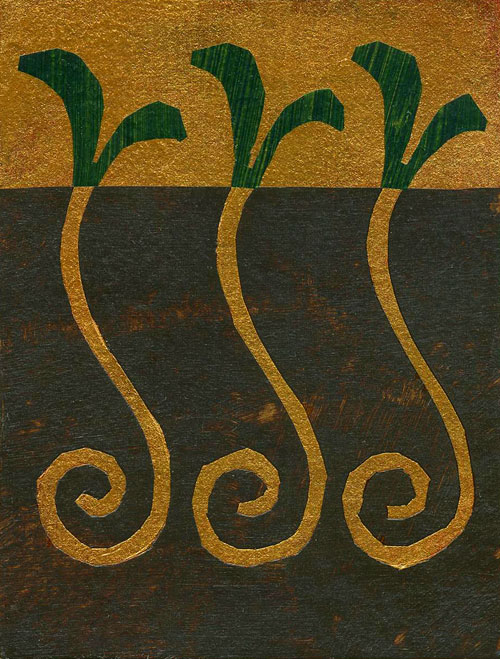
Getting Grounded ©  Jan L. Richardson

Reading from the Gospels, Proper 10/Ordinary 15/Pentecost +4 (July 10): Matthew 13.1-9, 18-23

During our recent Saint Brigid’s retreat, we were treated to a poetry reading from Father Kilian McDonnell, one of the Benedictine monks of Saint John’s Abbey, where our retreat took place. Having been on the retreat a few years earlier when Fr. Kilian came and shared his poems, I had been looking forward to his return visit with much anticipation.

For most of his life Fr. Kilian (who I first introduced in this post at The Advent Door) has worked as a theologian—teaching at Saint John’s University, writing scholarly books and articles on systematic theology, and taking a leading role in ecumenical work. At 75, in his so-called retirement, Fr. Kilian began to write poetry. In an essay that he wrote eight years after his poetic beginnings and included in his first published collection of poems (Swift, Lord, You Are Not), Fr. Kilian describes how, while reading a poem in the New Republic, “I said to myself, ‘I think I can do as well.’”

He acknowledges that his career as a scholar writing theology “out of a dogmatic, abstract, highly authoritarian, text-bound tradition” and dealing not only with the scriptures but also with “conciliar decrees, papal encyclicals, episcopal pronouncements, all highly conceptual, content and meaning-oriented,” had not prepared him particularly well for a vocation as a creative writer. “Too much imagination in theological writing,” Fr. Kilian observes, “can bring you to the stake.” Even in his own monastery, Fr. Kilian’s turn toward poetry was looked on by some as, if not outright dangerous, then a frivolous pursuit; he tells in one of his poems of a monk in the community who says, “Kilian does not have/enough to do./He writes poetry.”

Yet he has persisted. And as he prepares to turn 90 this year, Fr. Kilian is anticipating the publication of his fourth book of poems (the first having been followed by Yahweh’s Other Shoe and God Drops and Loses Things). It’s due out next month and is titled Wrestling with God. During his afternoon with us, Fr. Kilian gave us a sneak peek of the poems in this forthcoming book.

Most of Fr. Kilian’s poetry finds its grounding in the scriptures. And while some folks with stereotypes about monks, poetry, and the scriptures—let alone a combination of the three—might suppose that a longtime monk who takes his inspiration from the Bible would produce poetry that is ethereal or sentimental, Fr. Kilian’s poems provide a wondrous witness to how the contemplative life calls us deeper into the world, not away from it. Part of Fr. Kilian’s charm and punch as a poet lies in his earthiness (evident in such poems as “The Ox’s Broad Behind”), as well as in his willingness to go deep and deep into the layers of the biblical stories and to confront and call forth, with his piercing poet’s eye, the complexities of human life in this world given to us by a God who is both marvelous and maddening.

I will tell you that it is a wonder to be in the poetic presence of someone who has been pondering the Word—praying with it, contemplating it, ruminating upon it—in spitting distance of a century. Although we are not all called to become poets, Fr. Kilian’s deep engagement with the Word offers a window onto a life where the Word has found good soil and has born fruit, as this week’s Parable of the Sower calls us to.

As I ruminate on this week’s parable, I find myself wondering: What soil—what earth—is the Word finding in our own lives these days? How do we seek out the Word—in the scriptures and in the person of Christ—in the rhythm of our days? How willing are we to go deep into the layers and complexities it offers to us? How do we take the Word into ourselves and let it take root across the span of seasons and years? What fruit are we called to let the Word bear in and through us?

A Blessing with Roots

Tug at this blessing
and you will find
it is a thing
with roots.

This is a blessing
that has gone deep
into good soil,
into the sacred dark,
into the luminous hidden.

It has been months
since the ground
gathered the seed
of this blessing
into itself,
years since the earth
enfolded it.

Sometimes
that’s how long
a blessing takes.

And the fact
that this blessing
should finally show
its first fruits
on the day
you happened by—

well, perhaps we shall
simply call the timing
of this ripening
a mystery
and a sweet grace.

Take all you want
of this blessing.
Take every morsel
that you need for
the path ahead.
Let its fruits fall
into your hands;
gather them into
the basket of
your arms.

Let this blessing
be one place
where you are willing
to receive
in unmeasured portions,
to lay aside
for a moment
the way you ration
your delights.

Let yourself accept
its inexplicable plenitude;
allow it to give itself
to sustain you

not simply for yourself—
though on this bright day
I might be persuaded
to think that would
be enough—

but that you may
gather its seeds
into yourself
like the ground
where this blessing began

and wait
with the patience
of seasons
and of years

to bear forth
in the fullness of time
a stunning harvest,
a plenteous feast.

P.S. For a previous reflection on this passage, see Getting Grounded.

[To use the "Getting Grounded" image, please visit this page at janrichardsonimages.com. Your use of janrichardsonimages.com helps make the ministry of The Painted Prayerbook possible. Thank you!]

Related artwork:
Into the Seed
A Portable Cathedral for the 21st Century

June 17, 2011

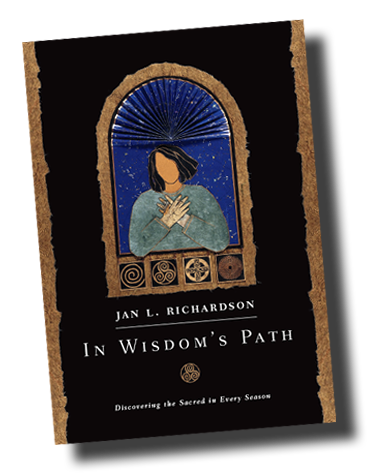
“Although some may find Ordinary Time a lackluster season, I’ve grown fond of it for the ways that it invites me to discover the sacred in the rhythms of unbroken dailiness. Waking, eating, reading the paper, working, playing, talking, doing laundry, doing dishes, doing errands, doing nothing at all: how is God with us in these times? Who is God with us in these times?” —From In Wisdom’s Path: Discovering the Sacred in Every Season

As we approach the season of Ordinary Time, I am thrilled to share that my book In Wisdom’s Path has just been released as an ebook! With original artwork, reflections, poetry, and prayers, In Wisdom’s Path invites the reader to enter into the rhythms of the Christian year. From the contemplative “Cave of the Heart” in Advent to the “Daily Way” of Ordinary Time, the book serves as a companion through the unfolding seasons of the sacred year.

First published in 2000, the book is now available in a PDF format that brings the beautiful, full-color layout—designed by my splendid art director, Martha Clark-Plank—from the printed page to the screen. Read it on your computer or, better yet, on your iPad, Nook Color, or other portable reader, so you can always have it with you wherever you go!

As we release In Wisdom’s Path as an ebook, I find myself thinking of the exquisite illuminated prayerbooks of the Middle Ages called Books of Hours (which helped inspire The Painted Prayerbook blog!). Designed to enable folks to pray the same rhythm of prayer as the monks, nuns, and priests who prayed the Liturgy of the Hours, these prayerbooks typically were small enough to carry in a pocket or purse. This medieval prayerbook became, as one writer has put it, a “portable cathedral.” In pausing for a few moments and opening the book amidst whatever was going on, the owner entered into a sacred space—a thin place—for reflection and prayer.

In the spirit of these remarkable medieval prayerbooks, In Wisdom’s Path incorporates 21st-century technology to offer you a sacred space in our own time. We are pleased to provide this book for you in a format that you can download and take with you anywhere to find moments of respite and renewal in the rhythm of your day.

For more info and to purchase the ebook, visit the Books page at janrichardson.com.

P.S. In other book news, In the Sanctuary of Women was recently named a winner in the 2011 National Indie Excellence Book Awards! More info over at the Sanctuary of Women blog.

The Hours of Mary Magdalene

April 13, 2011

Just in time for Holy Week, Gary and I have released a new video today that we’re excited to share with you. The Hours of Mary Magdalene features images from my mixed media series of the same name, combined with Gary’s enchanting song “Mary Magdalena” from his CD House of Prayer. The video draws from the life Mary Magdalene, whose story is so intertwined with the dying and rising of Christ. Called by Christ to be the first to proclaim the news of his resurrection, Mary Magdalene became known in the Middle Ages as the “apostle to the apostles.”

The video draws also from the fascinating body of legends about the Magdalene—stories that may be slim on facts but convey something of our centuries-old fascination with this woman who played a distinctive role as a follower of Christ. As a preacher chick, I’m especially fond of the legend in which Mary Magdalene moves to France and becomes a famous preacher. (I like to imagine her going for a cappuccino and a chocolate croissant after holding forth.) She is also said to have released prisoners from a French jail. In the video you’ll find glimpses of these and other legends, including one that tells that she spent her final years as a hermit in the wilderness, clad only in her long hair; at the canonical hours, angels would come and whoosh her up to heaven for the liturgy, then would whoosh her back down again.

The Magdalene series found much inspiration in Books of Hours, those exquisite illuminated prayerbooks that became so popular among medieval folk as a companion for prayer. You can find out more about the original series and the influences and legends behind it on the Magdalene page in my online gallery.

We have launched the video at the splendid Vimeo site; if you click the Vimeo logo in the player embedded above, it will take you directly to a larger version of the video. We have also released the video on YouTube, where you can view it here. To share the video in worship and related settings, you can find a high-resolution version by visiting The Hours of Mary Magdalene on the Jan Richardson Images website. As always, using the Jan Richardson Images site helps make possible the ministry that I offer at The Painted Prayerbook and beyond. And downloading the video will support Gary’s ministry as well!

As Holy Week approaches, Gary and I hope you will enjoy a few moments in the contemplative company of the Magdalene, and that she may inspire us all to tell forth the words we are called to speak. Blessings!

Looking toward Lent

March 5, 2011


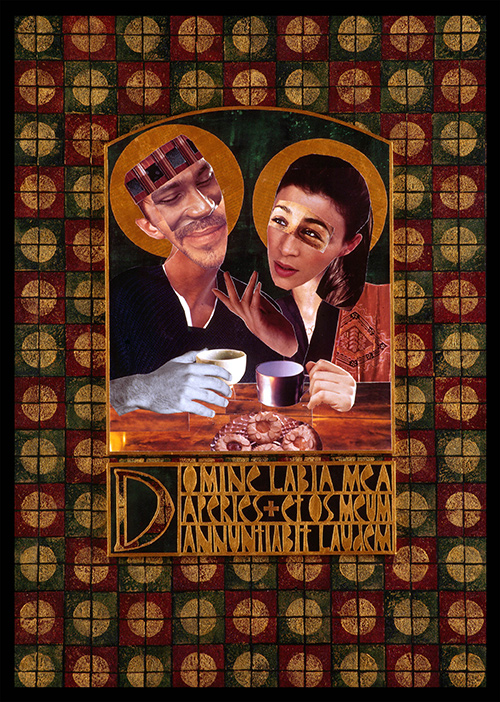
The Blessing Cups: Mary Magdalene and Jesus at Tea
© Jan L. Richardson

[For the Transfiguration Sunday reflection, scroll down or click here.]

With Ash Wednesday approaching, it’s time for a little Lenten housekeeping here at The Painted Prayerbook, as has become our custom at this point in the year. As we move into the coming season, I want to let you know about a few offerings that I have available—books, artwork, and other resources that I’ve created to draw you more deeply into the coming days. So have a cup of tea and sit for a spell while I share what’s been stirring in the studio…

A LITERARY LENT: It has been wonderful to hear from folks—men as well as women—who are reading my latest book, In the Sanctuary of Women. Many of them are reading it together in groups, including some who are using it as a way to stay connected across the distance by phone or online. Whether you read it alone or with others, the book offers a space for contemplation and conversation in the company of women from around the world and across the centuries. To order, click In the Sanctuary of Women or the cover below. And I’d be delighted to you have your company over at my Sanctuary of Women blog, where I’ll be posting frequently during Lent.

Published through my small press, Garden of Hollows: Entering the Mysteries of Lent & Easter offers artwork and reflections on the sacred texts and themes of the coming season. To order, visit Wanton Gospeller Press or click the cover below.

I am delighted to share the news that my book Night Visions: Searching the Shadows of Advent and Christmas has recently come back into print. With original artwork, reflections, poetry, and prayers, Night Visions is a companion for the journey from the beginning of Advent to the Feast of the Epiphany. Readers have told me that it works well during Lent, too! To order, visit Books or click the cover.

Be sure to check out the sidebar to the right for more books and other resources that provide good company for the season.

IMAGES ONLINE: Jan Richardson Images is a website that makes all my artwork easily accessible for use in worship, education, and related settings. You’ll find lots of images for Lent and Easter as well as the rest of the year. In addition to individual downloads, we offer an annual subscription that provides unlimited access to images (within the guidelines for use) for a year.

ART PRINTS: The Art Prints pages on my main website offer a variety of prints for Lent and Easter, including the images from Garden of Hollows. You can also order prints at Jan Richardson Images (which includes all the artwork I’ve created for The Painted Prayerbook); go to any image and click “Prints & Products.”

eNEWSLETTER: I periodically send out an e-newsletter, often in connection with the liturgical year. It includes a seasonal reflection, artwork, information about current offerings and upcoming events, and whatever else strikes my creative fancy. I would be pleased to include you in my mailing list and to stay connected with you in this way. You can sign up for the list here.

GRATITUDE: Many kind thanks for visiting The Painted Prayerbook and for the companionship you provide along the path. Your comments, emails, prayers, and presence are gifts for the journey and manna on my way. Know that you are present in my prayers. I wish you a blessed Lent.

Into Advent

November 22, 2010


Where Advent Begins © Jan L. Richardson

The elves and I are busy in the studio, happily painting and plotting as we prepare for Advent to begin this Sunday. During the coming season, I’ll be posting new reflections and artwork over at The Advent Door instead of here at The Painted Prayerbook. I’ve already added a couple of entries there and would be delighted for you to stop by. I’m planning to post at The Advent Door several times each week and look forward to sharing the coming days with you. I have lots of other resources for Advent and Christmas; you can find out more here.

I am also thrilled to say that my new book, In the Sanctuary of Women, was published last month. You can find more info and place orders on the Books page at my main website, where inscribed copies are available by request. I have also launched a companion site for the book at sanctuaryofwomen.com. More than just a site about the book, sanctuaryofwomen.com is designed to foster conversation and community through such features as the Guide for Reading Groups and the Sanctuary blog. I’d love for you to visit!

And if you live in central Florida, please join us for a special holiday evening to celebrate the book’s publication. The gathering will be Friday, December 3, at 8 PM at First United Methodist Church of Winter Park (near Orlando). For further info, visit Sanctuary Celebration.

In this week in which we celebrate U.S. Thanksgiving, know that I am grateful for you. Many blessings to you as we cross into Advent.

Meanwhile, Back at the Ranch…

September 20, 2010

I’m sorry to be absent from the blog for a bit. Gary and I were away leading a retreat last week for an amazing group of folks who were recently commissioned as ministers in the Florida United Methodist Conference. I took some desperately needed Sabbath time over the weekend and am spending this week on some things that need my attention as my new book nears its publication date, including finishing a website that will accompany the book (and will include a blog—another way to connect with you!).

So—know that I am missing being more present to you here but have been pondering the gospel lections with you in absentia, looking longingly at the drafting table and imagining what I would create and write if I could just fashion a few more hours in the day. I look forward to returning here in the not-too-distant future. In the meantime, I’m thrilled that the new book, In the Sanctuary of Women, will be available on October 1. It’s already available for pre-order online at such places as Amazon and Upper Room Books. I would love for you to stop by and check it out! I am excited about offering this not only as a book for personal reflection but also as a resource to foster conversation and community, whether in established groups such as book groups or study groups, or in informal conversations with friends or family members. I created In the Sanctuary of Women out of the understanding that a book can offer a place of sanctuary for our souls, and with the hope that it will invite readers to think about where we find sanctuary, and where we are called to create sanctuary with and for others.

On another note, I’ve taken the plunge and set up a Twitter account recently; if you’re on Twitter, I’d be pleased to connect with you in this way. You can find me at twitter.com/JanLRichardson or by clicking the Twitter icon in this blog’s sidebar.

Sending much gratitude and many blessings your way in these days!

Summer and Sanctuary

July 31, 2010

Greetings from the amazing Grünewald Guild, where I’ve been having a wondrous week serving as the keynote speaker and pastor-in-residence for the Guild’s first Liturgical Arts Week. Located in the Cascade Mountains of Washington state, the Guild is one of my favorite places in all the world. With its commitment to exploring and celebrating the connections between art and faith, the Guild always draws a splendid community of folks in whose creative presence I find sustenance that feeds me throughout the year.

I’ll linger here for another week, during which I’ll spend most of my time going through the proofs for my new book. The writing process is usually a very solitary endeavor, and I’m looking forward to getting to continue to soak up the Guild community while finishing my work on the book.

The book, which is titled In the Sanctuary of Women: A Companion for Reflection & Prayer, is something of a sequel to my first book, Sacred Journeys, in that it draws from the often hidden wellsprings of women’s experiences and history in the Judeo-Christian tradition. It will be published by Upper Room Books in October, and I was delighted to learn today that the book is now available for pre-order on Amazon.com. You can find it here: In the Sanctuary of Women.

Night has fallen at the Guild, and so I’ll offer you a nighttime blessing that comes from the new book. Each chapter opens with blessings for morning and evening, and this one appears in the chapter titled “A Way in the Wilderness: The Book of the Desert Mothers.”

God of the daylight,
you come also in darkness,
and even in shadows you make a home.
Be rest to the weary
and solace to the brokenhearted;
be healing to the sick,
and to the troubled, be peace.
Be our comfort, our dreaming,
our sleep, our delight;
breathe through these hours,
O great God of night.

Wishing you peace on this and every day.

Epiphany 3: Fulfilled in Your Hearing

January 19, 2010


Fulfilled in Your Hearing © Jan L. Richardson

Reading from the Gospels, Epiphany 3, Year C (January 24): Luke 4.14-21

In doing research for my new book, two of the most intriguing women I encountered were Agnes Smith Lewis and Margaret Dunlop Gibson. Twin sisters born in Scotland in the 19th century, Agnes and Margaret were a formidable pair who became pioneering scholars and explorers in a time when this was a rare feat for women. Semitic languages and biblical studies became their particular passions, and in 1892 they traveled to Egypt to make their first visit to St. Catherine’s Monastery. Established in the sixth century at the foot of Mt. Sinai, the Greek Orthodox community is famed for the many treasures it holds from the early centuries of Christianity. Margaret and Agnes hoped to study some of the ancient manuscripts in the monastery’s library.

Agnes writes that among the ancient books placed into their hands by the librarian of St. Catherine’s was “a thick volume, whose leaves had evidently been unturned for centuries, as they could be separated only by manipulation with the fingers…” In some cases, they had to separate the leaves with a steam kettle.

Agnes recognized the book as a palimpsest, a manuscript whose text had been effaced and overlaid by a later text. Such a practice was common in times when vellum was scarce. Looking closer, she saw that the more recent text was, as she described, “a very entertaining account of the lives of women saints.” Thecla, Eugenia, Euphrosyne, Drusis, Barbara, Euphemia, Sophia, Justa, and others: women revered in Eastern Christianity, these were among the desert mothers, women of the early centuries of the church who gave up safety, security, convention, and finally their lives in order to follow Christ.

Looking closer still, beneath the stories of these women saints, Lewis recognized that the more ancient writing belonged to the gospels. The manuscript proved to be what was then the oldest Syriac version of the four gospels, dating to the fourth century. It was a stunning discovery.

Reading about the palimpsest, I found myself fascinated by the imagery present within its story. The pages of the manuscript, with their layers of text, make visible what happened in the lives of these women of the early church. By their devotion, by their dedication to preserving and proclaiming the gospel message, the desert mothers became living palimpsests, the story of Christ shimmering through the sacred text of their own lives, the Word of God fulfilled in them.

I have thought of these women and this story in pondering the gospel reading for this Sunday. Luke tells us that, fresh from his forty-day sojourn into the wilderness and filled with the power of the Spirit, Jesus begins to teach in the synagogues. Coming to Nazareth, the hometown boy stands and reads from the scroll of Isaiah. From his lips flow some of the most powerful words in all of scripture:

The Spirit of the Lord is upon me,
because he has anointed me
to bring good news to the poor.
He has sent me to proclaim
release to the captives
and recovery of sight to the blind,
to let the oppressed go free,
to proclaim the year of the Lord’s favor. (Luke 4.18-19)

Finishing his reading, Jesus rolls up the scroll, returns it to the attendant, and sits down. One can imagine him pausing for dramatic effect before he then says to his listeners, “Today this scripture has been fulfilled in your hearing.”

It is perhaps the shortest teaching the crowd has ever heard. Not to mention the most startling, and, as we will see in next week’s gospel lection, one that will turn deeply disturbing.

The text doesn’t say whether his mother, Mary, was there, but I can imagine her listening to Jesus, a small smile on her face as she takes in the words of his reading and teaching. She is the woman, after all, who had sung words much like these when she carried this child-now-man inside her: had sung of a God who scattered the proud and brought down the powerful, a God who lifted up the lowly and filled the hungry with good things. From the womb Jesus had been marked by radical words about this God who showed mercy from generation to generation and was about the business of turning the world right side up. Like his mother, whose song was an echo of one sung by her foremother Hannah, Jesus offered words with a history, lines that were rooted in an ancient hope.

Amongst the crowd, his mother is perhaps the only one unsurprised by the stunning message from the lips of this One who was so deeply imprinted with the liberating words of God. And not just imprinted with those words, not just a vessel of those words, but the Word itself, the Word made flesh, the One who incarnates the Word in his own being. On that day in the synagogue, Jesus comes among them as the sacred story of God embodied in fullness for all to read; the ancient, sacred texts cohering and taking form and coming to life in him, for the life of the world.

And we who are the body of Christ and followers of the Word: what will we do with these words about good news for the poor, release for the captives, sight for the blind, freedom for the oppressed, and the year of God’s favor? How do we, like those long-ago desert mothers, let these ancient words show through the lines of our own lives? How do we, like the Christ whom we follow, give flesh to these words? Amid the brokenness of the world—of which we have been reminded so vividly by the devastation in Haiti—how do we become bearers of these words that are so radical and so challenging in the hope to which they call us?

These are a few of the questions that I—a woman in love with the Word and with words and who cannot rightly extricate the latter from the former—am chewing on in these days. May these words—the words of Isaiah, the Word of Christ—challenge us, call us, enliven us and take flesh in us, for the life of the world. Blessings to you.

Note: Agnes Smith Lewis’s account of the finding of the palimpsest is from her book, available online, A Translation of the Four Gospels from the Syriac of the Sinaitic Palimpsest. Janet Soskice has recently published a lively and absorbing book about Agnes and her sister Margaret; I highly recommend The Sisters of Sinai: How Two Lady Adventurers Found the Hidden Gospels.

[To use the "Fulfilled in Your Hearing" image, please visit this page at janrichardsonimages.com. Your use of the Jan Richardson Images site helps make the ministry of The Painted Prayerbook possible. Thank you!]

A Couple More Things…

Coming Attractions: Now that the book is (mostly) finished, I’m moving back into a rhythm of offering periodic retreats and workshops. I’m looking forward to traveling to Minnesota, Virginia, and Washington State in the next few months and invite you to stop by my just-added Upcoming Events page to check out what’s ahead.

Prints & More Prints: All the images here at The Painted Prayerbook and also at The Advent Door are now available as art prints. Visit Jan Richardson Images, go to any image that you’d like, and scroll down to “Prints & Products” to order.

The Gastronomical Jesus

July 27, 2009

blog-welcome-table2
The Welcome Table © Jan L. Richardson

Reading from the Gospels, Year B, Proper 13/Ordinary 18/Pentecost +9: John 6.24-35

Following up on last week’s reading, the gospel lection for this Sunday offers us another image of provision and plenitude that come through Christ. Last week we saw him turn a couple of fish and five loaves of bread into a feast for the masses; this week he talks about his own being as bread: bread of God, bread of heaven, bread of life.

In the wake of last week’s stunning feeding, John tells us that the crowd dogs Jesus’ trail, with the air of people looking for seconds. When they catch up with him, Jesus tells them they are looking for him “not because you saw signs, but because you ate your fill of the loaves. Do not work for the food that perishes,” he cautions them, “but for the food that endures for eternal life, which the Son of Man will give you.”

Jesus is clear in calling them to discern the difference between what fills the belly and what fills the soul. At the same time, he well understands the ways that the hungers of the body and the hungers of the soul intertwine, and how both are at play when it comes to food. This is, after all, the man who so loved to share a meal—with all sorts of companions—that his critics called him “a glutton and a drunkard, a friend of tax collectors and sinners” (Luke 7.34). When he wants to convey the essence of who he really is, in word and in action, it is to food, to the gifts of the earth, that Jesus turns. Wheat. Bread. Wine. In his hands, food is more than food; it is an enduring symbol of, and gift from, the one who offers his very being to meet our deepest hunger and our keenest thirst. Yet it is food nonetheless.

The famed food writer M.F.K. Fisher offers a passage that captures the ways that hungers of body and soul, and the feeding of them, are bound together. In the introduction to her book The Gastronomical Me, first published in 1943, she writes,

People ask me: Why do you write about food, and eating and drinking? Why don’t you write about the struggle for power and security, and about love, the way others do?

They ask it accusingly, as if I were somehow gross, unfaithful to the honor of my craft.

The easiest answer is to say that, like most other humans, I am hungry. But there is more than that. It seems to me that our three basic needs, for food and security and love, are so mixed and mingled and entwined that we cannot straightly think of one without the others. So it happens that when I write of hunger, I am really writing about love and the hunger for it, and warmth and the love of it and the hunger for it…and then the warmth and richness and fine reality of hunger satisfied…and it is all one.

I tell about myself, and how I ate bread on a lasting hillside, or drank red wine in a room now blown to bits, and it happens without my willing it that I am telling too about the people with me then, and their other deeper needs for love and happiness.

There is food in the bowl, and more often than not, because of what honesty I have, there is nourishment in the heart, to feed the wilder, more insistent hungers. We must eat. If, in the face of that dread fact, we can find other nourishment and tolerance and compassion for it, we’ll be no less full of human dignity.

There is a communion of more than our bodies when bread is broken and wine drunk. And that is my answer, when people ask me: Why do you write about hunger, and not wars or love?

I find myself thinking, too, of Simone Weil, who wrote, in her book Waiting for God, “The danger is not lest the soul should doubt whether there is any bread, but lest, by a lie, it should persuade itself that it is not hungry.”

What are you hungry for these days? What does your relationship with food have to say about your relationship with God—and vice versa? Are there meals that hold memories of connection and communion? Do you have habits of eating, or not eating, that reveal a soul-hunger that needs God’s healing?

May the Bread of Life, who knew the pleasures of the table, feed you well in these days. Blessings.

P.S. Deep thanks to those offering prayers and blessings as I work to finish writing my book. Know that I am tremendously grateful for every good thought and prayer that comes my way; they are manna indeed on this intense journey!

[To use this image, please visit this page at janrichardsonimages.com. For a print, visit Color Prints at janrichardson.com. Thanks!]