Archive for the ‘art’ Category

Ascension/Easter 7: While He Was Blessing Them

May 16, 2012

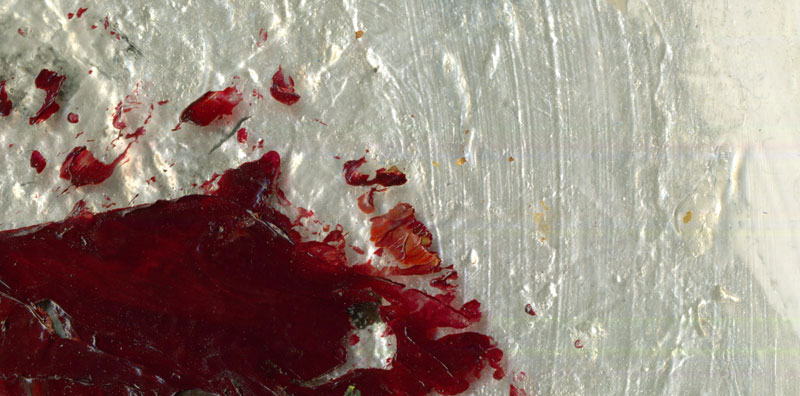
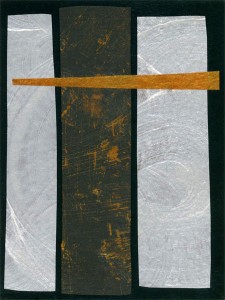
Image: While He Was Blessing Them © Jan Richardson

Reading from the Gospels, Ascension Day/Ascension of the Lord (often celebrated the Sunday after): Luke 24.44-53
Reading from the Gospels, Easter 7: John 17.6-19

It is a season of leave-takings. In the United Methodist Church, this is the time of year when colleagues who will be moving to new pastoral appointments this summer are announcing the news. Several friends have died in recent weeks (including dear Joe, whom I wrote about in this post a few months ago) as have several family members of friends. Graduation ceremonies are taking place (Brenda Lewis, my longtime friend and seminary roommate, reminded me this week that it’s been twenty years since our own graduation from Candler School of Theology), boxes are being packed, and familiar landscapes are receding into the distance.

In the rhythm of the liturgical year, this too is a season of leave-taking. For some time now we’ve been watching Jesus prepare his friends for his coming absence. As Jesus practices the art of departure, he invites us to think about what it means to say good-bye with intention, with mindfulness, with love. This week, the exquisite care that Jesus brings to his leaving reaches its apex in the passages for Ascension Day and Easter 7.

As always, I am struck by how, in Luke’s account of the Ascension, Jesus chooses to leave from Bethany. It is a beloved place of memory for Jesus: here he found hospitality in the home of his friends Mary, Martha, and Lazarus; here he raised Lazarus from the dead; here he received the gift of a woman’s anointing shortly before his death. Bethany has been a place of blessing for Jesus. And so, from this place of blessing, Jesus leaves, offering a blessing as he goes. While he was blessing them, Luke tells us, he withdrew from them and was carried up into heaven (24.51).

As we see also in this week’s passage from John, the blessing is part of the leaving. And, somehow, the leaving is part of the blessing. His departure—and the way he enters into it—is part of Jesus’ final gift to his friends. In much the same way that Jesus tells Mary Magdalene on Easter morning not to hold onto him, Jesus at the table and in his Ascension urges his disciples—his friends—to grow up. He invites them to enter into a new relationship with him that will no longer depend on his physical presence but will rely instead on trusting in his love and growing into the people and the community that Christ has called them to become. It is time for them to become his body, to continue his transforming work in the world that he has physically left but has not abandoned.

Joyful, sorrowful, bittersweet; planned or unexpected; welcomed or resisted or grieved: no matter how a leave-taking happens, it always brings an invitation, and it makes a space for the Spirit to come. As you navigate the leave-takings in your own life, how do you keep your eyes open for the invitations they hold? What blessings do they offer, and what blessings do they invite?

In the Leaving
A Blessing

In the leaving,
in the letting go,
let there be this
to hold onto
at the last:

the enduring of love,
the persisting of hope,
the remembering of joy,

the offering of gratitude,
the receiving of grace,
the blessing of peace.

—Jan Richardson

2016 update: This blessing appears in my new book, Circle of Grace: A Book of Blessings for the Seasons.

P.S. For previous reflections on the Ascension, click the images or titles below.
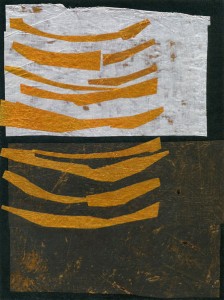
Ascension/Easter 7: Blessing in the Leaving
(includes “Ascension Blessing”)

Ascension/Easter 7: A Blessing at Bethany

[To use the image “While He Was Blessing Them,” please visit this page at janrichardsonimages.com. Your use of janrichardsonimages.com helps make the ministry of The Painted Prayerbook possible. Thank you!]


Easter 6: Abide In My Love

May 7, 2012

Abide In My Love © Jan L. Richardson

Reading from the Gospels, Easter 6 (May 13): John 15.9-17

After his resurrection, he will prove more elusive—telling Mary Magdalene not to hold onto him, disappearing from the table at Emmaus—but on this night, gathered at the table with his companions, he is fully present to those whose lives have become so intertwined with his. Though Jesus tells the disciples that he has made everything known to them, he sees what lies ahead more clearly than they can. And so he lingers at the table, telling them all that he wants them to understand, preparing them as best he can for the time when he will no longer be physically present to them.

Even as he works with such intention and care to make the disciples ready for his absence, Jesus impresses upon them that he is not letting them go, that his physical departure will not bring an end to his relationship with them, his loving of them. Abide in my love, he urges them, echoing and expounding on the imagery of the vine that he has offered in the preceding verses. He twines his words around them, calling them to stay with him, to remain, to persist in their sacred entanglement that will bear fruit for a hungering world.

In a world where leavings and endings often carry a sense of abandonment, Jesus somehow manages to make an art of departure. He does not turn his face from the pain involved, yet he draws the eyes and ears of his companions to the power and beauty and grace of the connections they have forged: connections that, though changing, will endure.

I have called you friends, he says to them. And says to us: offering himself, seeking us, lingering with us still.

Blessing

Even in the leaving
o abide with us
turn your face
toward us
and remain with us,
stay with us
still.

P.S. For a Mother’s Day reflection and blessing, visit Mother’s Day: Blessing the Mothers at my Sanctuary of Women blog.

[To use the image “Abide In My Love,” please visit this page at janrichardsonimages.com. Your use of janrichardsonimages.com helps make the ministry of The Painted Prayerbook possible. Thank you!

Easter 5: I Am the Vine

May 2, 2012

Image: I Am the Vine © Jan Richardson

Reading from the Gospels, Easter 5: John 15.1-8

This week I’ve designed some multimedia yumminess for you as you reflect on the evocative passage from John that serves as our gospel lection for Sunday. Along with this fresh-from-the-studio painting, I’m delighted to offer the song “Remain In Me” from my singer/songwriter husband, Garrison Doles. It’s from his CD House of Prayer. Just click the audio player below to enjoy.

In these Easter days, may you know yourself intertwined with the true vine who is our sustenance. Blessings.

[To use the image “I Am the Vine,” please visit this page at janrichardsonimages.com. Your use of janrichardsonimages.com helps make the ministry of The Painted Prayerbook possible. Thank you!]

Easter 2: Living into the Resurrection

April 13, 2012


Into the Wound © Jan L. Richardson

Reading from the Gospels, Easter 2: John 20.19-31

Happy Easter! I am grateful for the wisdom of the liturgical calendar that tells us that, like Christmas, Easter is not just a day but a season. It comes as both a comfort and a challenge to know that living into the resurrection is an ongoing journey.

Things have been quiet here at The Painted Prayerbook this week, with taking a deep breath after posting daily throughout the season of Lent and also spending time in preparation for upcoming events, including a retreat I’m leading next week for the women bishops of the United Methodist Church. With this, and needing to spend time in my studio to see what images are waiting to show up after the wave of paintings for Lent, it may be a little while before we get back into the blogging groove here. But know that new work is on its way. In the meantime, I’ll post links to previous reflections I’ve offered on the lectionary readings that we’re traveling with in this Easter season.

Since this week’s gospel lection from John 20 recurs each year, I have several reflections on this passage and would be delighted for you to stop by:

Easter 2: Into the Wound

Easter 2: The Secret Room

Easter 2: The Illuminated Wound

Blessings to you in these Easter days!

[To use the “Into the Wound” image, please visit this page at janrichardsonimages.com. Your use of janrichardsonimages.com helps make the ministry of The Painted Prayerbook possible. Thank you!]

 

Easter Sunday: Seen

April 6, 2012

Image: I Do Not Know Where They Have Laid Him © Jan Richardson

But Mary stood weeping outside the tomb. As she wept, she bent over to look into the tomb; and she saw two angels in white, sitting where the body of Jesus had been lying, one at the head and the other at the feet. They said to her, “Woman, why are you weeping?” She said to them, “They have taken away my Lord, and I do not know where they have laid him.”
—John 20.11-13

From a lectionary reading for Easter Sunday: John 20.1-18

Reflection for Easter Day

I never fail to be dazzled by this moment when Jesus calls out the name of the woman whom he finds weeping by his tomb. Mary. At the sound of her name, the Magdalene finally sees and knows who has found her there. It is a stunning moment of recognition.

Yet as I spiral back around this passage this week, what draws my attention is not only the way that Mary Magdalene sees Christ when he calls her name. What tugs at me this time is how, in that moment of hearing her name, Mary Magdalene must see herself.

With an inflection that only Christ could have given to it, his speaking of her name conveys everything: all their history, all that passed between them in their friendship, all that he knows of this woman whom he healed and who, along with other women, traveled with him and sustained him from her own resources. He knows her. He sees her. And now he asks her to see herself as he does.

Mary.

In that moment, and in the call and commissioning that will soon come, the risen Christ gives Mary Magdalene to herself. Not, of course, as if he owns or controls her but because, as ever, he knows her and wants to free her from what would hinder her from the life that God desires for her. Long ago, Jesus had released the Magdalene from the septet of demons that haunted her. (“A demon for every day of the week,” writes Kathleen Norris; “how practical; how womanly.”) Now he releases her again, this time from clinging to him, from becoming entangled with him. Where holding onto him might seem holy, Christ sees—and enables Mary Magdalene to see—that her path and her life lie elsewhere. Beyond this moment, beyond this garden, beyond what she has known. In going, Mary affirms that she has seen what she needed to see: not just Christ in the glory of his resurrection, but also herself, graced with the glory that he sees in her.

In the centuries to come, Mary Magdalene will become layered over with other visions that people have of her: other titles, other depictions, other names. Sinner, prostitute, penitent, bride: the stories and legends of who the Magdalene was and what she became will both fascinate us and frustrate our ability to know her. But on this day, the Magdalene we meet in the garden is simply one who has learned to see, and who goes forth to proclaim what she has seen.

This day, what will we allow ourselves to see: of Christ, of ourselves? How would it be to know ourselves as he does, to see ourselves as he sees us, to know that the risen Christ speaks our name, too, and releases us to tell what we have seen? What will you proclaim as you leave the empty tomb this day?

Seen
A Blessing for Easter Day

You had not imagined
that something so empty
could fill you
to overflowing,

and now you carry
the knowledge
like an awful treasure
or like a child
that roots itself
beneath your heart:

how the emptiness
will bear forth
a new world
that you cannot fathom
but on whose edge
you stand.

So why do you linger?
You have seen,
and so you are
already blessed.
You have been seen,
and so you are
the blessing.

There is no other word
you need.
There is simply
to go
and tell.
There is simply
to begin.

—Jan Richardson

2016 update: “Seen” appears in my new book, Circle of Grace: A Book of Blessings for the Seasons.

For previous reflections for Easter Sunday, click the images or titles below.


Easter Sunday: Risen
(includes “Easter Blessing”)


Easter Sunday: Out of the Garden

Last year, Gary and I created a video that weaves images from my “Hours of Mary Magdalene” series with his gorgeous song “Mary Magdalena,” which tells of Christ and Mary Magdalene’s encounter on the morning of the resurrection. Click below to see the video.


The Hours of Mary Magdalene

[To use the image “I Do Not Know Where They Have Laid Him,” please visit this page at janrichardsonimages.com. To use the “Hours of Mary Magdalene” video, please visit this page. Your use of janrichardsonimages.com helps make the ministry of The Painted Prayerbook possible. Thank you!]
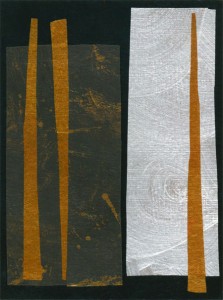
Day 40/Holy Saturday: Therefore I Will Hope

April 5, 2012

Image: Therefore I Will Hope © Jan Richardson

“The Lord is my portion,” says my soul,
“therefore I will hope in God.”
—Lamentations 3.24

From a lectionary reading for Holy Saturday: Lamentations 3.1-9, 19-24

Reflection for Saturday, April 7 (Holy Saturday/Day 40 of Lent)

I’m so taken with the way that, like those who composed the book of Psalms, the author of Lamentations—which tradition held to be the prophet Jeremiah—is able to hold seemingly conflicting emotions at once. Today’s reading consists primarily of—well, you can tell from the title of the book—a lamentation, stunning and suffocating in the way it describes the author’s sense of affliction and imprisonment. God has driven and brought me into darkness without any light, he wails; against me alone God turns a hand, again and again, all day long….God has made me sit in darkness like the dead of long ago. God has walled me about so that I cannot escape.

Though afflicted by destruction, the author of the lament cannot manage to sustain his despair for long. But this I call to mind, he cries out as the lament turns just before its end; and therefore I have hope: The steadfast love of the Lord never ceases, God’s mercies never come to an end; they are new every morning.

Though composed as a lament for the destruction of the Temple and the city of Jerusalem in 586 BCE, one can well imagine why these words came to be associated with Christ in the tomb. Christ, who referred to himself as the Temple, now brought to death and seeming destruction; Christ in the darkness without any light.

In another lectionary passage for Holy Saturday, we read of how, after Joseph of Arimathea places Jesus’ body in the tomb and rolls a stone across the entrance, “Mary Magdalene and the other Mary were there, sitting opposite the tomb” (Matthew 27.61). I wonder if these words from Lamentations came to them in their waiting. In the darkness, in their sorrow, with no evident cause for rejoicing, did they, like the author of Lamentations, yet find cause for hope?

On this day—this last, final day of Lent—it may be tempting to skip ahead to what awaits us on Sunday, without giving Holy Saturday its due. We know the rest of the story. Yet how might it be to linger with these words of lamentation, as if we did not know? What if we sat ourselves down with the women opposite the tomb, and listened to their grief and longing, and waited with them? When times of darkness come in our own lives, and we don’t know the rest of the story, how does what God has done for us in the past give us cause to hope for what God will yet do?

Therefore I Will Hope
A Blessing for Holy Saturday

I have no cause
to linger beside
this place of death,

no reason
to keep vigil
where life has left,

and yet I cannot go,
cannot bring myself
to cleave myself
from here,

can only pray
that this waiting
might yet be a blessing
and this grieving
yet a blessing
and this stone
yet a blessing
and this silence
yet a blessing
still.

—Jan Richardson

2016 update: The blessing “Therefore I Will Hope” appears in my new book, Circle of Grace: A Book of Blessings for the Seasons.

This reflection is part of the series Teach Me Your Paths: A Pilgrimage into Lent.

For previous reflections for Holy Saturday, click the images or titles below.


Holy Saturday: The Art of Enduring


Holy Saturday: A Day Between

[To use the image “Therefore I Will Hope,” please visit this page at janrichardsonimages.com. Your use of janrichardsonimages.com helps make the ministry of The Painted Prayerbook possible. Thank you!]

Day 39/Good Friday: They Took the Body of Jesus

April 5, 2012

Image: According to the Burial Custom © Jan Richardson (click to enlarge)

They took the body of Jesus and wrapped it with the spices in linen cloths, according to the burial custom of the Jews.
—John 19.40

From a lectionary reading for Good Friday: John 18.1-19.42

Reflection for Friday, April 6 (Good Friday/Day 39 of Lent)

Years earlier, when an angel had appeared in a sheep pasture proclaiming good news of great joy, the angel had told the shepherds of a Savior, a Messiah, a Lord whom they would find as a child wrapped in bands of cloth and lying in a manger. Now, on this day, the Savior is wrapped in a spiced shroud of linen cloths, a scented winding sheet to hold him as he lies in the tomb.

It’s tempting to draw a stark contrast between the emotions of those who held Christ at his birth and those who held him at his death. Though joy must have prevailed at the beginning of his life and fear and grief at the end, surely, among those who saw and knew him best, celebration and sorrow were mixed on each occasion. Yet as at the beginning, so at the end: those who love Christ enfold him, tend him, bless him.

Song of the Winding Sheet
For Good Friday

We never
would have wished it
to come to this,
yet we call
these moments holy
as we hold you.

Holy the tending,
holy the winding,
holy the leaving,
as in the living.

Holy the silence,
holy the stillness,
holy the turning
and returning to earth.

Blessed is the One
who came
in the name,

blessed is the One
who laid
himself down,

blessed is the One
emptied for us,

blessed is the One
wearing the shroud.

Holy the waiting,
holy the grieving,
holy the shadows
and gathering night

Holy the darkness,
holy the hours,
holy the hope
turning toward light.

—Jan Richardson

2016 update: “Song of the Winding Sheet” appears in my new book Circle of Grace: A Book of Blessings for the Seasons.

For previous reflections on Good Friday, click the images or titles below.


Good Friday: What Abides


Good Friday: In Which We Get Nailed

The video Listening at the Cross intertwines my series of images on the Seven Last Words of Christ with Gary’s exquisite song “This Crown of Thorns.”


Listening at the Cross

[To use the image “According to the Burial Custom,” please visit this page at janrichardsonimages.com. To use the “Listening at the Cross” video, please visit this page. Your use of janrichardsonimages.com helps make the ministry of The Painted Prayerbook possible. Thank you!]
Day 37/Wednesday of Holy Week: Rejoice and Be Glad

April 3, 2012

Rejoice and Be Glad © Jan L. Richardson (click image to enlarge)

Let all who seek you rejoice and be glad in you. Let those who love your salvation say evermore, “God is great!”
—Psalm 70.4

From a lectionary reading for Wednesday of Holy Week: Psalm 70

Reflection for Wednesday, April 4 (Day 37 of Lent)

In her book Traveling Mercies, Anne Lamott writes that the two best prayers she knows are “Help me, help me, help me” and “Thank you, thank you, thank you.” I think of Lamott’s prayers as I linger with Psalm 70, a tiny jewel of a psalm whose five brief verses offer a spare bit of elaboration upon that basic cry for help and declaration of gratitude.

“Be pleased, O God, to deliver me,” the psalmist pleads as the psalm begins. “O Lord, make haste to help me!” These same words (in the Douay-Rheims version of this verse, which renders the first part as “O God, come to my assistance”) open every office of the Liturgy of the Hours, with the exception of Vigils; for nearly two millennia, this constant reminder of humanity’s need for help has been embedded in the prayers that carry monastic folk through the day and night. The psalmist continues in this vein, imploring God to bring “shame and confusion” to those who seek to harm him, and entreating God to hurry. “You are my help and my deliverer,” the psalmist cries out as the psalm closes; “O Lord, do not delay!”

Help me, help me, help me.

Tucked into this tiny psalm, amidst the psalmist’s pleas for aid, a single verse counsels joy in the presence of panic: “Let all who seek you rejoice and be glad in you,” the psalmist sings. “Let those who love your salvation say evermore, ‘God is great!'”

Thank you, thank you, thank you.

For some of us, asking for help—from God, from another person—can be tremendously difficult. It may rarely occur to us that God created other people so that we don’t have to do everything by ourselves. Yet as the psalmist reminds us, knowing what we need and asking for appropriate help is part of what it means to belong to God—and to one another. And as the psalmist also reminds us in verse 4, seeking the help of God (which so often comes through others) is a pathway to gladness; drawing near to the God who takes delight in delivering us is a road to rejoicing.

And so I am here to ask you: What help do you need this day? How would it be to ask for it? What gladness and gratitude might be waiting for you there?

Blessing that Waits
to Come to Your Aid

When I have become
so reliant on myself
that I cannot see
the need that gnaws
so deep
in my soul,

open my eyes,
open my heart,
open my mouth
to cry out
for the help
that you do not ration,
the deliverance
that you delight to offer
in glad and
generous measure.

[To use the image “Rejoice and Be Glad,” please visit this page at janrichardsonimages.com. Your use of janrichardsonimages.com helps make the ministry of The Painted Prayerbook possible. Thank you!]
Day 36/Tuesday of Holy Week: A Rock of Refuge

April 3, 2012

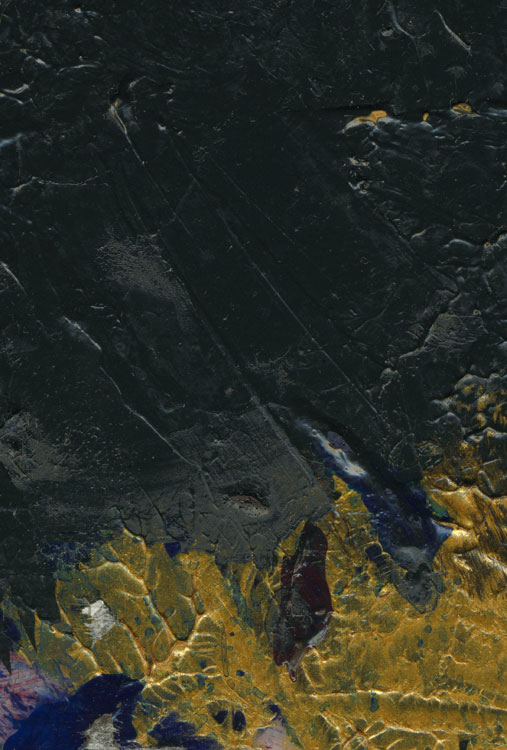
Rock of Refuge © Jan L. Richardson (click image to enlarge)

Be to me a rock of refuge, a strong fortress, to save me,
for you are my rock and my fortress.
—Psalm 71.3

From a lectionary reading for Tuesday of Holy Week: Psalm 71.1-14

Reflection for Tuesday, April 3 (Day 36 of Lent)

Pondering this passage and this image, I keep thinking of Skellig Michael. A small, peaked rock of an island off the coast of Ireland, Skellig Michael was home to a small community of monks in the Middle Ages. According to legend, the monastery was founded by Saint Fionan in the sixth century. In a stark landscape that afforded few level surfaces, the monks managed to build six stone cells (living quarters) constructed in the “beehive” style distinctive to Celtic monasteries, along with two oratories (places for prayer) and a tiny hermitage on a peak whose location would have made getting there an arduous pilgrimage in itself. It’s thought that a monastic community remained on the island until the twelfth or thirteenth century.

The monks of Skellig Michael devoted themselves to a way of life in which they embodied the words of the psalmist who, in today’s reading, proclaims, “My mouth is filled with your praise, and with your glory all day long” (v. 8). I imagine that on that craggy rock where they kept a rhythm of personal and communal prayer throughout the day and night, the monks felt a particular connection with this psalm and its imagery of the rock of refuge that the psalmist finds in God. Like the desert fathers and mothers of the early church who served as models and sources of inspiration for these monks, the brothers surely must have found that their home on Skellig Michael was not a place of escape from spiritual struggle but a space where they could both wrestle with God and rest in the God who delivered them and provided shelter and strength for their souls.

On this Lenten day, where do you find the solid ground that God provides? How do you seek the refuge, solace, and shelter that God offers you—not as a perpetual escape from the world but as a place of safety where you can receive the strength and sustenance that will enable you to engage the world in the ways God needs you to engage it?

Blessing of Refuge

That I may flee to you
not to escape forever
from the world
that you have created,
the world that you
call beloved

but that in your refuge
I will find
your presence
to strengthen me
your courage
to sustain me
your grace
to encompass me
as I go
where you would
have me go.

[To use the image “Rock of Refuge,” please visit this page at janrichardsonimages.com. Your use of janrichardsonimages.com helps make the ministry of The Painted Prayerbook possible. Thank you!]
Day 35/Monday of Holy Week: The Coastlands Wait for His Teaching

April 2, 2012

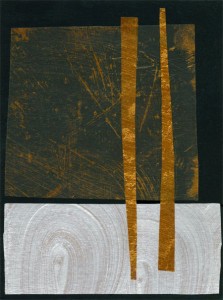
The Coastlands Wait for His Teaching © Jan L. Richardson

He will not grow faint or be crushed until he has established justice in the earth; and the coastlands wait for his teaching.
—Isaiah 42.4

From a lectionary reading for Monday of Holy Week: Isaiah 42.1-9

Reflection for Monday, April 2 (Day 35 of Lent)

Today is one of those days that remind me how much the path through Lent resembles the path through Advent. Waiting, preparation, anticipation; the invitation to live both in the now and the not yet; the call to recognize God in the present even as we yearn for a time when God will appear in fullness and bring healing to all creation: these themes that draw us into the season of Christ’s birth draw us also into this season in which we enter into the story of his death and resurrection.

And here, in this passage from Isaiah that contains the first Servant Song, these themes are at full play. The God who fashioned all things—”who created the heavens and stretched them out,” this passage tells us, “who spread out the earth and what comes from it, who gives breath to the people upon it and spirit to those who walk in it”draws our vision toward a time when creation will be restored, when the servant will bring justice upon the earth, and even the coastlands will wait for his teaching. This passage, stunning in its beauty and in the way it evokes a hope that pervades the entire earth, puts me in mind of Paul’s words in Romans 8.22-25, where he writes of how the whole creation groans in labor pains, crying out for redemption.

For now, we wait. With hope. With longing. With a patience that is not passive but that enables us to perceive where God may be calling us to act for the healing of the world. “See, the former things have come to pass,” today’s passage from Isaiah tells us at its close, “and new things I now declare; before they spring forth, I tell you of them.” On this Holy Monday, what new thing do you yearn for? What will you do to help prepare a way for it to appear upon the earth?

Blessing for Holy Monday

May the path
that Christ walks
to bring justice
upon the earth,
to bring light
to those who sit
in darkness,
to bring out those
who live in bondage,
to bring new things
to all creation:

may this path
run through our life.
May we be
the road Christ takes.

[To use the image “The Coastlands Wait for His Teaching,” please visit this page at janrichardsonimages.com. Your use of janrichardsonimages.com helps make the ministry of The Painted Prayerbook possible. Thank you!]