Archive for the ‘art’ Category

Trinity Sunday: Blessing of the Ordinary

June 12, 2011


A Spiral-Shaped God © Jan L. Richardson

Reading from the Gospels, Trinity Sunday (June 19): Matthew 28.16-20

Each year when Trinity Sunday rolls around, ushering us into the season of the year known as Ordinary Time, my memory travels back to a Trinity Sunday many years ago. It was my last Sunday living in Atlanta, where I had gone to seminary and was now finishing a bonus year spent working on my first book and lingering with the seminary community. In a few days I would move back to Florida to take my first pastoral appointment.

On that final, bittersweet Atlanta Sunday, I went with my boyfriend to Oakhurst Baptist Church, where one of the pastors preached a powerful sermon about entering into the rhythms of Ordinary Time. At the close of the sermon, she invited us into a ritual of laying on of hands as a way of seeking a blessing as we crossed into the new season. Several teams of church members, three in each team, moved to various places in the church. Folks who wished could go to one of the teams, asking them to pray for something in particular or simply to offer a blessing.

Standing at the threshold not only of  a new season but also of a dramatic life change as I prepared to move from Atlanta, where I had a close and wonderfully engaging community, to Orlando, where I knew virtually no one, I thought I could use a blessing. Approaching one of the teams that included a seminary friend of mine, I quietly told them about my upcoming move. And the team—a trinity of women, as it happened—laid their hands and their words on me in a sacramental gesture of blessing.

It would take a long time for me to find and reestablish some ordinary rhythms in my life. But on that Trinity Sunday, graced by the women who offered a blessing for me and for my ministry that lay ahead, I found sustenance that helped me cross the threshold into the new season and into the new life that waited for me.

As we move from the times and seasons that have been so marked by a sense of story and meaning—Advent, Christmas, Epiphany, Lent, Easter, Pentecost—into the long season of year that bids us celebrate the commonplace and to seek the God who dwells within the daily, what sort of blessing might you need? What words or gestures of sacrament and grace do you need to sustain you as you enter into this part of the year? How do you look for the presence of the God who lingers amid the ordinary and seemingly mundane? What rhythms of living do you yearn for as you stretch into the season that awaits you?

Blessing the Ordinary

Let these words
lay themselves
like a blessing
upon your head,
your shoulders

as if,
like hands,
they could pass on
to you
what you most need
for this day

as if they could
anoint you
not merely for
the path ahead

but for this
ordinary moment
that opens itself
to you—

opens itself
like another hand
that unfurls itself,
that reaches out
to gather up
these words
in the bowl
of its palm.

You may think
this blessing
lives within
these words

but I tell you
it lives
in the opening
and in the reaching;

it lives
in the ache
where this blessing
begins;

it lives
in the hollow
made by the place
where the hands
of this blessing
meet.

Spiraling back around: For a previous reflection on Trinity Sunday, see Trinity Sunday: A Spiral-Shaped God.

[To use the “Spiral-Shaped God” image, please visit this page at janrichardsonimages.com. Your use of janrichardsonimages.com helps make the ministry of The Painted Prayerbook possible. Thank you!]


Pentecost: One Searing Word

June 5, 2011


Pentecost © Jan L. Richardson

Reading from the Book of Acts, Day of Pentecost (June 12): Acts 2.1-21

Nearly thirteen weeks have passed since the day we stood on the threshold of Lent, our foreheads streaked with ashes. We have traveled through a wilderness season of reflection and preparation as we journeyed toward the cross. We have entered into a season of resurrection in these weeks since the wonders of Easter Day. We have watched Jesus take his leave, blessing those whom he has called to continue his work and become his body in this world.

Now, as the Day of Pentecost approaches, we find ourselves at the other end of the arc that began on the weeks-ago Ash Wednesday. “Know that you are dust, and to dust you shall return,” many of us heard on that day. A crucial reminder, to be sure: to know what we are made of, where we are from, to where we shall return. Yet all these weeks later, at the end of wilderness and death and resurrection, the day of Pentecost comes to show us that there is still more to know, and a purpose for knowing that lies beyond our individual lives.

Throughout this Easter season, the gospel readings have placed a persistent emphasis on knowing. To those who heard the Ash Wednesday admonition to know that you are dust, Jesus’ intentionality in telling his followers what he needs them to know comes as a striking complement to the words that ushered us into Lent. Although knowing our earthy origins is crucial in our life with Christ, the past weeks have proven there are other things he needs for us to know as well about who he is, what he has done, and what he is calling us to do.

Yet simply knowing, of course, is not enough. On the day of Pentecost, as the Spirit descends upon the gathered assembly, we see with dramatic clarity how the knowing that Christ gives us is not for ourselves alone: it is for the life of the community and the life of the world. As on Pentecost, when those who spoke in the Spirit did not recognize what they were saying but could be understood by others in the crowd, our knowing and understanding are always incomplete without the presence of community.

The incompleteness of our knowing comes as its own reminder of what dusty disciples we are. Made of common earth, fashioned of ordinary matter, we are called to a humus-born humility that cautions us against acting like we have all the answers and know all of God’s designs for creation. Yet the story of Pentecost bids us to remember what the Spirit can do with dust. Pentecost reminds us that the Spirit draws us together and gives us to one another so that we may hear and see and know with greater clarity. This day challenges us to open ourselves beyond the limits of our individual lives to the Spirit who sets us ablaze for the healing of the world.

In this Pentecost week, are you seeking the presence of others who will deepen your understanding? Where do you go to hear and see what you cannot hear and see on your own? When knowledge and wisdom come to you, how do you share them beyond yourself to help others flourish? Where are you turning your ears, your eyes, your heart, your mind to perceive the presence of the Spirit and the path to which it is drawing you?

Pentecost Blessing

On the day
when you are wearing
your certainty
like a cloak
and your sureness
goes before you
like a shield
or like a sword,

may the sound
of God’s name
spill from your lips
as you have never
heard it before.

May your knowing
be undone.
May mystery
confound your
understanding.

May the Divine
rain down
in strange syllables
yet with
an ancient familiarity,
a knowing borne
in the blood,
the ear,
the tongue,
bringing the clarity
that comes
not in stone
or in steel
but in fire,
in flame.

May there come
one searing word:
enough to bare you
to the bone,
enough to set
your heart ablaze,
enough to make you
whole again.

P.S. For a previous Pentecost reflection, click the image or title below:

Pentecost: Fire and Breath

[To use the “Pentecost” image, please visit this page at janrichardsonimages.com. Your use of janrichardsonimages.com helps make the ministry of The Painted Prayerbook possible. Thank you!]
Ascension/Easter 7: Blessing in the Leaving

May 29, 2011


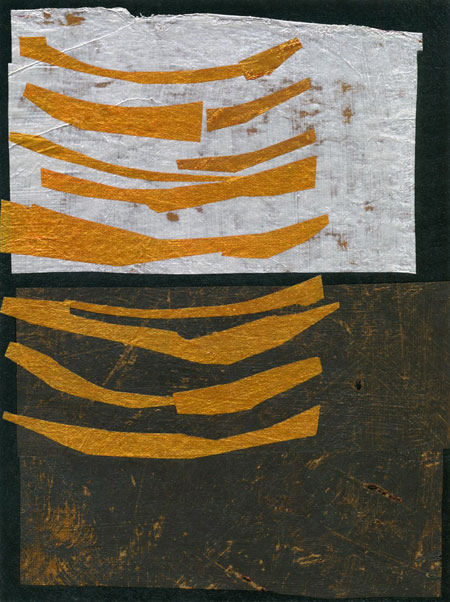
Ascension II © Jan L. Richardson

Reading from the Gospels, Ascension Day: Luke 24.44-53
Reading from the Gospels, Easter 7, Year A: John 17.1-11

Throughout this Easter season we have seen how the gospel lections have emphasized the theme of knowing: knowing the risen Christ, knowing what he has done for us and to us, knowing what he desires of us and calls us to do, knowing what he is preparing for us—and preparing us for. The fact that most of the gospel readings for the Easter season take place at a table underscores the intimacy that comes in knowing—in knowing Christ, in knowing God, in knowing one another.

This theme of knowing reaches its stunning apex in the gospel texts for this week. The reading from John’s Gospel draws us once again to the table where Jesus has lingered with his friends on the night before his death. He finishes their final feast by praying for his disciples. In his prayer, Jesus is knowing all over the place: “And this is eternal life,” he says, “that they may know you, the only true God, and Jesus Christ whom you have sent….I have made your name known to those whom you gave me from the world….Now they know that everything you have given me is from you; for the words that you gave to me I have given to them, and they have received them and know in truth that I came from you.” Then Jesus, who knows these friends so well, releases them into the world and into the care and protection of God, who has known them from the beginning.

In the reading from Luke for Ascension Day, we see the risen Christ appearing one last time to his disciples. He opens their minds, as Luke tells us, “to understand the scriptures,” and he impresses upon them that what was written about him, they have seen with their own eyes. Jesus then takes them to Bethany: this place so familiar and dear to Jesus, the place where Mary and Martha and Lazarus lived—his close friends who knew and were known by Jesus. And from this place Jesus leaves, blessing his beloved companions as he ascends.

As we spiral back around these stories this year, what still takes hold of me is this: how Jesus prays for and blesses his friends as he leaves them. How the leaving is part of the blessing. As if the blessing can happen no other way than by his departure, by his letting go of the ones whom he has loved—these ones whom he will never cease to love but must release into their own lives, so that they may enter into the blessing and enact it on this earth.

This week provides a good occasion to remember that the English word bless comes from the Old English word blod—blood, referring to the use of blood in ritual acts of consecration. The blessing that Jesus gives as he goes is one that will infuse the community with his love, his grace, his lifeblood. He gives a blessing that will run in the veins of those he has called to be his body; a blessing that will beat in the hearts of those whom he is sending into the world.

As we prepare to leave the season of Easter and cross into Ordinary Time, what blessing do you need? What word or gesture of grace and love do you need to infuse you and sustain you to be a blessing in this world? Is there a blessing that might depend on your letting go, on releasing something—or seeking to be released from something—so that there will be a space for the blessing to enter?

Blessing the Distance
For Ascension Day

It is a mystery to me
how as the distance
between us grows,
the larger this blessing
becomes,

as if the shape of it
depends on absence,
as if it finds its form
not by what
it can cling to
but by the space
that arcs
between us.

As this blessing
makes its way,
first it will cease
to measure itself
by time.

Then it will release
how attached it has become
to this place
where we have lived,
where we have learned
to know one another
in proximity and
presence.

Next this blessing
will abandon
the patterns
in which it moved,
the habits that helped it
recognize itself,
the familiar pathways
it traced.

Finally this blessing
will touch its fingers
to your brow,
your eyes,
your mouth;
it will hold
your beloved face
in both its hands,

and then
it will let you go;
it will loose you
into your life;
it will leave
each hindering thing

until all that breathes
between us
is blessing
and all that beats
between us
is grace.

—Jan Richardson
from Circle of Grace: A Book of Blessings for the Seasons

P.S. For a previous reflection on this passage, click the image or title below:


Ascension/Easter 7: A Blessing at Bethany

Using Jan’s artwork…

To use the “Ascension II” image, please visit this page at janrichardsonimages.com. (This is also available as an art print. After clicking over to the image’s page on the Jan Richardson Images site, just scroll down to the “Purchase as an Art Print” section.) Your use of janrichardsonimages.com helps make the ministry of The Painted Prayerbook possible. Thank you!

Using Jan’s words…
For worship services and related settings, you are welcome to use Jan’s blessings or other words from this blog without requesting permission. All that’s needed is to acknowledge the source. Please include this info in a credit line: “© Jan Richardson. janrichardson.com.” For other uses, visit Copyright Permissions.

Easter 6: Love and Revelation

May 22, 2011


Love and Revelation © Jan L. Richardson

Reading from the Gospels, Easter 6, Year A (May 29): John 14.15-21

On a day more than six hundred years ago, in the English town of Norwich, a woman walked into a cell attached to the parish church. She intended to stay there for the rest of her life. The original name of the woman is unknown, and the cell where she would live as an anchoress—a woman devoted to a life of contemplation and solitude—no longer remains. It is likely that she took her name from the church in whose cell she lived: the Church of St. Julian.

Nearly everything we know about Julian of Norwich comes from a manuscript that she composed in her cell. In it she tells of how, at the age of thirty and a half, she became desperately ill. Just as she thought herself at the point of death, her pain suddenly departed. As Julian continued to pray, she was visited by a series of sixteen visions or revelations—what she called “showings”—in which she came to experience and know God’s love for her.

Julian recorded her visions in a short text, and then, after nearly two decades, she expanded on them in a longer text that incorporates the insights that she gained through years of reflecting on and praying with the visions. Together Julian’s texts became the book known as Showings, or Revelations of Divine Love.

In the final chapter of Showings, as Julian comes to the end of the remarkable work in which she has revealed to us a God whose endless mystery encompasses a deep desire to know and love us in all our human particularity, she writes,

And from the time that it was revealed, I desired to know in what was our Lord’s meaning. And fifteen years after and more, I was answered in spiritual understanding, and it was said: What, do you wish to know your Lord’s meaning in this thing? Know it well, love was his meaning. Who reveals it to you? Love. What did he reveal to you? Love. Why does he reveal it to you? For love. Remain in this, and you will know more of the same. But you will never know different, without end.

From her anchorhold, with her stunning simplicity, Julian echoes and embodies what her beloved Jesus says to his friends in this week’s gospel passage. At the table where he gathers with his disciples on the night before his death, he persists in telling them what he wants them—needs them—to know about who he is, what he has done, what he will yet do, what he is calling them to do after he is physically gone. In this passage, Jesus becomes very clear about why he wants them to know these things, and what underlies and encompasses and is the reason for their knowing.

“They who have my commandments and keep them,” Jesus says, “are those who love me; and those who love me will be loved by my Father, and I will love them and reveal myself to them.”

The knowledge that Jesus shares with his followers is not for the purpose of giving them worldly power. It is not designed to make them feel important, or to initiate them into secrets meant for a select few, or to make their lives easier. He does not intend for them to use the knowledge as a weapon to threaten or diminish others. What Jesus reveals to his friends—his friends at the table that night, his friend in the cell at the Church of St. Julian, his friends throughout the ages—he does for one reason:

For love.

Jesus speaks of love and revelation in the same breath. He wants his friends to understand that loving and knowing are of a piece, that loving draws us deeper into knowing and being known by the one whom we love. Here on the threshold of his death, Jesus cannot go until he assures them that he will not leave them bereft but will, in fact, continue to love and help them. He cannot leave until he tells them that by their loving, they will remain in relationship with him; through their shared love, he will yet reveal himself to them and be known by them.

What knowledge does your loving lead you to? As you stretch yourself into loving others, what becomes revealed to you—of them, of yourself, of God? How has love challenged or changed what you know? How are you opening yourself to its presence in your life?

Blessing that Knows Your Name

Chances are
there will come a day
when you will forget
every last word
of this blessing.

It does not matter.

Let this blessing
slip through
your fingers.
Let it roll from
the smooth plane
of your palm.
Let each line
disappear
and every syllable
fall away.
Let this blessing
return
to where all
blessings begin.

Let it leave you
until all that remains
is the place where
it pierced you—
whether like fire
or like breath
you could not say,
only that you heard
your name as it entered,
then heard its own
as it blew away.

P.S. For a previous reflection on this passage, click the image or title below:

Easter 6: Side Orders

[To use the “Love and Revelation” image, please visit this page at janrichardsonimages.com. Your use of janrichardsonimages.com helps make the ministry of The Painted Prayerbook possible. Thank you!]

Easter 5: Many Rooms

May 15, 2011

Many RoomsImage: Many Rooms © Jan Richardson

Reading from the Gospels, Easter 5, Year A: John 14.1-14

Many years ago, a recurring dream began to take hold of my nighttime brain. The details shift and change each time it visits, but the essence of the dream remains the same: I am wandering through shops—not a mall, but a series of connected stores. The stores are the kind that I love to browse through, the sort that I find in communities that value artistry. As I wander among the stores that spill into one another, I savor what I see: richly hued artwork, finely crafted jewelry, beautiful pottery that calls out for me to touch it.

In the dream, no matter the changing details, I always find a bookstore. Often it’s a used bookstore, crammed with volumes and with more shelves around each turn. Once the bookstore contained a case of gorgeous hand-bound books, displayed like artwork. I marveled at the colors, textures, and designs, knowing as I touched the books, I want to do this, to create books like these.

Along with the persistent presence of a bookstore, one other detail of the dream never changes: it always begins with my walking down a familiar street. I turn a corner and suddenly find myself among the shops, thinking, Of course—that’s where they were! These treasures were in my neighborhood the whole time, waiting for me to find them.

And you know the way to the place where I am going, Jesus says to his disciples on the night before his death. Here at the table where they share their final meal before his crucifixion, there are many things Jesus wants to tell them. His hunger for them to know—which we see again and again in the gospel texts in this Easter season—becomes particularly acute as Jesus gathers with them just hours before his death. And so he will go on to tell them about the Holy Spirit whom he will send, and how this Spirit will be in them. Jesus will tell them that he is the true vine in which they will abide. He will tell them—command them—to love one another, and how the world will hate them. He will tell them that their sorrow will turn to joy. Jesus is desperate for them to know these things, and more.

But when he tells them, before all this, of the place he is preparing for them—the house with many dwelling places—Jesus tells them that they already know the way. When Thomas—ever the good questioner—asks him how they can know the way, Jesus reminds them that he himself is the way. If they know him, they know the way, and the One who sent him to prepare the way for them.

This text has me wondering if following in this way has less to do with striving and working at it, in the frenetic fashion we sometimes do, than with letting ourselves recognize what we already know; less to do with wrapping our brains around points of belief that grow so contentious than with opening our eyes to the door that has always been there in our soul, our heart, waiting for us to see it and walk through it and find the spacious dwelling place that has been there all along. To be sure, following Christ our Way takes work and effort and focus and sacrifice. Yet I find myself thinking of the poem by the Sufi poet Rumi in which he writes of how he has been living on the “lip of insanity,” as he puts it, knocking incessantly on a door. Finally the door opens, and he realizes, “I’ve been knocking from the inside!”

Here at the table, Jesus wants to make clear that although the place he describes is a someday place, a promised home that he is preparing, it is at the same time a dwelling that his followers can have a glimpse of in this world, a space that even now takes form in our midst. An abiding-place fashioned by—and fashioned of—the Christ who dwells in God, and is a dwelling place for God, and offers his own self to us as both a habitation and a way. A way that we find by opening the door that is already within us.

In this season, where are you making your home? Where are you dwelling? Is there a place in your life where you are pushing and pouring out your energy—something you are trying to wrap your brain around to understand it or to change it—when the way might lie instead in releasing, in finding the doorway that appears in letting go?

Blessing with Many Rooms

As you step inside
this blessing
we wish to tell you
it is large enough
for you to lie down in.

Or
(though it may not look it,
small as it is upon this page)
you can curl up
in this blessing
with a cup of tea
and a good book
beside the window—
here, just behind you—
that faces east.

Likewise it is true,
though you might not have
paused long enough
to notice,
that this blessing
is big enough
for a table—
quite a sizable one
can be accommodated—
where your guests
will want to linger
far into the night.

And if they desire to stay,
you will find that
through this door—
you did not see it before?—
there are rooms in plenty
where they can
lay their heads
and stretch out with abandon
in their dreaming sleep.

One room,
many rooms—
in this blessing
it is all the same.
The point is that
there is space
enough.

Enough to make
a life, a home;
enough to make
a world.

Enough to make
your way toward
the One who has made
this way for you.

—Jan Richardson

P.S. For a previous reflection on this passage, click the image or title below:

Easter 5: A Place to Dwell

[To use the “Many Rooms” image, please visit this page at janrichardsonimages.com. Your use of janrichardsonimages.com helps make the ministry of The Painted Prayerbook possible. Thank you!]
Easter 4: Blessing of the Gate

May 9, 2011

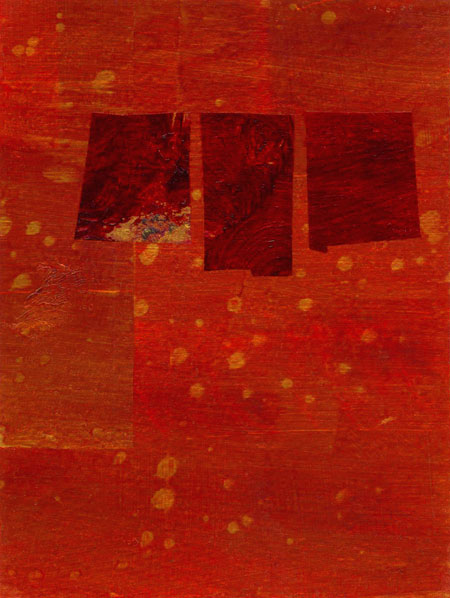
Image: Blessing of the Gate © Jan Richardson

Reading from the Gospels, Easter 4, Year A (May 15): John 10.1-10

Once again, for the fourth time in this Easter season, the lectionary turns toward the theme of knowing. Beginning with Easter Sunday, the gospel readings have beckoned us to pay attention to where we pay attention, to how we turn ourselves toward the Christ who comes to us. To the women at the empty tomb, to Thomas in the locked room, to the two at the Emmaus table, Jesus shows himself, inviting others to see and recognize him, even to place their hand within his very flesh so that they may know and trust who he is.

And here again this week the gospel lection impresses upon us how keen Jesus is for us to know him, to follow after the One who first knows us. Knows us by our own name, Jesus tells us in this Sunday’s text from John’s Gospel.

Jesus recognizes, of course, the import of knowing another’s name. Throughout the scriptures as well as in mythology and folklore, we see how knowing someone’s name often means having a kind of power; one’s name holds something of a key to one’s nature. Yet with Christ, this knowing is always steeped in grace, not control. “He calls his own sheep by name and leads them out,” Jesus says in this passage where he describes himself as the good shepherd. The gate of Christ swings toward freedom, not captivity. The shepherd does not assume a role of domination, of power-over that constrains and confines; he is one who pours his power out on our behalf, that we may enter into the places where we can flourish. “…that they may have life, and have it abundantly,” Jesus says.

As the Easter season continues to unfold, this theme of knowing will persist. As we travel through these days of resurrection, how will you open yourself to the Christ who desires to know you and to be known by you? How well do you want to be known? Are there any corners of your heart that you resist being known? Might those very spaces become a place of prayer, a doorway, a gate that opens into freedom?

Blessing of the Gate

Press your hand
to this blessing,
here along
the side
where you can feel
its seam.

Follow the seam
and you will find
the hinges
on which
this blessing turns.

Feel how
your fingers
catch on them—
top,
bottom,
the slightest pressure
sending the gate
gliding open
in a glad welcome.

Wait, did I say
press your hand
to this blessing?

What I meant was
press your hand
to your heart.

Rest it over that
place in your chest
that has grown
closed and tight,
where the rust,
with its talent
for making decay
look artful,
has bitten into
what you once
held dear.

Breathe deep.
Press on the knot
and feel how it
begins to give way,
turning upon
the hinge
of your heart.

Notice how it
opens wide
and wider still
as you exhale,

spilling you out
into a realm
where you never dreamed
to go
but cannot now imagine
living this life
without.

— Jan Richardson

Update: This blessing appears in Jan’s latest book, The Cure for Sorrow: A Book of Blessings for Times of Grief.

P.S. For a previous reflection on this passage, click the image or title below:

Easter 4: In Which We Do Some Sheep Wrestling

Using Jan’s artwork

To use the “Blessing of the Gate” image, please visit this page at janrichardsonimages.com. (This is also available as an art print. After clicking over to the image’s page on the Jan Richardson Images site, just scroll down to the “Purchase as an Art Print” section.) Your use of janrichardsonimages.com helps make the ministry of The Painted Prayerbook possible. Thank you!

Using Jan’s words
For worship services and related settings, you are welcome to use Jan’s blessings or other words from this blog without requesting permission. All that’s needed is to acknowledge the source. Please include this info in a credit line: “© Jan Richardson. janrichardson.com.” For other uses, visit Copyright Permissions.

Easter Sunday: Risen

April 20, 2011

Image: Easter II © Jan Richardson

Reading from the Gospels, Easter Sunday:
John 20.1-18 or Matthew 28.1-10

Risen
For Easter Day

If you are looking
for a blessing,
do not linger
here.

Here
is only
emptiness,
a hollow,
a husk
where a blessing
used to be.

This blessing
was not content
in its confinement.

It could not abide
its isolation,
the unrelenting silence,
the pressing stench
of death.

So if it is
a blessing
you seek,
open your own
mouth.

Fill your lungs
with the air
this new
morning brings

and then
release it
with a cry.

Hear how the blessing
breaks forth
in your own voice,

how your own lips
form every word
you never dreamed
to say.

See how the blessing
circles back again,
wanting you to
repeat it,
but louder,

how it draws you,
pulls you,
sends you
to proclaim
its only word:

Risen.
Risen.
Risen.

—Jan Richardson

2016 update: “Seen” appears in my new book, Circle of Grace: A Book of Blessings for the Seasons.

P.S. For a previous reflection on Easter Sunday, see Easter Sunday: Out of the Garden. I am also offering daily reflections throughout Holy Week at the Sanctuary of Women blog and would be delighted to have your company there as well. And if you haven’t seen the videos that Garrison Doles and I recently released for Lent and Easter, I welcome you to check them out here: Listening at the Cross and The Hours of Mary Magdalene. Know that I’m holding you in prayer throughout this Holy Week, and I wish you a joyous Easter!

[To use the “Easter II” image, please visit this page at janrichardsonimages.com. Your use of janrichardsonimages.com helps make the ministry of The Painted Prayerbook possible. Thank you!]
Holy Saturday: The Art of Enduring

April 19, 2011

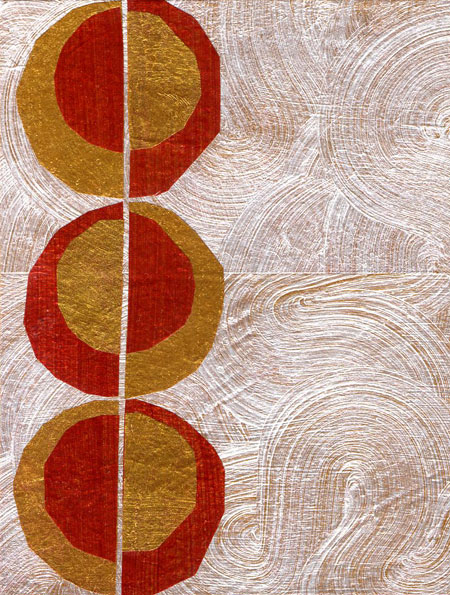
Image: Holy Saturday II © Jan Richardson

Reading from the Gospels, Holy Saturday:
Matthew 27.57-66 or John 19.38-42

The Art of Enduring
For Holy Saturday

This blessing
can wait as long
as you can.

Longer.

This blessing
began eons ago
and knows the art
of enduring.

This blessing
has passed
through ages
and generations,
witnessed the turning
of centuries,
weathered the spiraling
of history.

This blessing
is in no rush.

This blessing
will plant itself
by your door.

This blessing
will keep vigil
and chant prayers.

This blessing
will bring a friend
for company.

This blessing
will pack a lunch
and a thermos
of coffee.

This blessing
will bide
its sweet time

until it hears
the beginning
of breath,
the stirring
of limbs,
the stretching,
reaching,
rising

of what had lain
dead within you
and is ready
to return.

—Jan Richardson

2016 update: “The Art of Enduring” appears in my new book, Circle of Grace.

For a previous reflection on Holy Saturday, see Holy Saturday: A Day Between. I’m also offering daily reflections throughout Holy Week at the Sanctuary of Women blog.

[To use the image “Holy Saturday II,” please visit this page at janrichardsonimages.com. Your use of janrichardsonimages.com helps make the ministry of The Painted Prayerbook possible. Thank you!]
Good Friday: What Abides

April 19, 2011


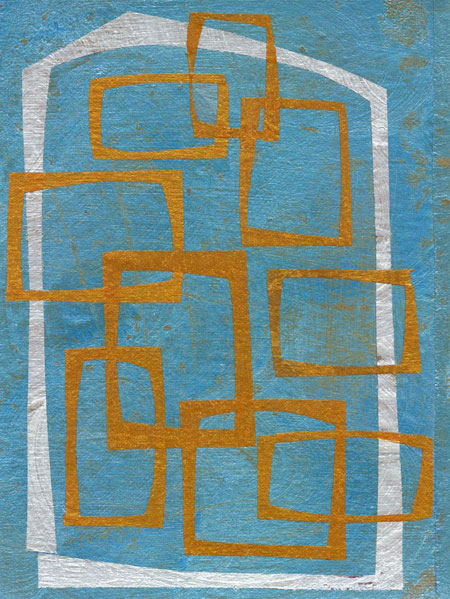
Good Friday II © Jan L. Richardson

Reading from the Gospels, Good Friday (April 22): John 18.1-19.42

Blessing for Good Friday

You will know
this blessing
by how it
does not stay still,
by the way it
refuses to rest
in one place.

You will recognize it
by how it takes
first one form,
then another:

now running down
the face of the mother
who watches the breaking
of the child
she had borne,

now in the stance
of the woman
who followed him here
and will not leave him
bereft.

Now it twists in anguish
on the mouth of the friend
whom he loved;

now it bares itself
in the wound,
the cry,
the finishing and
final breath.

This blessing
is not in any one
of these alone.

It is what
binds them
together.

It is what dwells
in the space
between them,
though it be torn
and gaping.

It is what abides
in the tear
the rending makes.

P.S. For a previous reflection on Good Friday, see Good Friday: In Which We Get Nailed. And blogging daily throughout Holy Week at the Sanctuary of Women blog.

[To use the “Good Friday II” image, please visit this page at janrichardsonimages.com. Your use of janrichardsonimages.com helps make the ministry of The Painted Prayerbook possible. Thank you!]
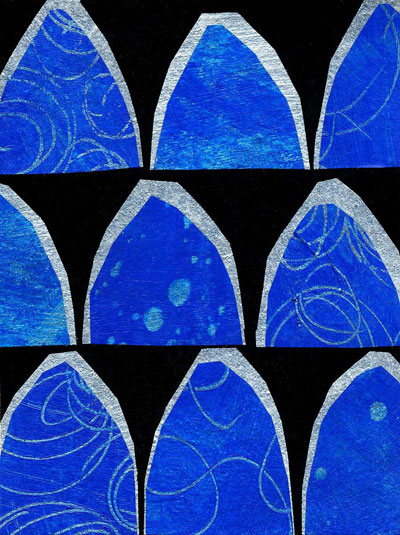
Holy Thursday: Take a Blessing

April 18, 2011

Image: Holy Thursday II © Jan Richardson

Reading from the Gospels, Holy/Maundy Thursday:
John 13.1-17, 31b-35

The story is told of St. Brigid, the beloved Celtic saint and leader of the early church in Ireland, that a man with leprosy came to her one day. Knowing the saint’s reputation for hospitality, the man says to Brigid, “For God’s sake, Brigid, give me a cow.” Brigid’s response suggests this man may have made a habit of such requests; though normally lavish with her generosity, Brigid tells the man to leave her alone. He persists.

Brigid asks the man how it might be if they prayed that God would heal him of his leprosy. “No,” the man tells her, “I get more this way than if I were clean.” Brigid, in her turn, persists with him, urging him to “take a blessing and be cleansed.” The man acknowledges he is indeed in much pain; he gives in and accepts the blessing and the gift of healing it brings. So great is his gratitude to Brigid—and to God—that he vows his devotion to Brigid and pledges to be her servant and woodman.

Sometimes it can be daunting to receive a blessing. As this man with leprosy recognized, a blessing requires something of us. It does not leave us unchanged. A blessing offers us a glimpse of the wholeness that God desires for us and for the world, and it beckons us to move in the direction of this wholeness. It calls us to let go of what hinders us, to cease clinging to the habits and ways of being that may have become comfortable but that keep us less than whole.

This can take some work.

Part of the challenge involved with a blessing is that receiving it actually places us for a time in the position of doing no work—of simply allowing it to come. For those who are accustomed to constantly doing and giving and serving, being asked to stop and receive can cause great discomfort. To receive a blessing, we have to give up some of our control. We cannot direct how the blessing will come, and we cannot define where the blessing will take us. We have to let it do its own work in us, beyond our ability to chart its course.

On the night that Jesus takes up his basin and towel and begins to wash the feet of his disciples, Simon Peter learns how difficult and how wondrous it can be to “take a blessing,” as Brigid put it. He resists, then allows himself to receive, the grace of it dripping from his toes.

This blessing will indeed require something of Simon Peter and of his fellow disciples. When Jesus has finished the washing, put on his robe, put away his towel and bowl, he turns to them and says, “Do you know what I have done to you?…If I, your Lord and Teacher, have washed your feet, you also ought to wash one another’s feet. For I have set you an example, that you also should do as I have done to you. Very truly, I tell you,” Jesus continues, “servants are not greater than their master, nor are messengers greater than the one who sent them. If you know these things, you are blessed if you do them.”

You are blessed if you do them.

A blessing is not finished until we let it do its work within us and then pass it along, an offering grounded in the love that Jesus goes on to speak of this night. Yet we cannot do this—as the disciples could not do this—until we first allow ourselves to simply receive the blessing as it is offered: as gift, as promise, as sign of a world made whole.

During this Holy Week, I am offering a series of blessings for Holy Thursday, Good Friday, Holy Saturday, and Easter Sunday. As we move through these days, may these blessings come as gift, as grace. In this week, may we take a blessing, and become one in turn.

Blessing You Cannot Turn Back
For Holy Thursday

As if you could
stop this blessing
from washing
over you.

As if you could
turn it back,
could return it
from your body
to the bowl,
from the bowl
to the pitcher,
from the pitcher
to the hand
that set this blessing
on its way.

As if you could
change the course
by which this blessing
flows.

As if you could
control how it
pours over you—
unbidden,
unsought,
unasked,

yet startling
in the way
it matches the need
you did not know
you had.

As if you could
become undrenched.

As if you could
resist gathering it up
in your two hands
and letting your body
follow the arc
this blessing makes.

—Jan Richardson

2016 update: “Blessing You Cannot Turn Back” appears in my new book Circle of Grace: A Book of Blessings for the Seasons.

P.S. For an earlier reflection for Holy Thursday, visit Holy Thursday: Feet and Food. I am also offering daily reflections at the Sanctuary of Women blog, where this week we’re traveling in the company of the women of Holy Week and Easter.

[To use the “Holy Thursday II” image, please visit this page at janrichardsonimages.com. Your use of janrichardsonimages.com helps make the ministry of The Painted Prayerbook possible. Thank you!]