Archive for the ‘blessings’ Category

Epiphany 3: Blessing the Nets

January 19, 2012


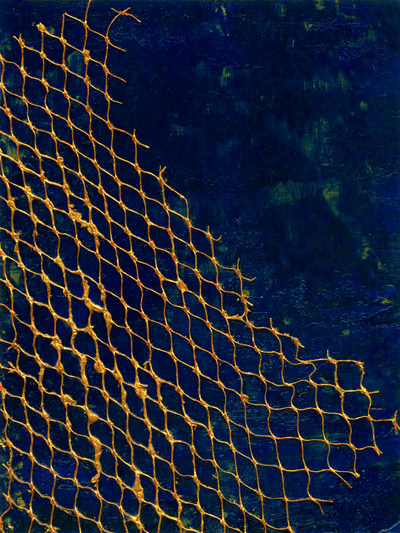
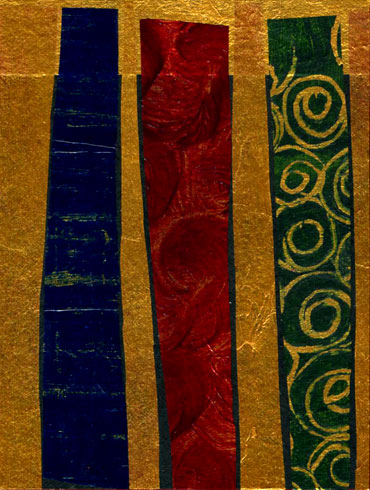
Casting © Jan L. Richardson

Readings for Epiphany 3: Jonah 3.1-5, 10; Psalm 62.5-12; 1 Corinthians 7.29-31; Mark 1.14-20

I marvel at how quickly they leave their nets, these fisherfolk who meet Jesus as they labor by the Sea of Galilee. What do Simon and Andrew hear in Jesus’ voice as he calls; what do James and John see as Christ beckons them to cast aside all they have known?

Perhaps, listening to Jesus, they remember the story of Jonah. Perhaps they think of the first time God called that reluctant prophet, and what happens when we run in the opposite direction of God’s call; how we are likely to wind up in a place that is dark and dank and lonely. A place that presses clarity upon us and inspires us to respond differently—as Jonah does—when the invitation comes again.

Get up, go
God says to Jonah.
So Jonah set out
and went.

Perhaps, encountering this man who immediately compels them, Simon and Andrew and James and John already know in their bones what Paul will later write about in his first letter to the Corinthians: how following Christ will mean letting go of what they have relied upon, will mean living without what they have become attached to.

And those who buy
as though they had no possessions,
Paul says to the church at Corinth;
and those who deal with the world
as though they had no dealings with it.

In the days, weeks, years to come, these four—and the eight soon to join them—will live into that initial burst of letting go. They will learn, and learn again, what it takes to follow Christ: how they will have to continually practice the art of leaving. And in their leaving, in their letting go, they will find their sustenance and their true home.

God alone is my rock and my salvation,
my fortress; I shall not be shaken
sings the psalmist to the Holy One.
On God rests my deliverance and my honor;
my mighty rock, my refuge is in God.

Follow me
Jesus says to Simon—
whom he will name Peter,
the Rock,
infused with God’s own being.

Follow me
he says to Andrew,
to James and to John.

Follow me
Jesus says to us.

What will we say in return?

Blessing the Nets

You could cast it
in your sleep,
its familiar arc
embedded in your
muscle memory
after months
years
a lifetime
of gathering in
what you thought
would sustain you
forever.

You would not
have imagined
it would be so easy
to cast aside,
would never have believed
the immediacy
with which your hands
could release their
familiar grip,
could let it go,
could let it simply continue
its arcing path
away from you.

But when the call came
you did not hesitate,
did not pause,
did not delay
to follow,

as if your body
had suddenly remembered
the final curve
of the arc,

as if the release
begun in your hands
now passed through you
entirely
and you let go
of everything

to cast yourself
with abandon
upon the waiting
world.

P.S. For a previous reflection on Mark 1.14-20, click the image or title below:

Epiphany 3: Hooked

For a reflection on Matthew’s account of this story, see:

Epiphany 3: Catch of the Day

[To use the “Casting” image, please visit this page at janrichardsonimages.com. Your use of janrichardsonimages.com helps make the ministry of The Painted Prayerbook possible. Thank you!]

Epiphany 2: How Did You Come to Know Me?

January 10, 2012


How Did You Come to Know Me? © Jan L. Richardson

Readings for Epiphany 2: 1 Samuel 3:1-10, (11-20); Psalm 139:1-6, 13-18; 1 Corinthians 6:12-20; John 1.43-51

“Go, lie down,” Eli tells the young Samuel; “and if he calls you, you shall say, ‘Speak, Lord, for your servant is listening.'”

“For it was you who formed my inward parts,” prays the psalmist; “you knit me together in my mother’s womb.”

“Do you not know that your body is a temple of the Holy Spirit within you…and that you are not on your own?” Paul writes to the Corinthians.

“How did you come to know me?” Nathanael asks of Jesus.

With each passage, the lectionary this week presents us with a God who calls to us, seeks us out, draws close to us, inhabits us. Again and again the word know appears, its repetition pressing upon us how serious God is about wanting to know us, and us to know God.

This God who calls to us, who fashions us within the womb, who inhabits our own bodies, who recognizes us in the midst of our daily lives: for those of us who need some breathing room in our lives, this God can fairly overwhelm. Do we want to be this sought, this known from the inside out?

Yet the God we see in these passages is not an intruder invading our lives by stealth or by force. Nor—though too many have absorbed such an image—is God’s persistent presence with us a form of surveillance designed to keep track of everything we do wrong. Somehow, this God who pervades all of creation, down to our very cells, manages to offer a spacious hospitality that calls to us but does not confine us; that continually invites but will not force us; that simply asks us to see and hear and know the One who is ever in our midst and in our own selves.

This week, this day, how are you listening? Where are you looking? What holy space are you making for God in yourself? How are you opening yourself to the God who wants to know and be known by you?

Blessing for Knowing

To receive this blessing,
it may feel like
you are peeling back
every layer of flesh,
exposing every nerve,
baring each bone
that has kept you upright.

It may seem
every word is written
on the back of
something that your life
depends upon,
that to read this blessing
would mean tearing away
what has helped you
remain intact.

Be at peace.
It will not be
as painful as that,
though I cannot say
it will be easy
to accept this blessing,
written as it is
upon your true frame,
inscribed on the skin
you were born
to live in.

The habits that keep you
from yourself,
the misconceptions
others have of you,
the unquestioned limits
you have allowed,
the smallness you have
squeezed into:

these are not
who you are.

This blessing simply wants
all this to fall away.

This blessing—
and it is stubborn on this point,
I assure you—
desires you to know yourself
as it knows you,
to let go of every layer
that is not you,
to release each thing
that you hide behind,
to open your eyes
to see what it sees:

how this blessing
has blazed in you
since before you were born;
how it has sustained you
when you could not see it;
how it haunts you,
prickling beneath your skin
to let it shine forth
in full and unstinting
measure;
how it begins
and ends
with your true name.

– Jan Richardson

P.S. For a previous reflection on John 1.43-51, click the image or title below:

Of Fig Trees and Angels

[To use the “How Did You Come to Know Me?” image, please visit this page at janrichardsonimages.com. Your use of janrichardsonimages.com helps make the ministry of The Painted Prayerbook possible. Thank you!]

HOLIDAY DISCOUNT EXTENDED! The special Christmas rate for annual subscriptions to Jan Richardson Images has been extended through Sunday, January 15. Visit subscribe for details.

Epiphany: Blessing for Those Who Have Far to Travel

December 31, 2011


Epiphany © Jan L. Richardson

Reading from the Gospels, Epiphany, Years ABC: Matthew 2.1-12

Merry Christmas to you, still! Because Advent is always such a wonderfully intense time for me, with offering The Advent Door and being engaged in other holiday happenings, I usually arrive at Christmas Day quite spent and ready for a long winter’s nap. I am grateful that instead of being over on December 25, when I’m finally able to take a breath, Christmas is a season—a short one, to be sure, with only twelve days, but a season nonetheless, with its own rhythm and invitations.

This year, the days of Christmas have been for me a time of resting, connecting with family and friends, long walks in the beautiful Florida sunshine, and doing some dreaming about the year ahead. Though the coming months are sure to be marked by surprises, I want to enter the year with some sense of what I’d like for the path to look like, and where I’m feeling drawn to go.

The Christmas season ends with Epiphany, a feast day in which the early church celebrated Jesus’ brilliant manifestation (epiphaneia in Greek, also translated as “appearing”) not only to the Magi but also to the world through his birth, baptism, and first recorded miracle at the wedding at Cana. Eastern Christianity maintains this multifaceted celebration of Epiphany, while we in the West focus primarily on remembering and celebrating the arrival of the Magi, those mysterious and devoted Wise Men who traveled far to welcome the Christ and offer their gifts.

As we travel toward Epiphany and savor the final days of Christmas, this is a good time to ponder where we are in our journey. As we cross into the coming year, where do you find yourself on the path? Have you been traveling more by intention or by reacting to what’s come your way? What direction do you feel drawn to go in during the coming weeks and months? Is there anything you need to let go of—or to find—in order to take the next step? In the coming months, what gift do you most need to offer, that only you can give?

Blessings and traveling mercies to you as we approach Epiphany and the year to come. I look forward to walking with you.

For Those Who Have Far to Travel
An Epiphany Blessing

If you could see
the journey whole,
you might never
undertake it,
might never dare
the first step
that propels you
from the place
you have known
toward the place
you know not.

Call it
one of the mercies
of the road:
that we see it
only by stages
as it opens
before us,
as it comes into
our keeping,
step by
single step.

There is nothing
for it
but to go,
and by our going
take the vows
the pilgrim takes:

to be faithful to
the next step;
to rely on more
than the map;
to heed the signposts
of intuition and dream;
to follow the star
that only you
will recognize;

to keep an open eye
for the wonders that
attend the path;
to press on
beyond distractions,
beyond fatigue,
beyond what would
tempt you
from the way.

There are vows
that only you
will know:
the secret promises
for your particular path
and the new ones
you will need to make
when the road
is revealed
by turns
you could not
have foreseen.

Keep them, break them,
make them again;
each promise becomes
part of the path,
each choice creates
the road
that will take you
to the place
where at last
you will kneel

to offer the gift
most needed—
the gift that only you
can give—
before turning to go
home by
another way.

—Jan Richardson

2016 update: This blessing appears in my new book Circle of Grace: A Book of Blessings for the Seasons.

P.S. For previous reflections on Epiphany here at The Painted Prayerbook, click the images or titles below. Also, the special holiday discount on annual subscriptions to Jan Richardson Images (the website that makes my work available for use in worship and education) will be available through Epiphany Day (January 6). For info, visit Jan Richardson Images.

Epiphany: Where the Map Begins

Feast of the Epiphany: Blessing the House

Feast of the Epiphany: A Calendar of Kings

The Feast of the Epiphany: Magi and Mystery

[To use the “Epiphany” image, please visit this page at janrichardsonimages.com. Your use of janrichardsonimages.com helps make the ministry of The Painted Prayerbook possible. Thank you!]

You Who Bless

November 15, 2011


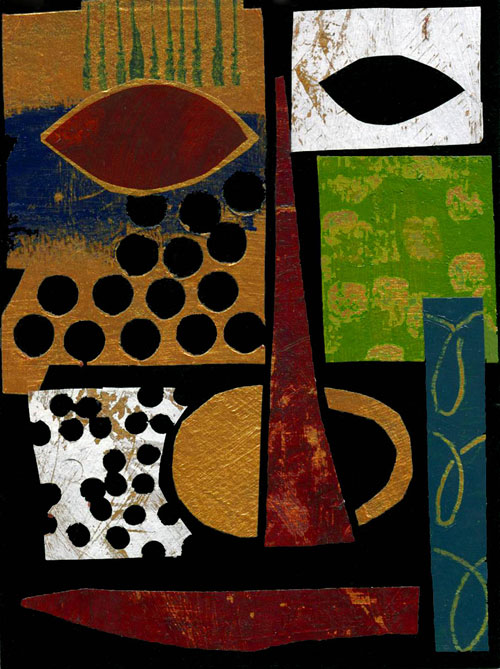
Christ Among the Scraps © Jan L. Richardson

Reading from the Gospels, Christ the King/Reign of Christ Sunday, Year A: Matthew 25.31-46

“Come, you who are blessed,” Jesus says; “for I was hungry and you gave me food, I was thirsty and you gave me something to drink, I was a stranger and you welcomed me, I was naked and you gave me clothing, I was sick and you took care of me, I was in prison and you visited me.”

You Who Bless

You
who are
yourselves
a blessing

who know
that to feed
the hungering
is to bless

and to give drink
to those who thirst
is to bless

who know
the blessing
in welcoming
the stranger

and giving clothes
to those
who have none

who know
to care
for the sick
is blessing

and blessing
to visit
the prisoner:

may the blessing
you have offered
now turn itself
toward you

to welcome
and to embrace you
at the feast
of the blessed.

P.S. For a previous reflection on this passage, visit Christ Among the Scraps. And Advent is just around the corner! I’m looking forward to spending the coming season at my blog The Advent Door and would love to have your company there.

I also want to let you know that my book Night Visions: Searching the Shadows of Advent and Christmas is back in print! Click the cover below to find out more.

[To use the “Christ Among the Scraps” image, please visit this page at janrichardsonimages.com. Your use of janrichardsonimages.com helps make the ministry of The Painted Prayerbook possible. Thank you!]

Blessing the Talents

November 7, 2011


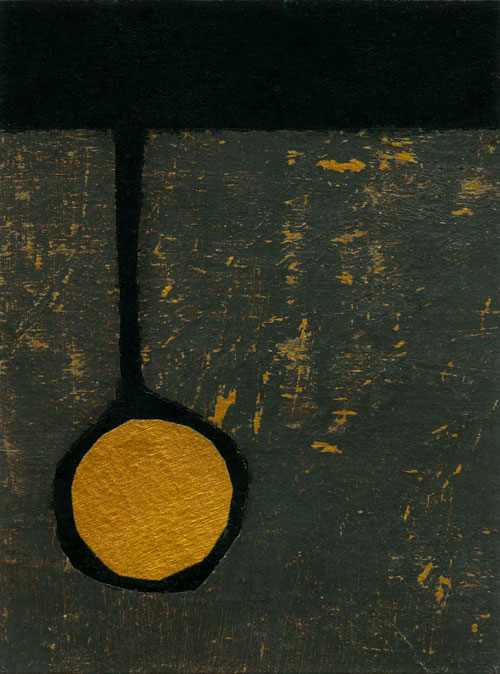
Buried © Jan L. Richardson

Reading from the Gospels, Year A, Proper 28/Ordinary 33/Pentecost +22: Matthew 25.14-30

Again and again throughout the gospels we see it in Jesus: a persistent bent toward revelation, a hankering to bring into the open what we might be content to leave hidden. Seeing our brokenness and our sins, Jesus challenges us to offer these to the light of God, that they might not fester in the dark and twist toward evil. Seeing our giftedness and the graces that God plants in each of us, Jesus impels us to uncover these, that the power of God may show forth in the world.

“You are the light of the world,” he tells his hearers in Matthew. “A city on a hill cannot be hid. No one after lighting a lamp puts it under the bushel basket, but on the lampstand, and it gives light to all in the house. In the same way,” he urges them, “let your light shine before others” (Matt. 5.14-16). Later he tells them, “Have no fear of them [those who will persecute his followers]; for nothing is covered up that will not be uncovered, and nothing secret that will not become known. What I say to you in the dark, tell in the light; and what you hear whispered, proclaim from the housetops” (Matt. 10.26-27).

A lost coin, a lost sheep, a lost son; a bleeding woman seeking a surreptitious healing whom Jesus cannot allow to remain hidden; children whom the disciples seek to dismiss; gifts once enclosed in the earth that Jesus lifts up to point toward the kingdom of God: with constant persistence, Jesus—this incarnate God who took such visible and vulnerable flesh so that we might clearly see the love that God has for us—tugs at what has been hidden or missing or buried in order to show us how the presence of God shines through it.

And so we see this quality again in the gospel reading for this Sunday, in this parable told by the One who will not be content to let us hide what God has given to us, who urges us to uncover the treasure that God has placed within us, who calls us to show forth the presence of God in the way that only we can.

How do you do this in your own life? Is there anything you allow to hinder the gift of God in you? Is there some gift that you have been willing to let lie dormant because others do not value it, or it seems prideful to you to pursue it, or because you don’t know how to use it, or for lack of time or some other reason? How might you allow God to break through these obstacles for you, so that others can see the presence of God in you in the way that only you can reveal it?

Blessing the Talents

There are blessings
meant for you
to hold onto

clutched
like a lifeline

carried
like a candle
for a dark way

tucked into a pocket
like a smooth stone
reminding you
that you do not
go alone.

This blessing
is not those.

This blessing
will find its form
only as you
give it away

only as you
release it
into the keeping
of another

only as you
let it
leave you

bearing the shape
the imprint
the grace
it will take

only for having
passed through
your two
particular
hands.

– Jan Richardson

P.S. For a previous reflection on this text, in which I confess my fondness for the shovel-wielding servant, visit Parabolic Curves.

[To use the “Buried” image, please visit this page at janrichardsonimages.com. Your use of janrichardsonimages.com helps make the ministry of The Painted Prayerbook possible. Thank you!]

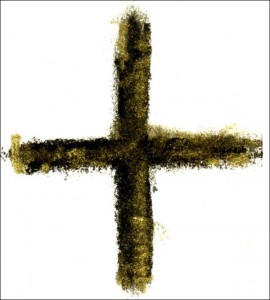
Blessing in the Shape of a Cross

August 23, 2011

Image: Blessing Cross © Jan Richardson

Reading from the Gospels, Year A, Proper 17/Ordinary 22/Pentecost +11: Matthew 16.21-28

Following so close on the heels of Jesus’ encounter with the Canaanite woman, who would not release Jesus until he healed her daughter, this week’s gospel reading confronts Peter—and us—with the demand to let go: not of Jesus, but of any impulse we have (and, oh, my goodness, I have them) to lock him into our own plans. Pondering this passage as the story of the Canaanite woman lingers with me, I find myself wondering: How do we discern what we should be fierce about? How do we choose what we will hold on to, and what we need to release?

“If any want to become my followers,” Jesus says in this passage, “let them deny themselves and take up their cross and follow me.” Some crosses are made of what we take on; some crosses are made of what we let go. Always, the cross that Christ invites us to is the place where our desires and Christ’s desires find their place of meeting, and all that distracts us from Christ falls away.

Where is this place in your own life? How do you discern what you will hold on to, what you will claim and fight for, and what you will release? How does this choosing, this discerning, draw you closer to Christ and to what God might imagine for your life?

Blessing in the Shape of a Cross

Press this blessing
into your palms—
right, left—
and you will see
how it leaves its mark,

how it imprints itself
into your skin,
how the lines of it
meet
and cross

as if signaling you
to the treasure
that has been in
your grasp
all along.

Except that these riches
you will count
not by what you hold
but by what you release,
by what you lose,
by what falls from
your open hands.

—Jan Richardson

P.S. For an earlier reflection on this passage, click the image or title below:
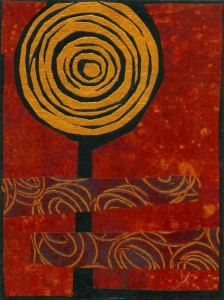

To Have without Holding

Related posts:


Lent 2: In Which We Set Our Mind Somewhere


The Shape He Makes

[To use the image “Blessing Cross,” please visit this page at janrichardsonimages.com. Your use of janrichardsonimages.com helps make the ministry of The Painted Prayerbook possible. Thank you!]

Blessing on the Waves

July 31, 2011


Night Passage © Jan L. Richardson

Reading from the Gospels, Year A, Proper 14/Ordinary 19/Pentecost +8 (August 7): Matthew 14.22-33

I am flying westward as I write this, arcing across the country toward Washington State. Gary, who is already there getting started on a string of concerts, will scoop me up from the Seattle-Tacoma airport tonight, and tomorrow we’ll arrive at the Grünewald Guild, eager to dive into the Liturgical Arts Week that lies ahead.

Sitting (and sitting and sitting) in this metal tube as it hurtles across the United States, I’m thinking about Peter in his own vessel, and where we place our faith, and where faith comes from in the first place. I find myself recalling Marge Piercy’s poem “For Strong Women,” where she writes about how strength is not inherent in us but rather something that we enact, as wind enacts a sail.

We sometimes think of faith primarily as an act of will, a disposition that we can summon up by our own efforts if we work hard enough at it—which can prompt guilt in those times when we’re having difficulty calling it forth. But perhaps faith acts more like the strength that Piercy writes about; that it doesn’t reside solely in us, waiting for us to muster it, but that it comes as we open ourselves to it, unfurling ourselves to be moved by it, to be propelled, to leave the familiar places we have known and to let go of our accustomed ways of moving through the world.

I’m a big fan of discernment, of taking time for prayerful reflection and conversation when an invitation presents itself or an opportunity stirs. One of the gifts of discernment is that it enables us to live with intention and mindfulness rather than merely reacting to everything and living by impulse. Yet it’s also true that I’m capable of discerning something nearly to death as I ponder my way through possibilities. So Peter comes as an intriguing messenger and companion this week, inviting me to wonder if there’s a leap—even a little one—that Christ might be calling me to make. Peter nudges me to remember that faith isn’t something that we have to find on our own; that Christ enacts it in us as we open ourselves to the voice that calls to us across the waves, and step out toward it.

How about you? What is compelling your attention and intentions these days? Amid all that tugs at you or tosses you about, is there a deeper invitation, a more compelling call, an opportunity to open yourself, a leap that would draw you closer to the Christ who is making his way toward you?

Blessing on the Waves

I cannot promise
that this blessing
will keep you afloat
as if by lashing these words
to your arms,
your ankles,
you could stop yourself
from going under.

The most this blessing
can do, perhaps,
is to stand beside you
in the boat,
place its hand
in the small of your back,
and push.

Be assured that
though this blessing
is eager to set you
in motion,
it will not
leave you forsaken,
will not compel you
to leap
where it has not already
stepped out.

These words
will go with you
across the waves.
These words
will accompany you
across the waters.

And if you
find yourself
flailing,
this blessing
will breathe itself
into you,
will breathe itself
through you

until you are
borne up
by the hands
that reach toward you,
the voice that
calls your name.

P.S. For a previous reflection on this text, visit Night Passage. And if you’re celebrating the Feast of the Transfiguration on August 6, here are a couple of reflections I wrote for Transfiguration Sunday (which some denominations, including us United Methodists, celebrate on the last Sunday after the Epiphany).

Transfiguration: Back to the Drawing Board

Transfiguration Sunday: Show and (Don’t) Tell

[To use the “Night Passage” image, please visit this page at janrichardsonimages.com. Your use of janrichardsonimages.com helps make the ministry of The Painted Prayerbook possible. Thank you!]

Pentecost: One Searing Word

June 5, 2011

Image: PentecostImage: Pentecost
© Jan Richardson

Reading from the Book of Acts, Day of Pentecost: Acts 2.1-21

Nearly thirteen weeks have passed since the day we stood on the threshold of Lent, our foreheads streaked with ashes. We have traveled through a wilderness season of reflection and preparation as we journeyed toward the cross. We have entered into a season of resurrection in these weeks since the wonders of Easter Day. We have watched Jesus take his leave, blessing those whom he has called to continue his work and become his body in this world.

Now, as the Day of Pentecost approaches, we find ourselves at the other end of the arc that began on the weeks-ago Ash Wednesday. “Know that you are dust, and to dust you shall return,” many of us heard on that day. A crucial reminder, to be sure: to know what we are made of, where we are from, to where we shall return. Yet all these weeks later, at the end of wilderness and death and resurrection, the day of Pentecost comes to show us that there is still more to know, and a purpose for knowing that lies beyond our individual lives.

Throughout this Easter season, the gospel readings have placed a persistent emphasis on knowing. To those who heard the Ash Wednesday admonition to know that you are dust, Jesus’ intentionality in telling his followers what he needs them to know comes as a striking complement to the words that ushered us into Lent. Although knowing our earthy origins is crucial in our life with Christ, the past weeks have proven there are other things he needs for us to know as well about who he is, what he has done, and what he is calling us to do.

Yet simply knowing, of course, is not enough. On the day of Pentecost, as the Spirit descends upon the gathered assembly, we see with dramatic clarity how the knowing that Christ gives us is not for ourselves alone: it is for the life of the community and the life of the world. As on Pentecost, when those who spoke in the Spirit did not recognize what they were saying but could be understood by others in the crowd, our knowing and understanding are always incomplete without the presence of community.

The incompleteness of our knowing comes as its own reminder of what dusty disciples we are. Made of common earth, fashioned of ordinary matter, we are called to a humus-born humility that cautions us against acting like we have all the answers and know all of God’s designs for creation. Yet the story of Pentecost bids us to remember what the Spirit can do with dust. Pentecost reminds us that the Spirit draws us together and gives us to one another so that we may hear and see and know with greater clarity. This day challenges us to open ourselves beyond the limits of our individual lives to the Spirit who sets us ablaze for the healing of the world.

In this Pentecost week, are you seeking the presence of others who will deepen your understanding? Where do you go to hear and see what you cannot hear and see on your own? When knowledge and wisdom come to you, how do you share them beyond yourself to help others flourish? Where are you turning your ears, your eyes, your heart, your mind to perceive the presence of the Spirit and the path to which it is drawing you?

Blessing That Undoes Us

On the day
you are wearing
your certainty
like a cloak
and your sureness
goes before you
like a shield
or like a sword,

may the sound
of God’s name
spill from your lips
as you have never
heard it before.

May your knowing
be undone.
May mystery
confound your
understanding.

May the Divine
rain down
in strange syllables
yet with
an ancient familiarity,
a knowing borne
in the blood,
the ear,
the tongue,
bringing the clarity
that comes
not in stone
or in steel
but in fire,
in flame.

May there come
one searing word—
enough to bare you
to the bone,
enough to set
your heart ablaze,
enough to make you
whole again.

—Jan Richardson

2016 update: “Blessing That Undoes Us” appears in my new book Circle of Grace: A Book of Blessings for the Seasons.


P.S.
For a previous Pentecost reflection, click the image or title below:

Pentecost: Fire and Breath

_____________________


Using Jan’s artwork
To use the image Pentecost, please visit this page at janrichardsonimages.com.

Using Jan’s words
For worship services and related settings, you are welcome to use this blessing without requesting permission. All that’s needed is to acknowledge the source. Please include this info in a credit line: “© Jan Richardson from Circle of Grace: A Book of Blessings for the Seasons. janrichardson.com.” For other uses, visit Copyright Permissions.

Easter 6: Love and Revelation

May 22, 2011

Image: Love and RevelationImage: Love and Revelation
© Jan Richardson

Reading from the Gospels, Easter 6, Year A: John 14:15-21

On a day more than six hundred years ago, in the English town of Norwich, a woman walked into a cell attached to the parish church. She intended to stay there for the rest of her life. The original name of the woman is unknown, and the cell where she would live as an anchoress—a woman devoted to a life of contemplation and solitude—no longer remains. It is likely that she took her name from the church in whose cell she lived: the Church of St. Julian.

Nearly everything we know about Julian of Norwich comes from a manuscript that she composed in her cell. In it she tells of how, at the age of thirty and a half, she became desperately ill. Just as she thought herself at the point of death, her pain suddenly departed. As Julian continued to pray, she was visited by a series of sixteen visions or revelations—what she called “showings”—in which she came to experience and know God’s love for her.

Julian recorded her visions in a short text, and then, after nearly two decades, she expanded on them in a longer text that incorporates the insights that she gained through years of reflecting on and praying with the visions. Together Julian’s texts became the book known as Showings, or Revelations of Divine Love.

In the final chapter of Showings, as Julian comes to the end of the remarkable work in which she has revealed to us a God whose endless mystery encompasses a deep desire to know and love us in all our human particularity, she writes,

And from the time that it was revealed, I desired to know in what was our Lord’s meaning. And fifteen years after and more, I was answered in spiritual understanding, and it was said: What, do you wish to know your Lord’s meaning in this thing? Know it well, love was his meaning. Who reveals it to you? Love. What did he reveal to you? Love. Why does he reveal it to you? For love. Remain in this, and you will know more of the same. But you will never know different, without end.

From her anchorhold, with her stunning simplicity, Julian echoes and embodies what her beloved Jesus says to his friends in this week’s gospel passage. At the table where he gathers with his disciples on the night before his death, he persists in telling them what he wants them—needs them—to know about who he is, what he has done, what he will yet do, what he is calling them to do after he is physically gone. In this passage, Jesus becomes very clear about why he wants them to know these things, and what underlies and encompasses and is the reason for their knowing.

“They who have my commandments and keep them,” Jesus says, “are those who love me; and those who love me will be loved by my Father, and I will love them and reveal myself to them.”

The knowledge that Jesus shares with his followers is not for the purpose of giving them worldly power. It is not designed to make them feel important, or to initiate them into secrets meant for a select few, or to make their lives easier. He does not intend for them to use the knowledge as a weapon to threaten or diminish others. What Jesus reveals to his friends—his friends at the table that night, his friend in the cell at the Church of St. Julian, his friends throughout the ages—he does for one reason:

For love.

Jesus speaks of love and revelation in the same breath. He wants his friends to understand that loving and knowing are of a piece, that loving draws us deeper into knowing and being known by the one whom we love. Here on the threshold of his death, Jesus cannot go until he assures them that he will not leave them bereft but will, in fact, continue to love and help them. He cannot leave until he tells them that by their loving, they will remain in relationship with him; through their shared love, he will yet reveal himself to them and be known by them.

What knowledge does your loving lead you to? As you stretch yourself into loving others, what becomes revealed to you—of them, of yourself, of God? How has love challenged or changed what you know? How are you opening yourself to its presence in your life?

Blessing That Knows Your Name

Chances are
there will come a day
when you will forget
every last word
of this blessing.

It does not matter.

Let this blessing
slip through
your fingers.
Let it roll from
the smooth plane
of your palm.
Let each line
disappear
and every syllable
fall away.
Let this blessing
return
to where all
blessings begin.

Let it leave you
until all that remains
is the place where
it pierced you—
whether like fire
or like breath
you could not say,
only that you heard
your name as it entered,
then heard its own
as it blew away.

—Jan Richardson

P.S. For a previous reflection on this passage, click the image or title below:

Easter 6: Side Orders

_____________________


Using Jan’s artwork
To use the image Love and Revelation, please visit this page at janrichardsonimages.com.

Using Jan’s words
For worship services and related settings, you are welcome to use Jan’s blessings or other words from this blog without requesting permission. All that’s needed is to acknowledge the source. Please include this info in a credit line: “© Jan Richardson from The Painted Prayerbook. paintedprayerbook.com.” For other uses, visit Copyright Permissions.

Easter 5: Many Rooms

May 15, 2011

Many RoomsImage: Many Rooms
© Jan Richardson

Reading from the Gospels, Easter 5, Year A: John 14.1-14

Many years ago, a recurring dream began to take hold of my nighttime brain. The details shift and change each time it visits, but the essence of the dream remains the same: I am wandering through shops—not a mall, but a series of connected stores. The stores are the kind that I love to browse through, the sort that I find in communities that value artistry. As I wander among the stores that spill into one another, I savor what I see: richly hued artwork, finely crafted jewelry, beautiful pottery that calls out for me to touch it.

In the dream, no matter the changing details, I always find a bookstore. Often it’s a used bookstore, crammed with volumes and with more shelves around each turn. Once the bookstore contained a case of gorgeous hand-bound books, displayed like artwork. I marveled at the colors, textures, and designs, knowing as I touched the books, I want to do this, to create books like these.

Along with the persistent presence of a bookstore, one other detail of the dream never changes: it always begins with my walking down a familiar street. I turn a corner and suddenly find myself among the shops, thinking, Of course—that’s where they were! These treasures were in my neighborhood the whole time, waiting for me to find them.

And you know the way to the place where I am going, Jesus says to his disciples on the night before his death. Here at the table where they share their final meal before his crucifixion, there are many things Jesus wants to tell them. His hunger for them to know—which we see again and again in the gospel texts in this Easter season—becomes particularly acute as Jesus gathers with them just hours before his death. And so he will go on to tell them about the Holy Spirit whom he will send, and how this Spirit will be in them. Jesus will tell them that he is the true vine in which they will abide. He will tell them—command them—to love one another, and how the world will hate them. He will tell them that their sorrow will turn to joy. Jesus is desperate for them to know these things, and more.

But when he tells them, before all this, of the place he is preparing for them—the house with many dwelling places—Jesus tells them that they already know the way. When Thomas—ever the good questioner—asks him how they can know the way, Jesus reminds them that he himself is the way. If they know him, they know the way, and the One who sent him to prepare the way for them.

This text has me wondering if following in this way has less to do with striving and working at it, in the frenetic fashion we sometimes do, than with letting ourselves recognize what we already know; less to do with wrapping our brains around points of belief that grow so contentious than with opening our eyes to the door that has always been there in our soul, our heart, waiting for us to see it and walk through it and find the spacious dwelling place that has been there all along. To be sure, following Christ our Way takes work and effort and focus and sacrifice. Yet I find myself thinking of the poem by the Sufi poet Rumi in which he writes of how he has been living on the “lip of insanity,” as he puts it, knocking incessantly on a door. Finally the door opens, and he realizes, “I’ve been knocking from the inside!”

Here at the table, Jesus wants to make clear that although the place he describes is a someday place, a promised home that he is preparing, it is at the same time a dwelling that his followers can have a glimpse of in this world, a space that even now takes form in our midst. An abiding-place fashioned by—and fashioned of—the Christ who dwells in God, and is a dwelling place for God, and offers his own self to us as both a habitation and a way. A way that we find by opening the door that is already within us.

In this season, where are you making your home? Where are you dwelling? Is there a place in your life where you are pushing and pouring out your energy—something you are trying to wrap your brain around to understand it or to change it—when the way might lie instead in releasing, in finding the doorway that appears in letting go?

Blessing with Many Rooms

As you step inside
this blessing,
we wish to tell you
it is large enough
for you to lie down in.

Or (though it may not look it,
small as it is upon this page)
you can curl up
in this blessing
with a cup of tea
and a good book
beside the window—
here, just behind you—
that faces east.

Likewise it is true,
though you might not have
paused long enough
to notice,
that this blessing
is big enough
for a table—
quite a sizeable one
can be accommodated—
where your guests
will want to linger
far into the night.

And if they desire to stay,
you will find that
through this door—
you did not see it before?—
there are rooms in plenty
where they can
lay their heads
and stretch out with abandon
in their dreaming sleep.

One room,
many rooms—
in this blessing
it is all the same.

The point is that
there is space
enough:

enough to make
a life, a home;
enough to make
a world;

enough to make
your way toward
the One who has made
this way for you.

—Jan Richardson

2025 update: “Blessing with Many Rooms” appears in my new book How the Stars Get in Your Bones: A Book of Blessings.

P.S. For a previous reflection on this passage, click the image or title below:


Easter 5: A Place to Dwell

[To use the “Many Rooms” image, please visit this page at janrichardsonimages.com. Your use of janrichardsonimages.com helps make the ministry of The Painted Prayerbook possible. Thank you!]