Archive for the ‘Easter’ Category

Easter 3: Comfort Food

April 3, 2008


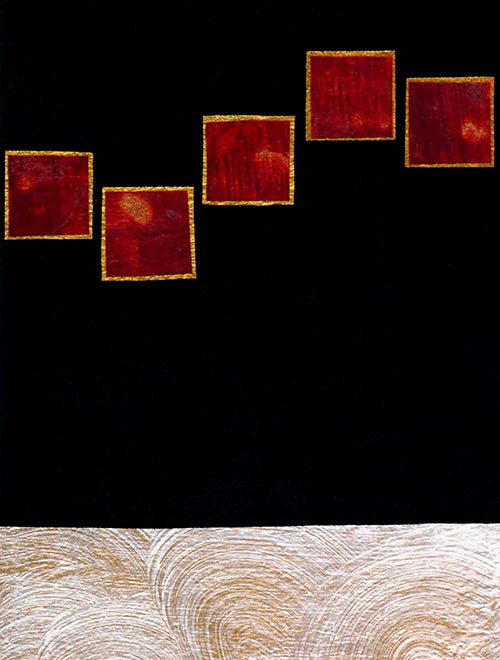
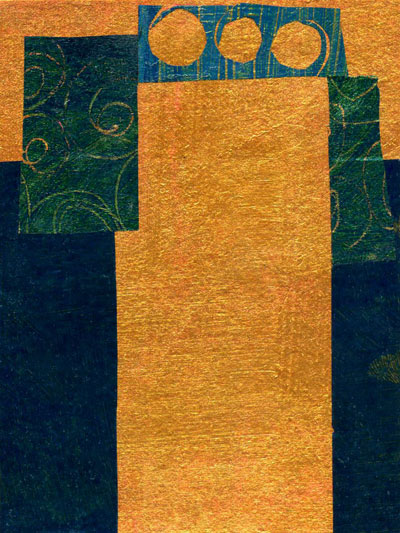
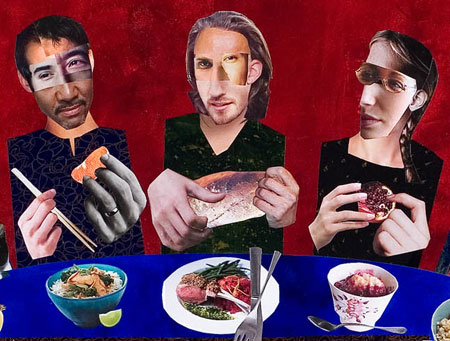
The Welcome Table (detail) © Jan L. Richardson

Reading from the Gospels, Easter 3: Luke 24.13-35

Last week I wrote my lectionary reflection as I was preparing to leave for North Carolina to be with my sweetheart and his family as their mother was dying. I arrived on Saturday evening, and we went from the airport straight to the hospital, where we joined Gary’s brothers and a sister-in-law as they waited with their mother. Shirley had slipped into unconsciousness the day before, shortly after a time of prayer with her four sons. After their prayer, Shirley had pulled aside her oxygen mask and said, “There are plenty of sheets and towels at the house.”

Shirley died later Saturday night, a few hours after Gary and I left the hospital. We had her funeral on Tuesday, and Gary, his son, and I drove back to Florida yesterday. I had just enough time to unpack, do laundry, repack, and grab a few hours of sleep before heading to the airport this morning to fly to Connecticut, where I’m leading a retreat this weekend.

In the midst of the events of the week, there hasn’t been time to do a collage. There has, however, been plenty of time to eat. Maybe it’s a cliché, but it’s one that holds true: Southerners do the food-after-death thing really well. The day after Shirley died, some church folks showed up at her house, where all of her family was camped out. With her sons and their families, there were nearly thirty of us, and there was plenty of sustenance on hand. We sat at Shirley’s tables and ate. We stood around her kitchen counter and ate. We went to one of her favorite lakeside restaurants and ate. I often found myself thinking of Kate Campbell’s song “Funeral Food.” (“Pass the chicken, pass the pie/We sure eat good when someone dies.”)

Amidst the shared meals, replete with the comforts they offered, I also spent some time pondering this week’s timely Gospel lection. Luke 24.13-35 offers the story that’s typically called The Walk to Emmaus, though the part that especially grabs my attention involves what happens after Jesus and his traveling companions come to the end of their walk. Luke tells us that Jesus, unrecognized by Cleopas and his companion (there’s cause to think it might have been Cleopas’ wife) as they walked together, accepts their invitation to stay the night with them. They gather at the table, the ultimate place of hospitality. In that gesture that was so familiar in his life, Jesus took bread, blessed it, and broke it. Luke tells us that it was in this moment that “their eyes were opened, and they recognized him”; in Jesus’ actions of breaking and blessing, they knew him. (“now the ears of my ears awake and/now the eyes of my eyes are opened,” e.e. cummings once wrote.)

Given the confusion around Jesus’ death and rumored resurrection, this is some serious comfort food. Yet this is more than a solacing dinner. The meal at Emmaus reveals the resurrected presence of Christ, who, as before his death, still loves to sit down with folks at a table. In a brilliant moment of illumination, his dining companions see, and understand. The knowledge he had tried to impart to them as they walked along the road now becomes flesh: what they had tried to grasp with their intellect as Jesus broke open the scriptures, they now experience in and with their bodies as Jesus breaks the bread.

Jesus had been so fond of feasting when he was alive that he earned a reputation of being “drunkard and a glutton, a friend of tax collectors and sinners.” Even after his death and resurrection, he does not seem interested in refuting his depiction as a guy who likes his groceries; in fact, he seems to relish it. The table at Emmaus is not his only post-resurrection meal. John tells a marvelous story of the risen Jesus feeding several of the disciples a seaside breakfast of fish and bread. (John 21.1-14)

It’s important to Jesus that his followers engage the mystery that happens in a meal, that they know the table as a place where we recognize that we cannot rely solely on ourselves to summon the sustenance that we need. A shared table is a sacred space where we acknowledge, in the presence of others, that we are hungry: not only for the feeding of our bodies but also of our souls.

The table at Emmaus reminds us that there is a profound connection between eating and knowing. This knowing that we experience at the table comes both as a deep comfort and also a keen challenge. As Cleopas and his companion discovered on that evening in Emmaus, the presence of Christ persists when his followers gather to eat. Particularly in times of confusion and grief, his presence at the table comes as comfort and solace indeed. The knowing that happens in the breaking of bread, however, requires something of us. This kind of knowing calls us to move beyond relying solely on our intellect and to open our eyes and our entire being to the ways in which Christ reveals himself in those with whom we eat.

In these days of resurrection, what are you hungry for? What kind of table hospitality are you giving or receiving? How is the table a place of comfort? Of challenge? Of knowing?

In this season and beyond, may we receive—and be—God’s daily bread.

[To use the “Welcome Table” image, please visit this page at janrichardsonimages.com. Your use of janrichardsonimages.com helps make the ministry of The Painted Prayerbook possible. Thank you!]

Easter 2: Into the Wound

March 29, 2008

Image: Into the Wound © Jan Richardson

Reading from the Gospels, Easter 2: John 20.19-31

Tonight I pulled out a card, received from a friend years ago. On the front of the card is Caravaggio’s depiction of the scene that we find in this week’s lectionary reading. As Caravaggio sees it, Christ stands to the left, chest bared, drawing Thomas’s hand into his wound as two other disciples look on. It is an intimate scene: Christ bows his head over Thomas’s hand, gazing at Thomas as he pulls him toward his wound; Thomas leans in, brow furrowed, the other disciples standing so close behind him they threaten to topple him straight into Jesus. Yet Thomas seems about to tumble into the wound of his own accord. He is doing more than merely looking where Christ leads him; his whole being is absorbed in wonder. The first time I saw this image, I immediately had the sense that Thomas was thinking, There’s another world in there.

The title sometimes given this remarkable painting, and this remarkable man, is “Doubting Thomas,” which grates a bit. Three weeks ago, contemplating the gospel lection for Lent 5, I was reminded that in the story of the raising of Lazarus, Thomas is the one—the only one—who steps forward and expresses his willingness to die with Jesus. In this week’s reading, Thomas once again crosses into a place where others have not ventured: into the very flesh of the risen Christ.

Caravaggio’s painting illumines a point that the gospel writers are keen to make in the post-resurrection stories of Jesus. They want to make sure we know that the risen Christ was no ghost, no ethereal spirit. He was flesh and blood. He ate. He still, as Thomas discovered, wore the wounds of crucifixion. That Christ’s flesh remained broken, even in his resurrection, serves as a powerful reminder that his intimate familiarity and solidarity with our human condition did not end with his death. Perhaps that’s what strikes me so about Caravaggio’s painting: it stuns the viewer with the awareness of how deeply Christ was, and is, joined with us. The wounds of the risen Christ are not a prison; they are a passage. Thomas’s hand in Christ’s side is not some bizarre, morbid probe: it is a union, and a reminder that in taking flesh, Christ wed himself to us.

The presence of the Christ who joins himself to us, who is intimately acquainted not only with the delights that come in being human but also in the ways it breaks us open, comes as a particular solace this week. As I write this in the middle of the night, my sweetheart is keeping vigil by his mother’s hospital bed. She is dying. Just a month ago, we—Gary and his brothers and their families—threw a surprise party to celebrate Shirley’s 80th birthday. Shortly afterward, she was diagnosed with a recurrence of leukemia, and where we expected that another series of chemo would buy her some more time, complications set in with startling speed in the past week. Shirley remained alert until Gary and his three brothers arrived to be with her, and now she is letting go.

In a dozen hours I’ll fly to North Carolina, where Shirley’s extended family has begun to gather. I’ve been doing laundry today, working on taxes, paying bills, doing dishes, preparing for a retreat I’m scheduled to lead in Connecticut next weekend—all the mundane and sometimes marvelous details of life that persist even as another life is ending. As I pack, I’ll tuck in the card that my friend gave me all those years ago. And instead of Doubting Thomas, perhaps I’ll call him Believing Thomas. Thomas Who Asked for What He Needed. Thomas Who Crossed the Boundary.

Perhaps I’ll call him Thomas of the Passage, who reached out his hand and found what Shirley is finding in these passing hours:

There’s another world in there.

[To use the image “Into the Wound,” please visit this page at janrichardsonimages.com. Your use of janrichardsonimages.com helps make the ministry of The Advent Door possible. Thank you!]

Easter Sunday: Out of the Garden

March 22, 2008

Image: Resurrection © Jan Richardson

Reading from the Gospels, Easter Day:
John 20.1-18 or Matthew 28.1-10

John’s telling of the Easter story has long had a powerful hold on my imagination. The encounter between Mary Magdalene and the risen Christ continues to coax me deeper into the mysteries of this day. I have written elsewhere about some of the things that strike me about their garden meeting, including how Mary has to decide whether she will try to cling to what she has known, or whether she will accept Jesus’ invitation to leave the garden and proclaim what she has seen this day.

What I find myself pondering this time around, however, is what happens after Mary Magdalene leaves the garden. For her willingness to let go, to step into her new life, and to proclaim what she has seen, the Magdalene becomes known (at least in some quarters) as the “apostle to the apostles.” There’s a wonderful depiction of her apostolic proclamation among the pages of an illuminated manuscript that’s among my favorites. The St. Albans Psalter belonged to a 12th-century Englishwoman named Christina of Markyate, for whom the psalter may have been originally created. Christina lived as an anchoress, a woman called to prayer and solitude. I wonder what this woman, so devoted to the Word, thought about as she pondered this image of Mary Magdalene, telling the good news of the risen Word. Scholars have pointed out that such a depiction of Mary was, in those days, quite rare.

Centuries after the fact, the Magdalene’s Easter proclamation contributed to the wonderful legend that she moved to France and became a famous preacher. (Here’s my depiction of that legend; I like to think that after this sermon, Mary went for an espresso and a chocolate croissant. France, you know?) This tale of Mary the French evangelist is one in a cycle of Magdalene legends that are short on evidence but long on power and charm. Though lacking in fact, such legends offer insights into the lasting power of Mary Magdalene to stir questions about her role in the life of Jesus and in the formation of the early church.

Whatever may have become of the Magdalene beyond Easter morning, John’s Gospel clearly tells us that it was to her that the risen Christ first revealed himself, and she was the one he called to carry the news that everything had changed.

On the threshold of this Easter morning, what is the good news that the risen Christ calls you to proclaim? Is there anything you need to release, in order to tell what you have seen?

On this day: blessings, blessings.

[To use the image “Resurrection,” please visit this page at janrichardsonimages.com. Your use of janrichardsonimages.com helps make the ministry of The Painted Prayerbook possible. Thank you!]