Archive for the ‘Gospel of John’ Category

Lent 5: Learning the Lazarus Blessing

April 3, 2011

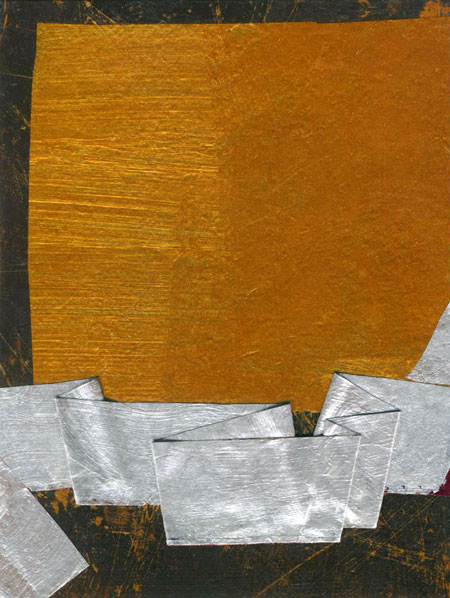
Image: Lazarus Blessing © Jan Richardson

Reading from the Gospels, Lent 5: John 11.1-45

He cried with a loud voice, “Lazarus, come out!”
—John 11.43

I wonder if it gave him pause. I wonder if Lazarus, stirring in his four-day tomb and beginning to feel the grave clothes weighing on his waking skin, had to take a moment to consider. When he heard that cry from beyond the threshold of his tomb; when he awoke to that voice, beloved but already growing strange to ears that had begun to settle into the silence; when that command came and challenged the dead calm of the grave, did Lazarus give a thought to staying put? It cannot have been easy, feeling the pulse of life tickle at the flesh already loosening from his limbs. Was he tempted to simply roll over and turn his face toward the wall so that he could continue his slide into decay?

Nobody goes into the tomb to pull Lazarus out; no one crosses into his realm to haul him to this side of living. Lazarus has to choose whether he will loose himself from the hold of the grave: its hold on him, his hold on it.

Only when Lazarus takes a deep and deciding breath, rises, returns back across the boundary between the living and the dead: only then does Jesus say to the crowd, “Unbind him, and let him go.” Not until Lazarus makes his choice does the unwinding of the shroud begin, and the grave clothes fall away.

I have written about this passage—a favorite of mine—on other occasions and invite you to visit Lent 5: Unbinding Words and Unbinding Words: Part 2. As we move deeper into the Lenten path, what might you need to let go of, to loose yourself from, so that you can move with freedom into the life to which Christ calls you?

Here is a blessing for your journey ahead. Peace to you in your waking, rising, living days.

Lazarus Blessing

The secret
of this blessing
is that it is written
on the back
of what binds you.

To read
this blessing,
you must take hold
of the end
of what
confines you,
must begin to tug
at the edge
of what wraps
you round.

It may take long
and long
for its length
to fall away,
for the words
of this blessing
to unwind
in folds
about your feet.

By then
you will no longer
need them.

By then this blessing
will have pressed itself
into your waking flesh,
will have passed
into your bones,
will have traveled
every vein

until it comes to rest
inside the chambers
of your heart
that beats to
the rhythm
of benediction

and the cadence
of release.

—Jan Richardson

Update: “Lazarus Blessing” appears in Jan’s new book Circle of Grace: A Book of Blessings for the Seasons.

Bonus round: For a song that will bless your ears and your soul, click the player below to hear the wondrous “Rise Up” by my husband, Garrison Doles. It’s from his CD House of Prayer.

[To use the “Lazarus Blessing” image, please visit this page at janrichardsonimages.com. Your use of janrichardsonimages.com helps make the ministry of The Painted Prayerbook possible. Thank you!]

Resources for the season: Looking toward Lent

And blogging daily at Sanctuary of Women during Lent…
Lent 4: A Tender and Grimy Grace

March 28, 2011


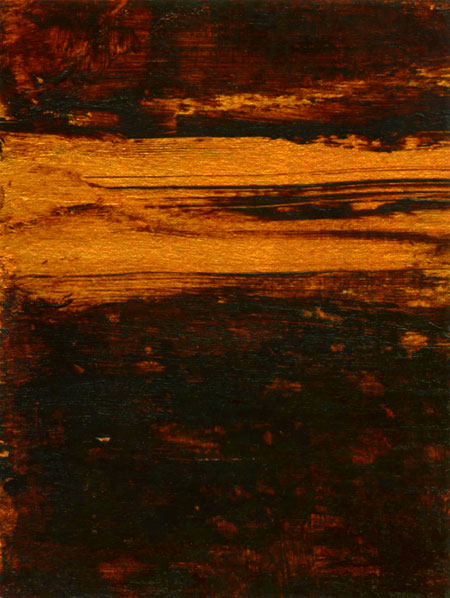
A Tender and Grimy Grace © Jan L. Richardson

Reading from the Gospels, Lent 4 (April 3): John 9.1-41

The season of Lent invites us to get up close to the things of the earth. Ash, wilderness, water, dirt, mud: these days impress upon us what an elemental fellow Jesus was. Throughout his ministry we see him touching the world around him, employing the things of earth to reveal the things of heaven.

In this week’s Gospel lection we see Jesus use earthly elements as he brings sight to a man who is blind. His acts of healing, of teaching, of preaching, of praying do not come from thin air: Jesus grounds these acts in, well, the ground. Although the Christian tradition, as it developed, would make sharp distinctions between matter and spirit, Jesus seems less inclined to do so.

I have dug into this muddy text previously and welcome you to take a look at Lent 4: Here’s Mud in Your Eye. In this Lenten week, how are you seeing? Is there anything you need to clear from your field of vision so that you can see more clearly? How grounded are you these days? Where do you perceive the presence of Christ in elemental, earthy things?

Here’s a blessing for this stretch of your Lenten path. Peace to you in this season.

Blessing of Mud

Lest we think
the blessing
is not
in the dirt.

Lest we think
the blessing
is not
in the earth
beneath our feet.

Lest we think
the blessing
is not
in the dust

like the dust
that God scooped up
at the beginning
and formed
with God’s
two hands
and breathed into
with God’s own
breath.

Lest we think
the blessing
is not
in the spit.

Lest we think
the blessing
is not
in the mud.

Lest we think
the blessing
is not
in the mire,
the grime,
the muck.

Lest we think
that God
cannot reach
deep into the things
of earth,
cannot bring forth
the blessing
that shimmers
within the sludge,
cannot anoint us
with a tender
and grimy grace.

Lest we think
that God
will not use the ground
to create us
once again,
to cleanse us
of our unseeing,
to open our eyes upon
this ordinary
and stunning world.

[To use the “A Tender and Grimy Grace” image, please visit this page at janrichardsonimages.com. Your use of janrichardsonimages.com helps make the ministry of The Painted Prayerbook possible. Thank you!]

Resources for the season: Looking toward Lent

Blogging also at Sanctuary of Women during Lent…

Lent 3: A Well-Blessed Woman

March 23, 2011


Well Blessed © Jan L. Richardson

Reading from the Gospels, Lent 3 (March 27): John 4.5-42

With this week’s Gospel passage, the lectionary continues to trace a watery way through the wilderness of Lent, calling us to be mindful of God’s provision even in the desert places. This text fairly drenches us as it draws us into the story of the Samaritan woman who meets Jesus while making her daily visit to the well—Jacob’s well, as both the narrator and the woman point out; the well established by a man who knew about meeting God in the midst of one’s journey.

The encounter between Jesus and the unnamed woman offers something of an icon of the Lenten season and the invitation it extends to us. If we give ourselves to a daily practice, if we keep taking our vessel to the source even when we feel uninspired or the well seems empty or the journey is boring, if we walk with an openness to what might be waiting for us in the repetition and rhythm of our routines, we may suddenly find ourselves swimming in the grace and love of God that goes deeper than we ever imagined.

In his Gospel, John did not record the name of this woman who became the first evangelist. The Eastern Orthodox tradition, however, filled in that gap, naming her Photini or Photina (meaning “the enlightened one” or “resplendent”) and also designating her an apostle and a saint. For more about Saint Photini, visit Suzanne Guthrie’s reflection “The Well of Love” at her lovely blog Come to the Garden.

I have lingered at the well with the Samaritan woman and Jesus on another occasion and invite you to stop by Lent 3: The Way of Water for that reflection. As you travel through this season, what are you finding in the midst of your daily rhythms and routines? Are your habits and practices drawing you closer to the sustenance you need or pulling you farther away from it? What are you thirsty for?

As you continue on your Lenten way, here is a new blessing for the next leg of your journey. Peace to you.

Blessing of the Well

If you stand
at the edge
of this blessing
and call down
into it,
you will hear
your words
return to you.

If you lean in
and listen close,
you will hear
this blessing
give the story
of your life
back to you.

Quiet your voice
quiet your judgment
quiet the way
you always tell
your story
to yourself.

Quiet all these
and you will hear
the whole of it
and the hollows of it:
the spaces
in the telling,
the gaps
where you hesitate
to go.

Sit at the rim
of this blessing.
Press your ear
to its lip,
its sides,
its curves
that were carved out
long ago
by those whose thirst
drove them deep,
those who dug
into the layers
with only their hands
and hope.

Rest yourself
beside this blessing
and you will
begin to hear
the sound of water
entering the gaps.

Still yourself
and you will feel it
rising up within you,
filling every hollow,
springing forth
anew.

[To use the “Well Blessed” image, please visit this page at janrichardsonimages.com. Your use of janrichardsonimages.com helps make the ministry of The Painted Prayerbook possible. Thank you!]

Resources for the season: Looking toward Lent

Blogging also at Sanctuary of Women during Lent…

Lent 2: Born of Water, Born of Spirit

March 17, 2011


Born of Water, Born of Spirit © Jan L. Richardson

Reading from the Gospels, Lent 2 (March 20): John 3.1-17

Very sorry to be posting late in the week. I am easily distracted by shiny objects, and one came in the form of an enticing project that consumed the first part of my week. More on that in another post. Amidst it all, I have had Nicodemus and his nighttime visit with Jesus much on my mind.

We are just barely into Lent, a season suffused with wilderness and desert. Yet with its imagery of water and of Spirit, this Sunday’s Gospel lection brings us a welcome reminder that God provides sustenance to us in every season.

This text from John’s Gospel invites us to eavesdrop on the visit that Nicodemus pays to Jesus shortly after Jesus clears out the temple. The fact that Jesus and Nicodemus have their conversation at night seems fitting not just because the darkness offers a measure of protection and secrecy for Nicodemus, away from the eyes of his fellow Pharisees, but because Jesus speaks here of a mystery. In response to the question that Nicodemus asks about being born anew, Jesus does not really provide a clear explanation. Yet in his words about water and Spirit, about birthing and love, Jesus offers something better than an explanation: he extends to Nicodemus, and to us, an invitation to a relationship and to a journey of transformation.

I have contemplated this nighttime passage a couple of times previously, at Lent 2: In Which We Get Goosed and Lent 4: The Serpent in the Text, and invite you to visit those reflections. I don’t have many new words to say about this text, but I did get into the studio this week to create a collage and was glad for the ways the text drew me in some new directions into the story and into my art.

I want also to wish you a blessed Saint Patrick’s Day! I have written previously about this beloved saint at Feast of Saint Patrick and invite you to stop by and especially to click on the audio player near the end of that reflection; “Patrick on the Water” is a marvelous song that my husband, Garrison Doles, wrote for a Wellspring service that we did in celebration of St. Patrick.

Speaking of Garrison, his most recent CD also includes a song inspired by this week’s Gospel. Click the player below to hear “O Nicodemus” from his CD House of Prayer:

This week offers many reminders of God’s provision and love. And so, by water and Spirit born and blessed, may you be a living sign of that love, and a blessing to those whose path you cross.

[To use the “Born of Water, Born of Spirit” image, please visit this page at janrichardsonimages.com. Your use of janrichardsonimages.com helps make the ministry of The Painted Prayerbook possible. Thank you!]

Resources for the season: Looking toward Lent

And blogging daily at Sanctuary of Women during Lent…
Epiphany 2: What Are You Looking For?

January 15, 2011


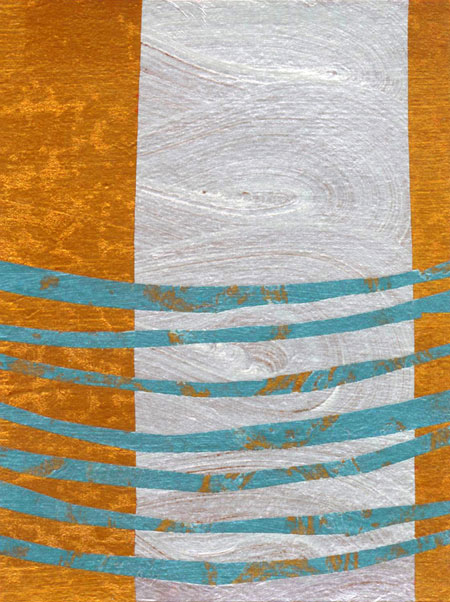
Who Gave You Your Eyes? © Jan L. Richardson

Reading from the Gospels, Epiphany 2, Year A: John 1.29-42

Who gave you your eyes? asks J. Ruth Gendler in her book Notes on the Need for Beauty. “Inside this question,” she goes on to write, “are several other questions. Who taught you to see? Who taught you what to see? What not to see? What are you paying attention to? What is beautiful to you?”

I’ve been spending time seeing, lately. After last year’s extraordinary outpouring of energy, I have devoted some space, in the opening days of this new year, to filling my creative well. Resting and restoring. Absorbing. Looking. Giving my attention to what feeds my eyes, grabs my imagination, renews my vision.

This involves books, of course. One of the books I’ve been keeping company with is Leslie Geddes-Brown’s marvelous book about Angie Lewin, an English printmaker whose work first crossed my path in a Seattle bookstore several years ago. I left the shop with a fistful of her cards, just because they made my soul and my eyeballs happy. The pages of Angie Lewin: Plants and Places, just recently published (and a post-Christmas treat to myself), brim with Lewin’s remarkable wood engravings, linocuts, lithographs, and screenprints, along with her working sketches as well as photographs of some of the places that inspire her art. The book, in fact, is thematically divided into sections that take their names from these places: woodland and hedgerow, river and loch, meadow and garden.

In images and in Lewin’s own words, the book reveals some of the sources of her seeing. She tells of landscapes she has sought or stumbled upon, along with artists whose work has helped her develop her distinctive vision. The book closes with a wonderful, offbeat bibliography (with photos) of books that are among Lewin’s favorites; she comments, “Many of the artists who inspire me have also illustrated books and designed textiles and ceramics, so this list is an eclectic mix of 1940s natural history books and obscure titles collected for the artwork regardless of their subject.”

The book, which came into my hands at about the same time as Ruth Gendler’s book, reads something like an extended meditation on the question that Gendler poses: Who gave you your eyes? Together these two books have prompted me to pay closer attention to how I see, what I see, where I look, what inspires me, how my seeing might need to stretch in new directions.

And into the midst of this strolls Jesus in this Sunday’s gospel lection, where we meet two of John the Baptist’s disciples who, after hearing John speak of Jesus as the lamb of God, begin to follow after Jesus. “What are you looking for?” Jesus asks them. They answer his question with a question: “Rabbi, where are you staying?” Jesus responds to them, “Come and see.”

Come and see. In all of the gospels, this is one of the most profound and challenging invitations Jesus will extend. Jesus is not beckoning them to a superficial seeing; what he offers them will demand more than a glance or a cursory look. The Greek word translated here as see comes from horao, which can be translated as perceive, understand, recognize, experience. Jesus is calling these disciples to the kind of seeing that opens a door, a seeing that draws us into a journey that will change us in ways we cannot know or imagine at the outset.

During Advent I wrote about getting stuck in my studio (“The Luminous Night”), and how getting stuck always seems to mean that a shift is brewing in my artwork. I’m in the early days yet of that shift, not clear what it means, but am feeling more excited than panicked about it. I know the shift is an invitation to a deeper seeing, a call both to extend my range of vision outward—to look beyond my usual lines of sight—as well as inward, to tunnel into layers of soul and guts and heart and see what—and who—is there. Lewin and Gendler’s books are good companions in these days; they not only feed my eyes and imagination but have also helped propel me into the studio, where I’ve begun to experiment with new colors and follow some different lines. Who knows where it will lead? The mystery and the risk are the price, and the gift, of learning to see—of being given our eyes, again and again and again.

What are you looking for? Jesus asks. Like that duo of disciples, I want to know where he is staying, where he is dwelling; I want to find where Christ makes his home. Come and see, he says. And in my studio, in my home, in my marriage, in my friendships, he keeps showing up; in the communities I’m part of, in the things I wrestle with, in the strangers who cross my path, in the questions and dreams and doorways that open onto places I could never have predicted, Christ lies in wait. Inviting me, beckoning me, challenging me to open my eyes wide, and wider still.

What are you looking for in these days?

Blessing

May God,
who comes to us
in the things of this world,
bless your eyes
and be in your seeing.

May Christ,
who looks upon you
with deepest love,
bless your eyes
and widen your gaze.

May the Spirit,
who perceives what is
and what may yet be,
bless your eyes
and sharpen your vision.

May the Sacred Three
bless your eyes
and cause you to see.

[The blessing is from In the Sanctuary of Women © Jan L. Richardson. For a previous reflection on this lectionary reading, visit Epiphany 2: Come and See.]

[To use the “Who Gave You Your Eyes?” image, please visit this page at janrichardsonimages.com. Your use of janrichardsonimages.com helps make the ministry of The Painted Prayerbook possible. Thank you!]

Epiphany 2: Marriage and Miracles

January 12, 2010


When He Surprised Us with Wine © Jan L. Richardson

Reading from the Gospels, Epiphany 2, Year C (January 17): John 2.1-11

“So how are your wedding plans coming along?”

It’s a question I’ve been getting a lot as Gary and I look toward being married this April. Mostly the question has prompted laughter from me, as the past few months have been so wildly full that we’ve had little time to take care of any wedding planning except for a few of the major things: location, food, music. I’d like to think that with those things covered, what else could we need? Which puts me in mind of a young relative of mine who still gets ribbed for asking, at the outset of his engagement, “How complicated can it be to plan a wedding?” Having been an officiant or a bridesmaid at plenty of weddings, I know that designing even a simple celebration, as Gary and I are aiming to do, can be a real feat.

Still and all, I’m aware that even with as much as we still need to do to plan the festivities—and, now that January is here, we’re shifting into higher gear on that—there are plenty of other things to be sorted out as we plan and plot our marriage together. We’ll need to find a house, as I mentioned in a recent post. We’ll need to figure out how to make a home and a life together as two people who each require a good measure of solitude and space for our souls. I—who have lived on my own for nearly twenty years—will need to learn a different rhythm of living, not only with a husband but also with his teenaged son. And Gary and I will need to do all the work of establishing a household and creating a home as two people whose ministries involve the adventure of raising our own incomes.

As I look at all that needs to be done, both before the wedding and after it, I’m aware that we’re going to need a few miracles. So it’s been good to be keeping company with the story of the wedding at Cana of late. It’s a story, after all, that reminds us that marriage and miracles go together.

John’s account is familiar enough: Jesus and his disciples, along with Mary, Jesus’ mother, are invited to a wedding in Cana. The wine gives out—an occurrence which, I once heard someone point out, might not have happened if all those disciples hadn’t been there. Mary points out the lack of libations to Jesus. Initially resistant, Jesus relents and calls for the servants to fill six stone jars, used for the Jewish rites of purification, with water. When a sampling of the contents is taken to the chief steward, he is stunned and begins to praise the groom for saving the good wine until now, when many of the guests have become too drunk to notice.

John makes a point of letting us know that this is the first of Jesus’ miracles—“the first of his signs” (from the Greek semeion), as some translations put it. It’s John’s way of calling us to pay particular attention to what’s going on here. Jesus’ action at the wedding at Cana is not only a wonder in itself; it reveals much about who he is and what he has come to do. Jesus offers here a foretaste, if you will, of the wonders he will yet perform; his gesture is a harbinger of the bent toward plenitude that will mark his ministry. Again and again, in the chapters to come, we will witness Jesus’ persistence in entering places of lack—lack of health, of justice, of wisdom, of wholeness—and offering abundance in its place.

To a couple setting out on a life together—the couple at Cana, and the couple of which I am a part—Jesus’ wondrous act comes as a comfort and a sign of hope that those who undertake the journey of committing their lives to one another will be met with the abundance and provision they need.

But here’s the thing. As miraculous as Jesus’ provision is, and as hopeful as I find it, I wonder if he was up to something more here than just supplying what was lacking.

The older I get, the more aware I become of what particular and complex individuals we humans are. We are so deeply imprinted by our experiences, our genes, our personal and cultural history, our instincts and desires, our biases and patterns. This imprinting only becomes deeper as we go along. My dad calls this “Dr. Moreso’s Theory”: whatever our personality characteristics are, as we age they tend to become more so. Given this, I occasionally find it something of a wonder that any two of us can pass five minutes in the same room, let alone make a life together, sometimes for decades on end.

The fact that so many people choose, in the midst of this, to commit themselves to another person is a wonder and a delight. To choose to make a life with someone while also knowing some of the obstacles to such a life is a sign of profound hope. And lest anyone think by my ponderings about the challenges of marriage that I’m not actually looking forward to it, let me say that my wonderings about how my beloved and I are going to sort through some of those challenges are much outweighed by my anticipation and delight at the prospect of making a life together. My wonderings are grounded by my clarity, present nearly from the outset and borne out by eight years together (“Kinda rushing things, aren’t you?” one friend recently observed), that this is the person I feel called to go through life with. The presence of such love and clarity is a gift and a wonder.

And perhaps this is something of what Jesus was up to at that wedding: by his action, Jesus was not only providing a needed plenitude but also recognizing that it was already present. Encouraged by his mother, a woman who knew something of marriage and miracles, Jesus was offering a sign by which he acknowledged and celebrated the miracle already present when two people enter into a covenant with one another, with all the challenges and the blessings it will bring, most of which can hardly be seen at the outset.

Relational miracles aren’t reserved just for couples who have covenanted to make a life together, of course. In friendships, in families, in communities, in all the places where we honor the threads of connection and commit to engage the struggles and joys that come with them, the presence of wonder lurks, and the miraculous lies in wait for us to notice. When we do notice, when we see the plenitude present in our connections, it comes as a reminder of what we celebrate in this season of Epiphany: the life and work of God-with-us, who, in the person of Jesus, came to tangle himself up with us in the messy miracle of this shared life.

So in the midst of your relationships, in the web of your connections, how are you keeping your eyes open for signs and wonders these days? What sustains you when the signs are hard to see? As you pray or yearn or ache for needed miracles in your life or in the life of another, are there marvels that God is already up to? Might the miracle be coming in a different form than you expect, and can you let yourself see it? How might God be inviting you to participate in the working out of a wonder in the life of another? How do you keep yourself open to the surprising gifts—the sharp, sweet wine—that God is conniving to bring?

In these days, may we perceive the wonders at hand, be part of the miracles yet to come, and encounter unexpected delights along the way. Blessings to you.

[To use the “When He Surprised Us with Wine” image, please visit this page at janrichardsonimages.com. For my charcoal drawing of the wedding at Cana, which first appeared in The Christian Century magazine, please see this page. Your use of the Jan Richardson Images site helps make the ministry of The Painted Prayerbook possible. Thank you!]

The Gastronomical Jesus

July 27, 2009

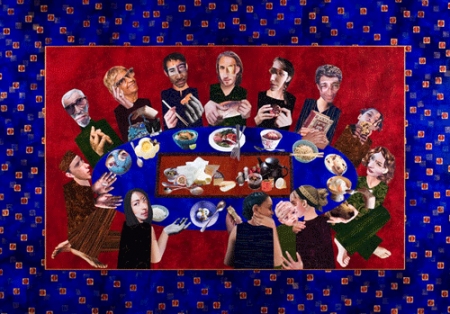
blog-welcome-table2
The Welcome Table © Jan L. Richardson

Reading from the Gospels, Year B, Proper 13/Ordinary 18/Pentecost +9: John 6.24-35

Following up on last week’s reading, the gospel lection for this Sunday offers us another image of provision and plenitude that come through Christ. Last week we saw him turn a couple of fish and five loaves of bread into a feast for the masses; this week he talks about his own being as bread: bread of God, bread of heaven, bread of life.

In the wake of last week’s stunning feeding, John tells us that the crowd dogs Jesus’ trail, with the air of people looking for seconds. When they catch up with him, Jesus tells them they are looking for him “not because you saw signs, but because you ate your fill of the loaves. Do not work for the food that perishes,” he cautions them, “but for the food that endures for eternal life, which the Son of Man will give you.”

Jesus is clear in calling them to discern the difference between what fills the belly and what fills the soul. At the same time, he well understands the ways that the hungers of the body and the hungers of the soul intertwine, and how both are at play when it comes to food. This is, after all, the man who so loved to share a meal—with all sorts of companions—that his critics called him “a glutton and a drunkard, a friend of tax collectors and sinners” (Luke 7.34). When he wants to convey the essence of who he really is, in word and in action, it is to food, to the gifts of the earth, that Jesus turns. Wheat. Bread. Wine. In his hands, food is more than food; it is an enduring symbol of, and gift from, the one who offers his very being to meet our deepest hunger and our keenest thirst. Yet it is food nonetheless.

The famed food writer M.F.K. Fisher offers a passage that captures the ways that hungers of body and soul, and the feeding of them, are bound together. In the introduction to her book The Gastronomical Me, first published in 1943, she writes,

People ask me: Why do you write about food, and eating and drinking? Why don’t you write about the struggle for power and security, and about love, the way others do?

They ask it accusingly, as if I were somehow gross, unfaithful to the honor of my craft.

The easiest answer is to say that, like most other humans, I am hungry. But there is more than that. It seems to me that our three basic needs, for food and security and love, are so mixed and mingled and entwined that we cannot straightly think of one without the others. So it happens that when I write of hunger, I am really writing about love and the hunger for it, and warmth and the love of it and the hunger for it…and then the warmth and richness and fine reality of hunger satisfied…and it is all one.

I tell about myself, and how I ate bread on a lasting hillside, or drank red wine in a room now blown to bits, and it happens without my willing it that I am telling too about the people with me then, and their other deeper needs for love and happiness.

There is food in the bowl, and more often than not, because of what honesty I have, there is nourishment in the heart, to feed the wilder, more insistent hungers. We must eat. If, in the face of that dread fact, we can find other nourishment and tolerance and compassion for it, we’ll be no less full of human dignity.

There is a communion of more than our bodies when bread is broken and wine drunk. And that is my answer, when people ask me: Why do you write about hunger, and not wars or love?

I find myself thinking, too, of Simone Weil, who wrote, in her book Waiting for God, “The danger is not lest the soul should doubt whether there is any bread, but lest, by a lie, it should persuade itself that it is not hungry.”

What are you hungry for these days? What does your relationship with food have to say about your relationship with God—and vice versa? Are there meals that hold memories of connection and communion? Do you have habits of eating, or not eating, that reveal a soul-hunger that needs God’s healing?

May the Bread of Life, who knew the pleasures of the table, feed you well in these days. Blessings.

P.S. Deep thanks to those offering prayers and blessings as I work to finish writing my book. Know that I am tremendously grateful for every good thought and prayer that comes my way; they are manna indeed on this intense journey!

[To use this image, please visit this page at janrichardsonimages.com. For a print, visit Color Prints at janrichardson.com. Thanks!]

One Fish, Two Fish

July 20, 2009

blog2008-07-281
A Gracious Plenty © Jan L. Richardson

Reading from the Gospels, Year B, Proper 12/Ordinary 17/Pentecost +8: John 6.1-21

For folks just tuning in, I want to mention that I’m mostly (though not entirely, as it’s turned out) taking a break from offering lectionary reflections this summer, as I’m up to my eyeballs working on a new book that’s due next month. Finishing a book in the midst of a hot and rainy Florida summer is proving quite a feat of endurance! Prayers are very, very welcome as I persist with the pages. Deadline pressures aside, I am glad to be so immersed in the making of a new book.

Every book seems to require and invite something different of me, and that’s certainly been the case with this one. One of the things I’ve especially felt a need to do has been to invite some folks to be in prayer for and with me. Writing is such solitary work that I sometimes forget that there are ways I can invite people into the process. In recent weeks I’ve become more intentional about doing this. The responses have been wondrous and heartening. Folks have offered not only prayers and blessings but also some tangible reminders of their presence in my life. My writing nook now holds such gifts as a prayer flag that artist friends painted for me, a string of prayer beads made by a friend who attached a St. Brigid’s cross of green marble from Connemara, a photo of my seminary girlfriends whom I gather with over Labor Day weekend every year, a buckeye (for luck) from a friend in Kentucky, a stone carved with the word “Presence,” and cards with wonderful words of support and blessing. My writer’s soul is feeling well fed.

I’ve been thinking a lot lately about provision—how I seek it, how I offer it. Recognizing what I need can be a real challenge sometimes—and asking for it, even more so. Yet I’ve learned that in order to provide for others, in order to be a blessing to others, I have to discern what provision I need for my own self, and to seek it out. Though sometimes it comes unbidden, which is always a wondrous gift of grace, I find that it’s more likely to show up when I remember to invite it.

This Sunday’s gospel lesson about the feeding of the five thousand offers good food for thought as I continue to ponder what I need, what I’m hungry for, and what sustenance will carry me through these days, that I may in turn participate, like the disciples, in meeting people at the point of their own hunger.

I wrote a reflection on Matthew’s version of this miraculous feeding last year; I invite you to visit it by clicking this link: A Gracious Plenty.

This Sunday’s lection from John also includes a story of Jesus’ walking on the water. If you’re looking for some artwork to accompany this portion of the passage, I invite you to visit several earlier collages that I created for watery themes, including Matthew’s version of Jesus and Peter walking on the water (first image below). Clicking on each image below will take you to that image’s page at janrichardsonimages.com. Clicking the titles below will take you to the blog reflection where the collage originally appeared.

In these days, may we know and ask for the provision we need, that we may share in offering sustenance to others. Blessings to you!

blog2008-08-03

Night Passage

Lent 2: In Which We Get Goosed

blog2008-02-20

Lent 3: The Way of Water

blog-2009-01-07

Epiphany 1: Take Me to the River

Easter 2: The Secret Room

April 13, 2009

blog-thesecretroomImage: The Secret Room © Jan Richardson

Reading from the Gospels, Easter 2: John 20.19-31

In his book The Art of Pilgrimage, Phil Cousineau writes that in every pilgrimage, there is a secret room, a place along the path that gives us insight into the deep mystery of our journey. In describing this hidden room, Cousineau draws on a story that poet Donald Hall tells of friends who purchased an old farmhouse. Cousineau writes,

It was a ‘warren of small rooms,’ and once they settled in and began to furnish their new home they realized that the lay of the house made little sense. ‘Peeling off some wallpaper, they found a door that they pried open to reveal a tiny room, sealed off and hidden, goodness knows why: They found no corpses nor stolen goods.’ For Hall, the mystery of poetry to evoke powerful feelings finds its analogy here, in its ability to be sealed away from explanation, this is the place where ‘the unsayable gathers.’

And so it is on the pilgrim’s path. Everywhere you go, there is a secret room. To discover it, you must knock on walls, as the detective does in mystery houses, and listen for the echo that portends the secret passage. You must pull books off shelves to see if the library shelf swings open to reveal the hidden room.

I’ll say it again: Everywhere has a secret room. You must find your own, in a small chapel, a tiny cafe, a quiet park, the home of a new friend, the pew where the morning light strikes the rose window just so.

As a pilgrim you must find it or you will never understand the hidden reasons why you really left home.

It is the day after Easter Sunday. I savored sleeping in this morning and am now in my writer’s nook at the top of the stairs, gazing out the window as I ponder the season past. I think of the pilgrimage these forty Lenten days led me on, the twists and turns they offered, the questions and challenges they posed, the graces they beckoned me to see.

Where was the secret room?

I think of a day in the week just past, when I went with my sweetheart to the Morse Museum of American Art in Winter Park, not far from where I live. The primary draw of the Morse is its collection of works by Louis Comfort Tiffany, the artist famed for his stained glass designs. I have always liked Tiffany well enough—a poster of one of his windows accompanied me through a succession of dorm rooms and apartments in college—but in more recent years found I had a somewhat limited affinity for this kind of work. I thought it was pretty, in an ornamental fashion, but didn’t go much beyond that.

I had, however, changed as an artist since the last time I had walked through the museum’s doors, had begun to work in ways that—I came to realize—altered the way that I saw Tiffany’s work. And so I found myself in front of one of his windows last week, leaning in close, pulling back, leaning in again. I was stunned by his line work, the loose style so markedly different from the stained glass designs of previous centuries. His lines captivated the part of me that had begun to work in charcoal since I’d last been to the museum, and had become fascinated with how the lay of a line—how it turns this way, then that—can convey a whole world.

And, between the lines, was the remarkable glass, so distinctive of Tiffany, who radicalized the manufacture of stained glass and turned each fragment into an art form in itself. I spent a long moment at a table that offered pieces of Tiffany glass to touch. Every piece a different texture—smooth, coarse, rippled, ridged. A fragment that so looked like flame that its coolness seemed incongruous. I ran my hand over each piece, each a living link with its maker, each an embodiment of his vision and daring, each a window onto the mysterious crucible that gives rise to art, each a threshold beckoning me deeper into my own creative path and reminding me why I set out on it in the first place.

This week’s gospel lection offers us a secret room, and, with it, an invitation to touch, to cross more deeply into Jesus’ story and our own. John tells of a room in which the disciples gather—a locked room, for fear. For secrets. And there, in their midst, Jesus appears, offering his hands and side, offering peace, offering the Holy Spirit, breathing into them (“and God breathed into his nostrils the breath of life,” John means for us to remember). But Thomas is gone, John tells us, and will not believe unless he sees. So Jesus returns a week later, slides through the shut doors of the secret room, shows himself to Thomas. “Put your finger here and see my hands,” Jesus says, as if touching and seeing are one and the same. “Reach out your hand and put it in my side. Do not doubt but believe.”

History has labeled this disciple Doubting Thomas, as if his uncertainty were the most memorable thing about this follower of Jesus who, elsewhere, is the first to step up and say he is willing to die with him (John 11.1-16). Yet Jesus, as is his way, gives Thomas what he needs. In Jesus’ hands, in Jesus’ side, Thomas reaches into a secret room, a place that, though “sealed away from explanation,” as Cousineau writes, makes some kind of sense of the long pilgrimage that Thomas has undertaken with Jesus, to whom he is now able to say, “My Lord and my God!”

And you? Did the pilgrimage through Lent offer you a secret room? Somewhere along the way, did you find a place that offered, not an explanation of your path, but a window onto it, a space within it that enabled you to see it anew, and the one who called you there? Where was it, and what did you find there? How does it illuminate the way before you?

In the weeks to come, may we remember that Easter is not just a day but rather a season. May the gift and challenge of resurrection go with you, and may the path ahead be graced with secret rooms.

[To use the image “Secret Room,” please visit this page at janrichardsonimages.com. Your use of janrichardsonimages.com helps make the ministry of The Painted Prayerbook possible. Thank you!]

Lent 5: Into the Seed

March 24, 2009

Image: Into the Seed © Jan Richardson

Reading from the Gospels, Lent 5, Year B: John 12.20-33

So do you remember that kerfuffle back in the 90s when Mattel brought out a new Barbie doll called Teen Speak Barbie? The Barbies were programmed to say what the company considered typical adolescent girl phrases. Some of the dolls were heard to utter, “Math class is tough!” A protest ensued, and Mattel excised that phrase. The story still circulates, with the troublesome phrase often (mis)quoted as “Math is hard!”

At this point in the Lenten journey, I find myself getting in touch with my Inner Barbie. Call her Ecclesiastical Barbie, perhaps, or Exegetical Barbie. (Ooooh, can’t you see her now, complete with the Barbie Dream Church and Deacon Ken?) These days, when someone pulls the string on my Inner Barbie, she’s likely to say, “Lent is tough!” or “These lections are hard!”

The scripture passages that this season presents to us are intense, dense, and complex. They are laden with metaphor and meaning, swirl with constellations of symbols and images, and shimmer with vivid emotion and crucial teaching. These texts challenge us to look with honesty at our lives, they confront us with our attachments, and—in a phrase I recently encountered—they urge us to sit with our own mirrors.

Lent is not for sissies.

In these past few weeks, we have traveled with Jesus into the wilderness, listened to his challenge to discern between the things of heaven and the things of earth, witnessed his outraged and outrageous cleansing of the temple, and overheard him liken himself to the serpent that Moses raised in the wilderness. Now he comes along, in this week’s gospel reading, speaking of grain and dying, losing one’s life and keeping it, hating and loving. We hear a thundering voice from heaven speaking of glory, and Jesus talking of being raised up from the earth.

The import of these Lenten texts is all the more intense for the surety of Jesus’ violent death that looms ahead. As we walk with Jesus through these weeks, we know what we are walking toward. And so his words carry extra weight, and we bend closer to capture them, as we do with someone we know is not long for this world—but who is already beginning to see things we cannot see, and speaking a language we do not yet understand.

Unlike others loosing the tethers that have held them to this life, however, Jesus retains a passionate interest in this world. Despite any impression he may give to the contrary (“those who hate their life in this world will keep it,” he says this week), Jesus does not perceive this world, this life, merely as a prelude to heaven or as a stockyard for weeding out the blessed from the damned. He seeks, rather, to train our eyes to perceive the kingdom of heaven tucked into the midst of this very world.

Teaching us to see the kingdom requires symbol, myth, metaphor, story. It requires the visual poetry that Jesus repeatedly uses as he turns to the things of earth to describe the things of heaven: yeast, seeds, dirt, water, fish, lilies of the field, birds of the air. Again and again he employs the ephemeral as he seeks to explain what is eternal. His doing so both comforts and unsettles; taking what is familiar to us, he turns it on its head, and us as well. How will we ever come to understand such a language?

We may feel daunted at this point in the season. I do. So suffused with meaning and messages, not to mention impending murder, these passages can overwhelm with their density and intensity and with their challenge to us to hold their paradoxes and untangle their meanings. Their lines somehow intertwine with the stuff of my days, drawing me deeper into the questions they pose about what my life is really about. There is so much to discern, to sort through, to sift.

In the midst of feeling daunted, I find myself thinking of the mystic poet who asked, “What is the cure for love? More love.” The formula holds true elsewhere. The cure for mystery? More mystery. The cure for paradox? More paradox. Last week’s readings from Numbers and the gospel of John reminded us that the cure for snakebite lay in looking upon a serpent. And in such a way this season beckons us to consider that we find our cure not by shrinking from what besets and befuddles and daunts us but by looking deeper into those very places, and finding the treasure that God has placed within them.

Go into the things you shrink from, Jesus tells his hearers—and us—in this passage. Go into the questions, the mysteries, the paradoxes, the seeming contradictions. Go into the Lenten dying that is not dying after all. We work so very hard at letting go, sometimes, trying to train ourselves to release our grip on all that is not God. But what if it is not about giving up but giving in? Falling into dirt, as Jesus says here. Going where grain is supposed to go. Following the spiral within the seed that takes us deeper into the dark but also—finally, fruitfully—out of it.

The lectionary interrupts this passage before its end; Jesus’ conversation with the crowd actually extends to verse 36. After Jesus finishes his discourse, here’s what John tells us Jesus did: he hid from them. And perhaps that’s what Jesus means for us to do at this point on the Lenten path: to hide. To not be set on figuring everything out but rather to let at least some part of ourselves, for some space of time, withdraw. To cease from wrestling with the questions and mysteries and simply rest with them and give in to them. To secret our souls like a seed in the earth. To see what grows.

How is it with your soul at this point on the Lenten path? As you work with these texts, how are these texts working on you? What questions have they stirred for you in these days? How do you respond to the mysteries and paradoxes they hold? Can you rest with those questions and mysteries? What do you need?

May you fall into, rest into, a place that will tend and nourish you in these days. Blessings.

Resources for the Season: Looking toward Lent

P.S. Happy Eve of the Feast of the Annunciation! Falling on March 25, this feast celebrates the radical yes that Mary said to Gabriel when the angel beckoned her to become the mother of Christ. For some of my artwork and reflections on the Annunciation, visit Getting the Message and The Hour of Matins: Annunciation.

[To use the image “Into the Seed,” please visit this page at janrichardsonimages.com. Your use of janrichardsonimages.com helps make the ministry of The Painted Prayerbook possible. Thank you!]