Archive for the ‘Lent’ Category

Coming Attractions

March 15, 2009

We have a richness of special days coming up this week, so I wanted to give a quick nod to them and offer some resources for their contemplation and celebration.

March 17, of course, marks the Feast of St. Patrick, patron saint of Ireland. For my reflection from last year, visit Feast of Saint Patrick.

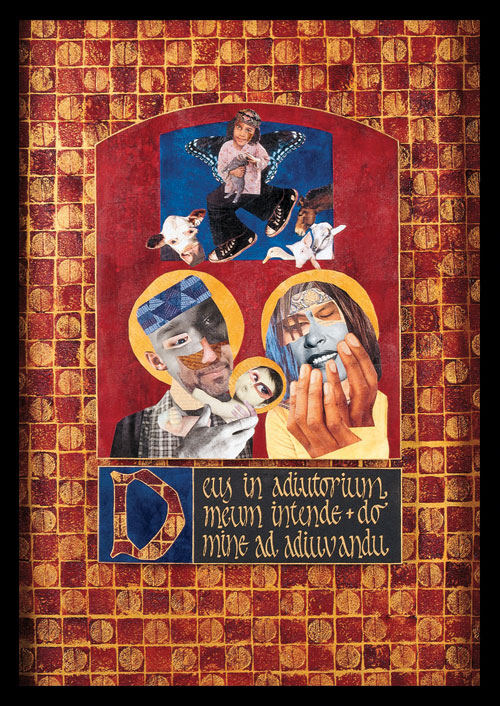
blog-nativity1

March 19 gives us the Feast of Saint Joseph, the remarkable man who listened to angels and took both Mary and Jesus into his care. Joseph has made a number of appearances in my artwork; I invite you to stop by and see him at The Advent Hours and The Advent and Christmas Series.

blog2008-autumnal-equinox

This year, the vernal equinox (also called the spring equinox—in the Northern Hemisphere—or the March equinox) falls on March 20. I posted a reflection on the autumnal equinox here last year; the sentiments apply in springtime as well. Just turn the image upside down for the vernal version!

May you have a festive week!

Lent 3: The Temple in His Bones

March 11, 2009

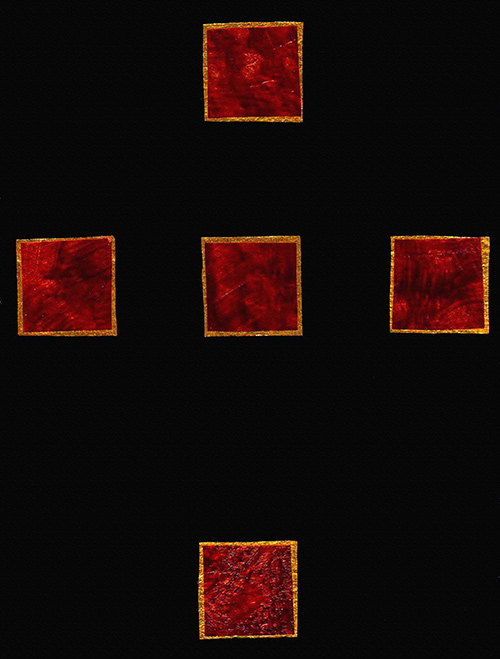
Image: The Temple in His Bones © Jan Richardson

Reading from the Gospels, Lent 3, Year B: John 2.13-22

On my first afternoon in Rome a few years ago, I climbed on the back of my friend Eric’s motorcycle and set off with him to begin my acquaintance with the Eternal City. A few minutes down the road, he told me to close my eyes. When we came to a stop and I opened them, my field of vision was filled with one of the most impressive sights in a city of impressive sights: the Pantheon. Built in the second century AD, the Pantheon replaced the original Pantheon that Marcus Agrippa constructed fewer than three decades before the birth of Christ. A temple dedicated to “all the gods” (hence its name), the Pantheon became a church in the seventh century when Pope Boniface IV consecrated it as the Church of Santa Maria ad Martyres. It’s said that at the moment of the consecration, all the spirits inhabiting the former temple escaped through the oculus—the hole in the Pantheon’s remarkable dome that leaves it perpetually open to the heavens.

As churches go, it’s hard to top the Pantheon for its physical beauty and power. It was perhaps risky to see it on my first day, so high did it set the bar for the rest of my trip. Yet Rome, of course, brims with delights for the eyes, and the next two weeks offered plenty of stunning visual fare. Amid the calculated grandeur, I found that it was the details that charmed me: the intricate pattern of a Cosmatesque marble floor, the shimmer of light on a centuries-old mosaic, the inscribed marble fragments that had been unearthed and plastered to the walls. It was staggering to contemplate the countless hours and years that went into the construction of these spaces, or to fathom the vast wells of talent and skill that generations of architects, artisans, and laborers lavished upon them.

The Roman churches that most linger in my memory are those that possessed a clear congruence between the physical environment and its purpose—those places of worship that were not primarily tourist destinations but true sanctuaries. I felt this congruence keenly, for instance, in the Church of Santa Maria in Trastevere. The space intrigued me from my first moments in it, on the first evening of my trip. I would return several times, learning along the way that one of the many ways the church serves the surrounding Trastevere neighborhood is as a place of prayer for the Community of Sant’Egidio, a lay movement of people who work for reconciliation, peace, solidarity with the poor, and hospitality to pilgrims.

On the day that Jesus sweeps into the temple, it’s this kind of congruence that is pressing on his mind. We don’t know precisely what has him so riled up; after all, particularly with Passover drawing near, there are transactions that need to take place in the temple. As Jesus enters, he sees those who are attending to the business involved in the necessary ritual sacrifices, but he seems to feel it has become simply that: a business. Commercial transaction has overtaken divine interaction. Time for a clearing out, a return to congruence between form and function, to the integrity of the purpose for which the temple was created: to serve as a place of meeting between God and God’s people.

To those who challenge his turning over of the temple, Jesus makes a remarkable claim: that he himself is the temple. “Destroy this temple,” he says to them, “and in three days I will raise it up.” His claim stuns his listeners, who know that the sacred space in which they are standing—the Second Temple, which was in the midst of a massive renovation and expansion started by Herod the Great—has been under construction for forty-six years. John clues us in on the secret that the disciples will later recall: “He was speaking of the temple of his body.”

This scene underscores a particular concern that John carries throughout his gospel: to present Jesus as one who takes into himself, into his own body and being, the purpose of the temple. Richard B. Hays writes that in making the link between Jesus’ body and the temple, this passage provides “a key for much that follows” in John’s gospel. “Jesus now takes over the Temple’s function,” Hays observes, “as a place of mediation between God and human beings.” Hays goes on to point out how Jesus’ sometimes enigmatic sayings about himself in John’s gospel—for instance, “Let anyone who is thirsty come to me, and let the one who believes in me drink” and “I am the light of the world”—are references to religious festivals whose symbolism Jesus takes into himself.

Perhaps, then, it all comes down to architecture. The decades of work that have gone into the physical place of worship, the skill of the artisans, the labors of the workers; the role of the temple as a locus of sacrifice, of celebration, of identity as a community; the power and beauty of the holy place: Jesus says, I am this. Jesus carries the temple in his bones. Within the space of his own body that will die, that will rise, that he will offer to us, a living liturgy unfolds.

We will yet see the ways that Jesus uses his body to evoke and provoke, how he will offer his body with all its significations and possibilities as a habitation, a place of meeting, a site of worship. Calling his disciples, at the Last Supper, to abide in him; opening his body on the cross; re-forming his flesh in the resurrection; offering his wounds to Thomas like a portal, a passageway: Jesus presents a body that is radically physical yet also wildly multivalent in its meanings.

The wonder and the mystery of this gospel lection, and of Jesus’ life, lie not only in how he gives his body as a sacred space but also in how he calls us to be his body in this world. Christ’s deep desire, so evident on that day in the temple, is that we pursue the congruence he embodied in himself: that as his body, as his living temple in the world, we take on the forms that will most clearly welcome and mediate his presence. In our bodies, in our lives, in our communities; by our hospitality, by our witness, by our life of prayer: Christ calls us to be a place of meeting between God and God’s people, a living sanctuary for the healing of the world.

The season of Lent beckons us to consider, are there things we need to clear out in order to have the congruence to which Christ invites us? Who helps you recognize what you need to let go of in order to be more present to the God who seeks a sanctuary in you? How is it with your body—your own flesh in which Christ dwells, and the community with which you seek to be the body of Christ in the world? What kind of community do you long for—do you have that? What would it take to find or create it?

In these Lenten days, may we be a place of hospitality to all that is holy. Blessings.

[Richard B. Hays quote from his chapter “The canonical matrix of the gospels” in The Cambridge Companion to the Gospels, ed. Stephen C. Barton.]

Resources for the Season: Looking toward Lent

[To use the image “The Temple in His Bones,” please visit this page at janrichardsonimages.com. Your use of janrichardsonimages.com helps make the ministry of The Painted Prayerbook possible. Thank you!]

Lent 1: A River Runs through Him

February 27, 2009

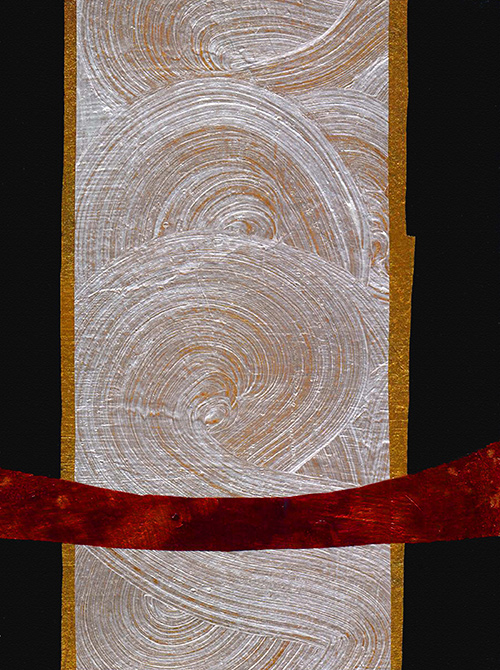
A River Runs through HimImage: A River Runs through Him © Jan Richardson

Reading from the Gospels, Lent 1, Year B: Mark 1.9-15

Well, it doesn’t get much more basic, does it? A man. A wilderness. A few wild beasts for company. And, in Matthew and Luke’s telling of it, no food.

Forty days.

Jesus has just been baptized, just been Holy-Spirit-descended-upon, just been named Son and Beloved. One might think he is now raring to begin his ministry (or what have the past three decades been for?). Instead he goes in the opposite direction. Into the wild. He disappears into the desert as his Jordan-drenched flesh goes dry.

I wonder if, as he settled into that landscape, Jesus thought of those who preceded him in the wilderness. I wonder if he went through the list in his head, remembering his forebears who entered into those betwixt places, the spaces that lay between where they had been and where they were going, between the life they had known and the life they could barely envision. Every morning when he woke up, did he utter a liminal litany?

Hagar
cast into the wilderness with her young son

Jacob
on the run from his brother

Moses and Miriam and Aaron
and all the children of Israel
wandering but delivered from their bondage

Elijah
fleeing for his life from queen Jezebel

Jesus was in good company. The wilderness may be a place of solitude, but it is at the same time a mythic place, imprinted by all who have inhabited it for a little or a longer while. It breathes with the memories of those who found themselves there by accident or intent, who fled there for safety or who entered it in search of what they could not find elsewhere.

In his desert sojourn, did Jesus ever wish for the wellspring that the angel revealed to Hagar in the wilderness, when her son was on the point of death? Did he pray for a vision, a dream like Jacob’s to direct and sustain him? Did he start hungering for the manna that nourished the Israelites in their journey? (And did those wild beasts that Mark mentions start looking tasty to him?)

Did the question that came to Elijah (traveling for forty days and forty nights in the strength of the angel-borne food) come also to him:

What are you doing here?

That’s the question that the desert gives us, isn’t it? What are we doing here? Not just: what are you doing here in this physical place, but also: what are you doing here in this life?

Sometimes it takes going into the wilderness, of body or of soul, to find the answer to this question. Traveling toward where the familiar contours of our lives disappear. Leaving the landmarks behind, the people and patterns and possessions that orient us.

That’s where Jesus goes. Surfacing from the waters of his baptism, he doesn’t fling himself into his ministry, doesn’t take up his work among the community that will meet him with both belief and betrayal. He first goes into the place where everything is stripped away, and he confronts the basic questions about who he is and what he is doing.

We don’t know precisely what it is that Jesus learns there, what he comes to know about himself in that Forty Day Place. We do know that when Satan shows up, Jesus is ready. What Mark hints at in his version, Matthew and Luke describe more fully: Jesus meets the chaos of his tempter with clarity. The baptismal waters may have evaporated from his skin, but not from his soul. A river of knowing runs through him. He is drenched with discernment.

Beloved. Son.

This is what he knows.

When Jesus leaves the wilderness, he takes this clarity with him as a treasure of the desert, a sign of the sustenance that always comes to those who survive that landscape. Baptized in the Spirit, named by the Creator, attended by the angels, Jesus walks out of the desert and into the life that has been prepared for him. He is an initiate, ready, going in the company of all who know what it means to walk through the wilderness and find the gifts God hides there. Perhaps he carries their names on his lips as he crosses back into the community, prepared to proclaim the good news; perhaps those names pound in him like a heartbeat, or rush in his ears like the sound of an ancient river:

Hagar, Jacob, Moses, Miriam, Aaron, Elijah…

So what are you doing here? At the outset of the Lenten journey, why are you where you are? What do you need from the Forty Day Place that this season offers? Is there a wilderness you need to enter—with your body or with your soul or with both—in order to gain clarity at this point in your life? What might that look like? Whose stories could you draw on, lean on, take heart from, as you contemplate this?

As you travel into this Lenten landscape, may you find what you most need, may you receive the gift you never expected, may you find strength in those who have journeyed there before you, and may angels attend your way. Blessings.

[For last year’s reflection on Matthew’s version of this story, visit Discernment and Dessert in the Desert.]

[To use the image “A River Runs through Him,” please visit this page at janrichardsonimages.com. Your use of janrichardsonimages.com helps make the ministry of The Painted Prayerbook possible. Thank you!

Resources for the season: Looking toward Lent


The Artful Ashes

February 22, 2009

blog-2009-ash-wednesday-2Image: Ash Wednesday © Jan Richardson

Readings for Ash Wednesday: Joel 2:1-2, 12-17; Psalm 51:1-17;
2 Corinthians 5:20b – 6:10
; Matthew 6:1-6, 16-21

When I received the invitation to do the artwork for Peter Storey’s book Listening at Golgotha, a series of reflections on the Seven Last Words of Jesus (featured in Friday’s post), it came as a lovely bit of synchronicity. His editor, who had been the editor for my first book, wasn’t aware that Peter and I were acquainted, having crossed paths on a few occasions when he was visiting the U.S. from his native South Africa. The catch was that the artwork had to be in black and white. With my having worked primarily in paper collage, black and white was not exactly my first language, artistically speaking. I so wanted to work on Peter’s book that I told the editor yes. Then I set about to figure out what kind of black and white medium I could manage.

I tried doing collages in black and white, but made little headway. After several other experiments, I picked up a piece of charcoal. And fell in love.

Beginning to work with charcoal was like learning a new language, with the delights and challenges that come in such a process of discovery. Most of my early sketches were a mess. I could sense that a style was stirring, but in the beginning stages it appeared so raw and unformed that I began to despair of having anything ready in time for Peter’s book.

On the verge of calling the editor to do an embarrassing backing-out dance (an awkward jig that I try hard to avoid), I instead called my artist friend Peg to ask if she could either collaborate with me or counsel me on the project. Peg told me to bring her all the sketches I’d done: the good, the bad, and the ugly. To my eye they were mostly bad and ugly. But Peg took the smudgy, ashy papers, spread them out, and pondered them. In a fashion that struck me as being something like lectio divina, she followed their tangled lines until she began to perceive something that had the beginnings of coherence and form. Moving through what I had perceived as chaos, Peg showed me what she saw, and she offered suggestions on how to pursue and develop the path that had been obscure to me. Not only did this help make it possible to complete the project, but it also began to open creative doors within and beyond me in ways I never would have imagined.

In large part, what I came to love about working in charcoal was the dramatic contrast it offered to my colorful, often intricate collage work. Where collage involves a process of accumulation and addition as the papers are layered together, charcoal invites me to an opposite experience. When I do a charcoal drawing, my goal is to find the fewest number of lines necessary to convey the scene. It is a medium of subtraction, involving little more than a piece of blank paper, a stick of charcoal, and an eraser to smudge and then smooth away all that is extraneous. What remains on the page—the dark, ashen lines—is spare, stark, sufficient.

For every artist, one of the most crucial habits to develop is staying open to what shows up. In the process of cultivating a unique vision, with all the consuming focus that involves, we have to learn, at the same time, how to keep an eye open for the creative surprises and invitations that can lead us to new pathways or deepen existing ones. If I stay too attached to a favorite medium or familiar technique, I risk shutting myself off to possibilities that can take me to whole new places in my work and in my own soul.

Taking up a new medium, entering a different way of working, diving or tiptoeing into a new approach: all this can be complex, unsettling, disorienting, discombobulating. Launching into the unknown and untried confronts us with what is undeveloped within us. It compels us to see where we are not adept, where we lack skill, where we possess little gracefulness. Yet what may seem like inadequacy—as I felt in my early attempts with charcoal—becomes fantastic fodder for the creative process, and for life. Allowing ourselves to be present to the messiness provides an amazing way to sort through what is essential and to clear a path through the chaos. To borrow the words of the writer of the Psalm 51, the psalm for Ash Wednesday, it creates a clean heart within us.

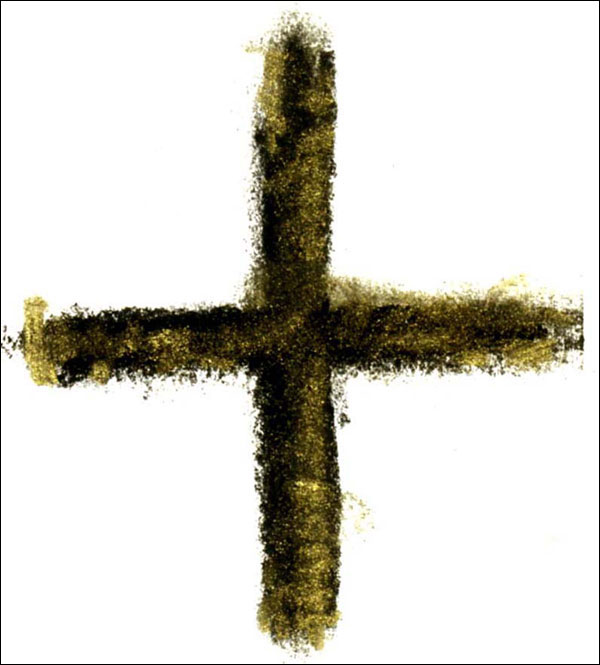
Ash Wednesday beckons us to cross over the threshold into a season that’s all about working through the chaos to discover what is essential. The ashes that lead us into this season remind us where we have come from. They beckon us to consider what is most basic to us, what is elemental, what survives after all that is extraneous is burned away. With its images of ashes and wilderness, Lent challenges us to reflect on what we have filled our lives with, and to see if there are habits, practices, possessions, and ways of being that have accumulated, encroached, invaded, accreted, layer upon layer, becoming a pattern of chaos that threatens to insulate us and dull us to the presence of God.

Each of the scripture texts for this day invites us to ponder the practices that we have given ourselves to, and the practices to which God calls us, both individually and in community. The prophet, the psalmist, the apostle, and Jesus himself all urge us, in these readings, to pay attention to the rhythms of our lives so that we may discern which rhythms draw us closer to God and which ones pull us away.

Where do these sacred texts find you as we cross into the season of Lent? What is the state of your heart? What has taken up residence there over the past weeks, months, years? Are there habits and ways of being that you are so invested in, so attached to, that it has become difficult to discern new directions in which God might be inviting you to move? Who can help you ponder the patterns present in your life—the good, the bad, the ugly—and help you see where new life is stirring, and where a new path might be opening? What are the most basic, elemental, crucial things in your life, and how might God be challenging you to give your attention to them in this season?

The gospel for Ash Wednesday tells us that where our treasure is, there our hearts will be also. On this day, and throughout the coming days, may we see clearly where our treasure lies, and have hearts clear and open enough to recognize the surprising forms that such treasure can take. On this day of ashes, blessings to you.

[For last year’s reflection on Ash Wednesday, visit Ash Wednesday, Almost.]

[To use the “Ash Wednesday” image, please visit this page at janrichardsonimages.com. Your use of the Jan Richardson Images site helps make the ministry of The Painted Prayerbook possible. Thank you!]
Looking toward Lent

February 20, 2009

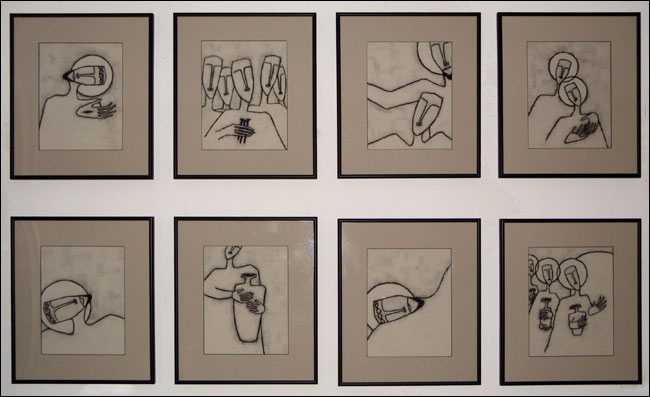
blog-sevenlastwordsframed31

As Ash Wednesday approaches, I thought this would be a good time to do a bit of housekeeping here at The Painted Prayerbook. I have a few artful Lenten offerings I want to let you know about, along with some related news.

ORIGINAL ART: The artwork above is a series of charcoals that I did several years ago for Peter Storey’s book Listening at Golgotha, which offers a collection of reflections on the Seven Last Words of Jesus. The original artwork is available for sale (as an intact series), beautifully matted and framed. Great for a church, chapel, or other space for devotion/worship, especially during Lent and Holy Week. For more information, visit The Seven Last Words Series. [Update: I’m delighted that this series was acquired by Duke Divinity School, where it is permanently installed.]

MORE ORIGINAL ART: I have a few of the original pieces from The Hours of Mary Magdalene available. For details, visit The Hours of Mary Magdalene and click on the individual images.

ART PRINTS: All of the images from The Seven Last Words Series and The Hours of Mary Magdalene are available as prints; check out the Art Prints page on my website. You can also purchase prints of The Lenten Series (illustrations from my book Garden of Hollows) as well as prints of artwork from my books and my blogs.

A LITERARY LENT: Published through my small press, Garden of Hollows: Entering the Mysteries of Lent & Easter offers artwork and reflections on the sacred texts and themes of the coming season. You can read excerpts and order at Wanton Gospeller Press. My book In Wisdom’s Path: Discovering the Sacred in Every Season includes a section for Lent and Easter. Visit the Books page on my website for details on this book that includes my full-color artwork.

IMAGES ONLINE: Thanks so much to everyone who has requested permission to use my artwork. In response to the number of requests, I’m working to create a website that will enable congregations and other communities to download high-resolution files of my images for use in worship and educational settings (bulletin covers, PowerPoint, etc.). The artwork will be available for a per-image fee, or, for an annual subscription, churches can have access to all the images for a whole year. I’m aiming to have this ready sometime this spring, and I look forward to having this new service available as a way to share mutual creative support with worshiping communities and other groups. In the meantime, I am always happy to respond to individual requests. Thank you for being mindful that, like most artwork, the images on my blogs, website, and in my books are under copyright. I am really happy for folks to make use of my artwork, but permission must be sought for use of these images in any format. Details and contact info are available at Copyright Permissions. [Update: images for use in worship and related settings are available at Jan Richardson Images.]

eNEWSLETTER: I send out an occasional e-newsletter. It includes a seasonal reflection, artwork, information about current offerings and upcoming events, and whatever else strikes my creative fancy. I would be delighted to include you in my mailing list if you haven’t already subscribed. You can sign up here.

GRATITUDE: Most of all, thank you for visiting The Painted Prayerbook and for the sustenance and companionship you provide along the way. Your comments, emails, prayers, and presence are all tremendous gifts on my path. Please know that I pray for you and that I carry a heap of gratitude for the ways you help make possible my work in this world.

Many blessings to you in these remaining days of Epiphany!

Eat this Book

February 14, 2009

blog-bookbinding21

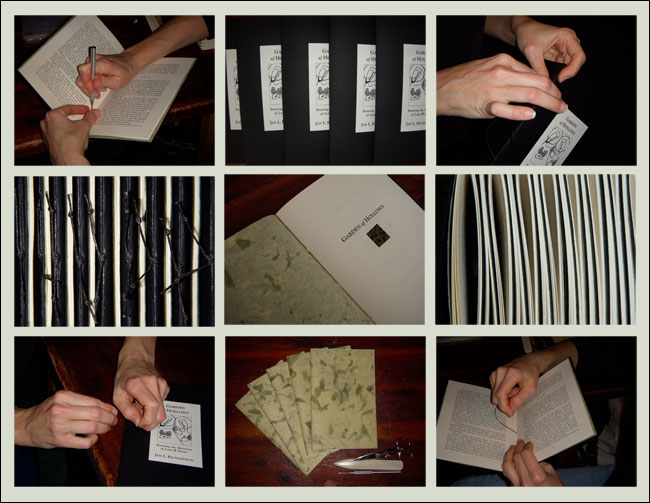
During the past couple of weeks, I’ve spent some time in the bookbindery (a.k.a. my dining/kitchen/studio table), working to replenish the supply of books that I’ve published through my small press. With Lent just around the bend, I’ve been particularly focused on shoring up my stock of my book Garden of Hollows: Entering the Mysteries of Lent & Easter. Drawing on the texts and images that the Lenten season gives us, Garden of Hollows invites readers to contemplate their lives in the light—and shadows—of the stories that lead us toward resurrection.

I established Wanton Gospeller Press in order to create small, intimate, artful books of a sort that traditional publishing houses typically can’t offer. Although I’m continuing to work with publishing houses, I’m grateful to have a pathway that enables me to develop my own vision for a book and handle its production from start to finish. I do virtually the whole shebang myself: writing, artwork, design, making the covers, and binding the books. The process is labor intensive, but I enjoy the rhythm and being engaged in each step of bringing a book into the world.

With this round of book making, I’ve added a couple of new, artful elements, including gorgeous endpapers made of mango papers that come from Thailand. The paper is beautiful, translucent, and has mango leaf inclusions, as you can see in a couple of the photos above. I’ve selected a different mango paper for each of my Wanton Gospeller editions; for Garden of Hollows I chose a lovely pale green.

My sweetheart Gary says using mango paper is a good choice, as readers can eat the endpapers if they start feeling peckish along the way. That’s actually a great image for these books, and for the process of lectio divina (sacred reading) that gave rise to them. The Dominican nun who first taught me about lectio sometimes calls it lectio bovina, in respect of the way that this form of reading invites us to chew and chew on a sacred text until we gain the nourishment it has to offer. Garden of Hollows grew from a long process of ruminating on the sacred stories of the coming season. I pray that this book, in turn, offers some of the sustenance that I have found.

I would love to share these Wanton Gospeller Press books with you! For more information and book excerpts, click on Wanton Gospeller Press, where you can order either from Amazon.com or directly from me.

Happy munching!

Holy Saturday: A Day Between

March 21, 2008

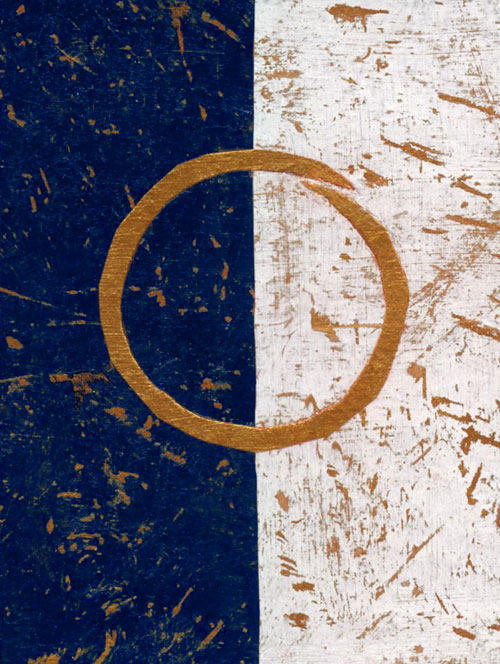
Holy SaturdayImage: Holy Saturday © Jan Richardson

Reading from the Gospels, Holy Saturday: Matthew 27:57-66 or John 19:38-42

At the end of my yoga session this morning, I relaxed into the pose that’s called Savasana, or the Corpse Pose. On this day of thinking about Christ in the tomb, the pose gave me pause.

I thought of a visit to Minnesota a few years ago, and how a friend took me to a nearby Catholic church where you can take a drive-through tour of the Stations of the Cross. Each station offers a large carved relief, with the most elaborate being a life-sized rendering of the Crucifixion. Beneath the Crucifixion, you can look through a sheet of plexiglass to see Christ stretched out in his tomb. It is…interesting. Not the kind of thing that a Methodist girl often comes across.

On Holy Saturday, the lectionary presents us with a choice of Gospel readings. Both readings describe the burial of Christ, with Joseph of Arimathea figuring in each one. Matthew’s version tells us that Mary Magdalene and “the other Mary” (the mother of James and Joseph) were present, sitting opposite the tomb as Joseph of Arimathea laid Jesus in the tomb, rolled a stone across its entrance, and walked away. In John’s Gospel, Nicodemus helps Joseph of Arimathea with Jesus’ burial, bringing a hundred pounds (a hundred pounds!) of myrrh and aloes that he and Joseph use as they wrap Jesus in his shroud and lay him in the tomb. I love how Nicodemus, whom we encountered on the second Sunday of Lent, shows up again here; the man who questioned Jesus about the womb now tends his body at the tomb.

Though the Sabbath soon descended after Jesus was laid in the tomb, some traditions hold that Jesus did not rest on this day. We see evidence of this in the Apostles’ Creed, in versions that follow the words “crucified, dead, and buried” with “He descended into hell” (or “He descended to the dead”). The idea that Christ descended into hell is particularly prevalent in Orthodox Christianity. It’s also known as the Descent into Hades, the Harrowing of Hell, or the Anastasis (Resurrection). Searching online for artwork depicting this scene, I found one image titled “Christ Visits Hell,” which makes it sound like a vacation. Artwork of the Descent regularly depicts Christ releasing Adam, Eve, and others from captivity in the underworld, such as in this image from the 12th-century Winchester Psalter. The Descent embodies the idea that the one who fully entered our humanity on earth and thereby freed us was able also to enter even into hell and release those in bondage there.

Whatever Christ was up to (or down to) on Holy Saturday, for his followers it was a day of sorrow and bewilderment. Bereft of the one around whom they had shaped their lives, they had to choose whether they would isolate themselves in their sorrow and fear, or whether they would remain together and wait for a way to present itself.

Holy Saturday is not a day for answers. It is a threshold day, a day that lies between, and so resists any easy certainty. It is a day of waiting, of remembering to breathe, of willing ourselves to turn to one another when grief lays hold of us. It is a day to open ourselves to the one who goes into the places of deepest pain and darkest fear, in order to bring us out.

What stirs within you on this holy, in-between day?

[To use the image “Holy Saturday,” please visit this page at janrichardsonimages.com. Your use of janrichardsonimages.com helps make the ministry of The Painted Prayerbook possible. Thank you!]
Good Friday: In Which We Get Nailed

March 20, 2008

Good FridayImage: Good Friday © Jan Richardson

Reading from the Gospels, Good Friday: John 18.1-19.42

Several years ago, I did a series of charcoal drawings for Peter Storey’s book Listening at Golgotha, in which he reflects on Jesus’ Seven Last Words from the cross. (View the series here.) Peter is a retired bishop and active leader of the Methodist Church of Southern Africa, and his experiences of working for justice and reconciliation in his home country profoundly shape his understanding of Jesus’ crucifixion and resurrection. In Peter’s reflection on Jesus’ third word, “Woman, here is your son…. Here is your mother,” he observes that in giving his mother and his beloved friend John to one another, Jesus “created a community that was to become family to the widow, the orphan, the outcast, and the stranger.” Peter writes of our call to such a community as a “sacred trust,” and he asks, “If we accept, can anybody suffer hunger, homelessness, or need? Would there be any lonely old people? Could there be a single unwanted child? If Jesus has made everyone kin to me, would that not make every war in history a civil war and every casualty a death in my family?”

Peter goes on to write, “From the cross where he is nailed, Jesus nails us to each other.”

The first time I read this sentence, sitting at my drafting table as I contemplated Peter’s manuscript, I cringed. I wanted some other word there besides nailed. I wanted Peter to say that Jesus binds us to each other, or joins us to each other, or some other image less graphic and bloody.

As I continued to sit with the image, I began to realize—Well, yeah, Peter’s right. In our loving, in our call and struggle to be community, we get nailed.

I have listened to the stories of women and men who lived with abuse; I have—like all of us—been drenched with images of terrorism and warfare; I have seen the ways that some people participate in their own wounding because they don’t know how to live otherwise, or because they believe that suffering, by its own nature, is somehow redemptive and should be sought out. Everything I know about the love of God causes me to resist the idea that Christ desires our suffering and that he would perpetuate this culture of violence by willfully inflicting pain upon us.

What Peter claims here, however, is not that Christ desires or wills our wounding. Rather, Peter recognizes and names what happens when we try to be family to one another. Christ doesn’t call us to seek out pain. Pain is not the goal. It does, however, seem to be an inextricable part of loving. When it comes to love, there’s no need to seek out suffering. In the risk of exposing ourselves and opening ourselves to one another, the wounds will open of their own accord.

We call the crucifixion of Jesus the passion, and so it is, for us as well as for him. Each time we stretch out our arms in love to one another, every time we open our hearts, we find the shadow of the cross, but also a glimpse of the open tomb. We are nailed indeed. It is our keenest grief, and our deepest joy.

Pierce, break, tear, rend, nail: the older I get, the longer and more deeply I love, the more I see how the words I used to avoid are part of the vocabulary of the community to which Christ calls us. It is part of the language of hearts that seek to live in relationship with one another, with all the risks and losses and joys that come in loving. Jesus’ final word from the cross, “Into your hands I commend my spirit,” reminds us that every relationship will, at some point, contain a good-bye.

Yet we who know the rest of the story, we who have glimpsed the other side of Good Friday, know that Jesus’ last word from the cross isn’t the final word. There are more words to come, crucial words that Christ will yet add to our vocabulary, our story, our community.

For now, we wait. Together. Nailed to one another.

What words are you noticing, hearing, speaking this day? What is the vocabulary you use to describe your experience of community and of loving?

Blessings to you as we approach Good Friday.

[To use the image “Good Friday,” please visit this page at janrichardsonimages.com. Your use of janrichardsonimages.com helps make the ministry of The Painted Prayerbook possible. Thank you!]
Holy Thursday: Feet and Food

March 19, 2008

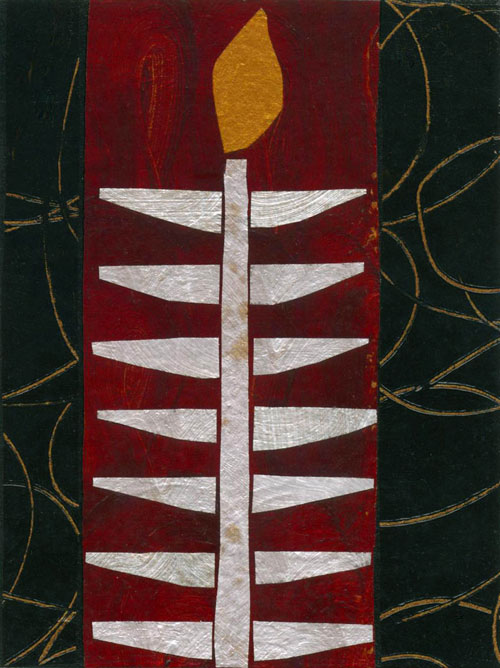
Image: Holy Thursday © Jan Richardson

Reading from the Gospels, Holy Thursday: John 13.1-17, 31b-35

Years ago I spent a summer doing an internship that involved regular, intensive meetings with the other interns and a supervisor. We were expected to be emotionally and spiritually vulnerable with one another as part of the process. As someone who much prefers to have control over where and how I share about myself, I continually struggled with how to do this with a group of people whom I hadn’t chosen myself. The internship became an important part of my formation process as a minister, and I gained a deep appreciation for the folks in the group, but for an introvert, the expected intimacy was a huge and frequently uncomfortable stretch.

Maybe it was that experience, or perhaps it’s just my natural introverted tendencies, but I tend to avoid situations where I’m encouraged or expected to be intimate beyond my usual boundaries. And here we are at the edge of Holy Thursday, a day when we’re confronted with a story that challenges us as a church to do that very thing.

The Gospel lection for Holy Thursday offers John’s telling of the Last Supper. Alone among the Gospel writers, John tells us that in the middle of the meal—likely a Passover meal in which they would have retold the story of God’s deliverance of the Israelites from their captivity—Jesus removes his robe, pours water into a basin, and begins to wash the disciples’ feet. Peter challenges him, and in responding to Peter’s challenge, Jesus makes very clear that he expects his disciples to do the same thing for one another. In word and action, Jesus provides a quick and deep lesson about power in Christian community: how we are to share power, how this challenges us beyond our accustomed roles, and how it is grounded in love. “I give you a new commandment,” Jesus says as he responds to Peter, “that you love one another. Just as I have loved you, you also should love one another. By this everyone will know that you are my disciples, if you have love for one another” (John 13.34, 35).

I find it intriguing that in terms of ritual practices, Jesus laid down hardly any mandates. One can argue, in fact, that footwashing is the only ritual act that he specifically exhorted his followers to practice. Interesting, then, that most Christian communities practice it so seldom. I can count on two hands (or feet) the number of times I’ve participated in a footwashing. Given my aforementioned aversion to situations where I’m expected to be intimate with folks whom I might not otherwise choose to be intimate with, there’s a part of me that doesn’t terribly mind this. Given the dearth of footwashing opportunities, I know I’m not alone in this.

The last footwashing I participated in was during a retreat that I shared with clergywomen who serve in a denomination where the practice of footwashing is part of their custom. Drawing from this same passage in John, their ritual takes place in the context of a love feast. It was an exquisite experience to participate with these amazing women who had crafted the ritual with such intention and care, and who understand the power of a practice that calls us not only to serve but to be served. (For those whose lives are shaped around service, the latter may be the most challenging part of the ritual).

But I find myself wondering—what would such a ritual be like in the church community of which I am a part? As Jesus demonstrated, such a ritual shakes up the usual relationships by which a community understands and defines itself. Perhaps this, as much as the mere fact of such physical closeness in a culture that doesn’t particularly foster this, is the source of our discomfort.

Which, of course, is what Jesus was trying to get his disciples—and us—to see. In these final days of Lent, Jesus’ act calls us to remember that this season is not only about examining our personal habits, to see if there are any that are insulating us from God; it’s a season that calls us to examine our corporate habits as well, to see how our practices as a community open us to or distract us from the presence of God.

I love that Jesus washes the disciples’ feet in the context of a meal. As someone who considers the table a holy place, and who purely loves to eat, I dig that. An old boyfriend told me one time that he’d never met a girl who liked her groceries so much. (Though at 40, I’m starting to feel my lucky metabolism shift…) In its own way, however, sharing a table calls us to a radical intimacy. To some of us it may seem less risky than footwashing, may cause less overt squirming, but it demands no less of us. Jesus had a few things to say about tables and power, too. (Remember how, in Luke 14, he tells some banquet parables as a caution for those inclined to get grabby for seats of honor?).

M.F.K. Fisher, the famed culinary writer, once observed that “There is a communion of more than our bodies when bread is broken and wine is drunk.” “And feet are washed,” Jesus might add. As we approach Holy Thursday, how might God be calling you to find communion with others? How does power manifest itself in the community or communities of which you are a part? Does your community engage in any practices that challenge the balance of power, that cause you to reflect on your relationships with one another, and that invite you to question how you’ve always done things as a community?

May this week find you at a holy and challenging table.

[To use the image “Holy Thursday,” please visit this page at janrichardsonimages.com. Your use of janrichardsonimages.com helps make the ministry of The Painted Prayerbook possible. Thank you!]
Feast of Saint Patrick

March 17, 2008

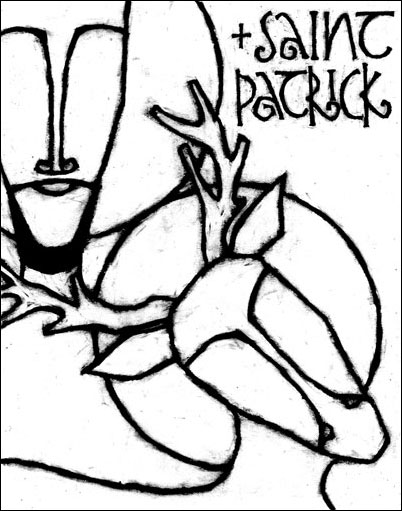
stpatrick.jpg
Saint Patrick: Deer’s Cry © Jan L. Richardson

It seems auspicious that Holy Week this year begins with the feast of St. Patrick. Though his feast falls during Lent by happenstance, Patrick offers a powerful example of someone who, in every season, accepted the challenge that Lent poses us: to stretch beyond the familiar borders of the world we know, and to meet God there.

The story of Patrick is deeply entwined with the story of Ireland, so much so that it was only in recent years that I learned that Patrick’s story didn’t begin there. The boy who would become a saint was born in Britain at the end of the fourth century. As a youth he was kidnapped and taken to Ireland as a slave, where he tended flocks and began to spend his time in prayer. In a work titled “Patrick’s Declaration on the Great Works of God,” also known as the Confessio, Patrick writes that as he prayed among the flocks, “more and more, the love of God and the fear of him grew [in me], and [my] faith was increased and [my] spirit was quickened….” After six years, Patrick escaped from captivity and returned to Britain and to his parents, who, he tells us, “begged me—after all those great tribulations I had been through—that I should go nowhere, nor ever leave them.” Yet Patrick goes on to write,

…it was there, I speak the truth, that ‘I saw a vision of the night’: a man named Victoricus—’like one’ from Ireland—coming with innumerable letters. He gave me one of them and I began to read what was in it: ‘The voice of the Irish.’ And at that very moment as I was reading out the letter’s opening, I thought I heard the voice of those around the wood of Foclut, which is close to the western sea. It was ‘as if they were shouting with one voice’: ‘O holy boy, we beg you to come again and walk among us.’ And I was ‘broken hearted’ and could not read anything more. And at that moment I woke up. Thank God, after many years the Lord granted them what they called out for.

Patrick eventually went back to Ireland, returning as a bishop to the land that had been the place of his bondage. For Patrick and his fifth-century contemporaries, Ireland was the edge of the known world. In returning there, he considered himself to be living out Christ’s call to take the Gospel to the ends of the earth. He writes, “We are [now] witnesses to the fact that the gospel has been preached out to beyond where any man lives.” Though Patrick was not the first Christian to set foot in Ireland, he was among the earliest, and his tireless, wide-ranging ministry was pivotal in the formation and organization of the church in that land.

Like all good saints, Patrick has attracted good legends. One story relates that as he and his companions made their way to Tara to see Loegaire, the High King of Ireland, the king’s men tried to ambush them. Patrick sang a prayer, known as a lorica (”breastplate”—a prayer of encompassing and protection), and he and his companions took on the appearance of deer, thereby eluding their attackers. The prayer, which became known as Patrick’s Breastplate or Deer’s Cry, most likely dates to at least two centuries later. It endures, however, as one of the most beautiful and powerful prayers of the Christian tradition, and it conveys something of the spirit of Patrick that continues to permeate Ireland and the world beyond. The prayer reads, in part,

Christ with me, Christ before me, Christ behind me;
Christ within me, Christ beneath me, Christ above me;
Christ to right of me, Christ to left of me;
Christ in my lying, Christ in my sitting, Christ in my rising…

(This excerpt, along with the quotes from Patrick’s Confessio,
come from Celtic Spirituality, translated and introduced
by Oliver Davies.)

Enter “Deer’s Cry” into your search engine and you’ll find a variety of translations of the entire prayer. My favorite translation is by Malachi McCormick of the Stone Street Press. In a charming edition which, like all his books, is calligraphed, illustrated, and hand-bound by his own Irish self, Malachi offers his English translation alongside the old Irish text. I happened upon Malachi’s Deer’s Cry as a seminary student many moons ago and was immediately taken by his elegant and painstaking work. His wondrous books provided the initial inspiration when I founded Wanton Gospeller Press several years ago, and one of my great delights in the wake of that has come in exchanging correspondence with Malachi. I invite you to celebrate St. Patrick’s Day by visiting Malachi’s site at Stone Street Press, purchasing a copy of Deer’s Cry, and picking up a few other books while you’re at it.

A blessed Feast of St. Patrick to you, and may God encompass you with protection on this and all days.

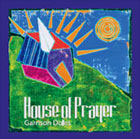
Bonus round: My sweetheart, Garrison Doles, has an amazing song inspired by the life of St. Patrick. It incorporates the ancient prayer of encompassing known as “St. Patrick’s Breastplate” or “Deer’s Cry.” Click this audio player to hear “Patrick on the Water” (from Gary’s CD House of Prayer).

[To use the “St. Patrick: Deer’s Cry” image, please visit this page at janrichardsonimages.com. Your use of janrichardsonimages.com helps make the ministry of The Painted Prayerbook possible. Thank you!]