Archive for the ‘Lent’ Category

Day 3: Into the Wilderness

February 22, 2012

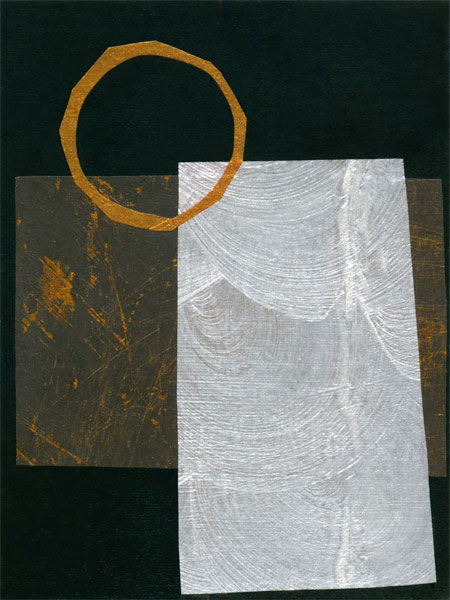
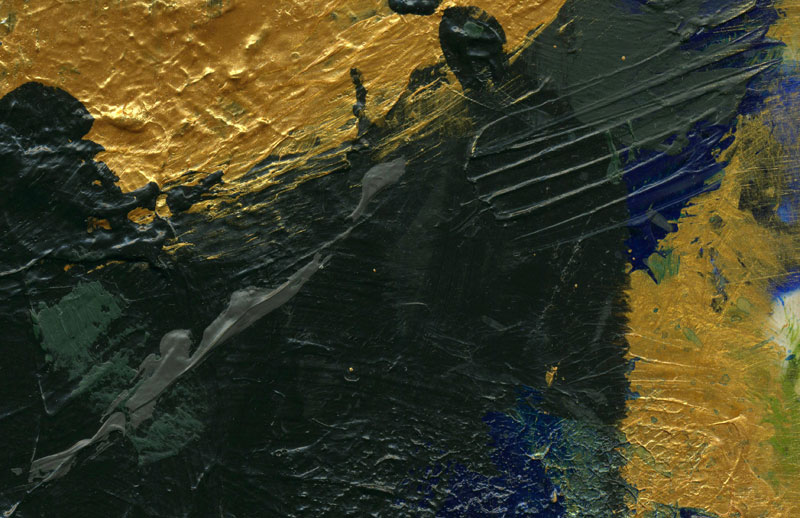
Image: Tempted © Jan Richardson
(click image to enlarge)

He was in the wilderness forty days, tempted by Satan.
—Mark 1.13

From a lectionary reading for Lent 1: Mark 1.9-15

Reflection for Friday, February 24 (Day 3 of Lent)

Still dripping with the waters of the Jordan, Jesus is poised on the brink of his public ministry. Yet instead of turning toward the people whom, in the days to come, he will heal and teach and challenge and love, he first turns his face toward the wilderness. Toward solitude. Toward a place where, shed of everything that is familiar to him, he will wrestle and reckon with who he is and what he has come to do.

Satan comes to that forty-day place. Mark’s version of the story omits the details of the temptations that Jesus’ visitor offers. We could turn to Matthew and Luke to remind us of the specific ways that Satan seeks to entice Jesus. In their Gospels we could see how Jesus, shimmering with the clarity the wilderness can provide, turns away from each temptation Satan brings, the temptations he has designed to target what he thinks are Jesus’ soft spots. Or we could instead enter into the wilderness with Jesus, travel into that landscape to which Lent draws us, and let Mark’s omission of the details serve as an invitation to us.

In the wilderness of Lent, what temptations might a visitor offer to you? What enticements would come to you, tailoring themselves—as temptations always do—especially to fit you, molding themselves with precision to the places where you are most vulnerable? What comes to distract you from your path? How might you enter this wilderness season as a space to see more clearly: who you are, what you have come to do?

[To use the image “Tempted,” please visit this page at janrichardsonimages.com. Your use of janrichardsonimages.com helps make the ministry of The Painted Prayerbook possible. Thank you!]
Day 2: Up From the Water

February 16, 2012

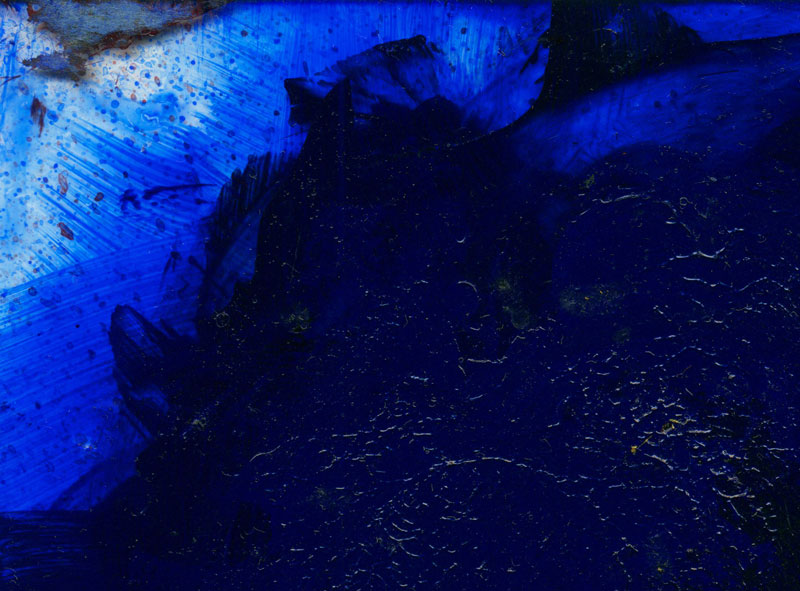
Image: Up From the Water © Jan Richardson
(click image to enlarge)

And just as he was coming up out of the water, he saw the heavens torn apart and the Spirit descending like a dove on him.
—Mark 1.10

From a lectionary reading for Lent 1: Mark 1.9-15

Reflection for Thursday, February 23 (Day 2 of Lent)

What does a rite of passage look like from the inside?

When I was married nearly two years ago, one of the things I wanted most on my wedding day was to be present to it. Walking down the aisle, I paid attention to taking in the beloved faces of those who had gathered from across decades to surround and to bless. I found myself suddenly overwhelmed, surprised by the tears that momentarily overtook me.

Just as Jesus was coming up out of the water, Mark writes in his story of Jesus’ baptism. And I wonder how that was for Jesus: to be inside that moment, to inhabit that space in which the waters break over him as he hears a voice name him Son and Beloved; to be in that place of passage as he moves into the life for which he has been preparing.

[To use the image “Up From the Water,” please visit this page at janrichardsonimages.com. Your use of janrichardsonimages.com helps make the ministry of The Painted Prayerbook possible. Thank you!]
Day 1/Ash Wednesday: Rend Your Heart

February 15, 2012

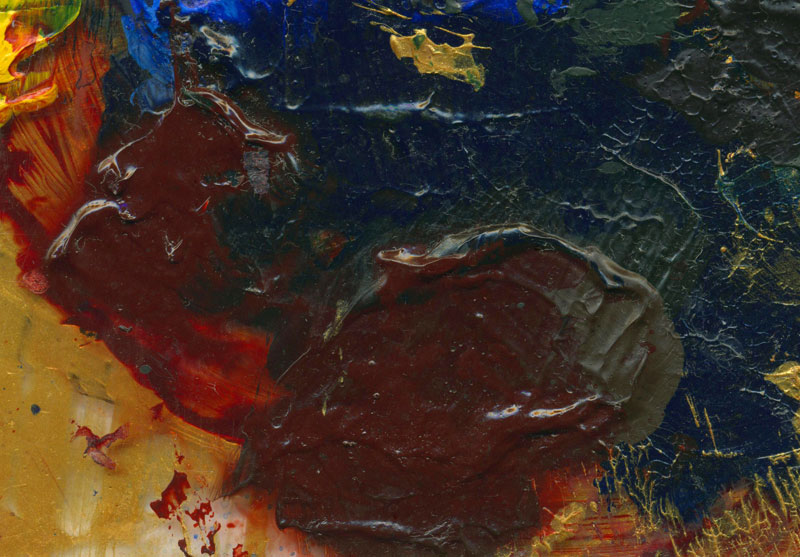
Image: Rend Your Heart © Jan Richardson (click image to enlarge)

Yet even now, says the Lord, return to me with all your heart,
with fasting, with weeping, and with mourning;
rend your hearts and not your clothing.

—Joel 2.12-13

From a lectionary reading for Ash Wednesday: Joel 2.1-2, 12-17

Reflection for Wednesday, February 22 (Day 1 of Lent)

Rend Your Heart
A Blessing for Ash Wednesday

To receive this blessing,
all you have to do
is let your heart break.
Let it crack open.
Let it fall apart
so that you can see
its secret chambers,
the hidden spaces
where you have hesitated
to go.

Your entire life
is here, inscribed whole
upon your heart’s walls:
every path taken
or left behind,
every face you turned toward
or turned away,
every word spoken in love
or in rage,
every line of your life
you would prefer to leave
in shadow,
every story that shimmers
with treasures known
and those you have yet
to find.

It could take you days
to wander these rooms.
Forty, at least.

And so let this be
a season for wandering,
for trusting the breaking,
for tracing the rupture
that will return you

to the One who waits,
who watches,
who works within
the rending
to make your heart
whole.

—Jan Richardson

2016 update: “Rend Your Heart” appears in my new book Circle of Grace: A Book of Blessings for the Seasons. You can find the book here.

P.S. For previous reflections on Ash Wednesday, please see The Memory of Ashes, Upon the Ashes, The Artful Ashes, and Ash Wednesday, Almost.

[To use the image “Rend Your Heart,” please visit this page at janrichardsonimages.com. Your use of janrichardsonimages.com helps make the ministry of The Painted Prayerbook possible. Thank you!]
I Will Remember: On the Eve of Ash Wednesday

February 14, 2012

Image: I Will Remember My Covenant © Jan Richardson

I will remember my covenant that is between me and you and every living creature of all flesh; and the waters shall never again become a flood to destroy all flesh.
—Genesis 9.15

From a lectionary reading for Lent 1: Genesis 9.8-17

Reflection for Tuesday, February 21

On a day years ago when I was dealing with a vexatious situation—a tussle with an institutional system, as I recall—I spent some time talking with Gary. Gifted at thinking through things with me, Gary mostly listened and helped me name some possible options for moving forward. Then, as we were finishing the conversation, Gary said to me, “The thing to remember here, Jan, is that I am on your side.”

I am on your side.

For those who don’t know me, let me say this: I was past forty when I married, nearly two years ago now. A fervently focused person from the time I was a child, I have been a Woman with a Plan—even when the plan was changing—nearly all my adult life. I enjoyed being in relationship but prized my independence and understood the importance of finding and making a life that I loved, one in which my sense of wholeness didn’t rely on being involved with someone else.

I will tell you that after Gary showed up, I realized I had vastly underestimated the kind of claim that a relationship could have on me. More than a decade later, I continue to marvel at the strangely wondrous state of being so met by another person. In a relationship that’s grounded in that mutual sense of being met, I have come to see how it’s possible to become intertwined and tangled up with another in ways that do not confine and limit us but instead help us to know ourselves more clearly, open doorways to paths we had not imagined on our own, and draw us deeper into who God has created us to be.

I am on your side.

The narrative of Noah is, among other things, an amazing story of the God who chooses to become tangled up with us, who takes our side, who risks casting God’s lot with us. It is a Big Deal on God’s part to make such a covenant. Yet as I spiral back around this story, it occurs to me that for Noah to accept this is no small thing.

To be sure, God is insistent about binding Godself to Noah, along with his family and his descendants. In this passage, God speaks the word covenant seven times, the repetition becoming something of a litany as God tells Noah—again and again—what God is doing. I am establishing my covenant with you, God says. This is the sign of the covenant that I make between me and you, God emphasizes. I will remember my covenant, God insists. And so forth, until God decides that it has sunk in, that Noah gets it.

But a covenant does not run in one direction, and Noah must choose whether he in fact wants to be a party to this covenant, to receive this marvel that is wondrous but weighty. He must decide whether he wants to be so claimed by God, and whether the God who wants to take his side is offering a relationship that will be a cage that makes him smaller or a home that frees him to be who he is.

Tomorrow, as we cross the threshold into Lent, we will hear the words of the prophet Joel as he tells us, “Rend your hearts.” We, like Noah, can choose to do this, to turn toward God, because God has already opened God’s own heart to us. God keeps letting God’s heart break for us. Keeps choosing to become bound to us. To become entangled with us. To covenant with us and with creation and with those who will come after us.  Keeps taking our side even when we have wandered into the far country, bent on a path of our own stubborn choosing. In this season God asks us, invites us, dares us to let ourselves be claimed.

Here on the threshold of Lent, who or what have you allowed to claim you? Do you find yourself becoming more free, more yourself in this claiming, or more confined? Where do you find the presence of God in the connections that hold you? Are there any entanglements that God might be inviting you to look at in this coming season? What do you resist inviting God to claim in your life?

As we enter into Lent, may this season draw you closer to the One who persists in seeking us out. Blessings.

[To use the image “I Will Remember My Covenant,” please visit this page at janrichardsonimages.com. Your use of janrichardsonimages.com helps make the ministry of The Painted Prayerbook possible. Thank you!]
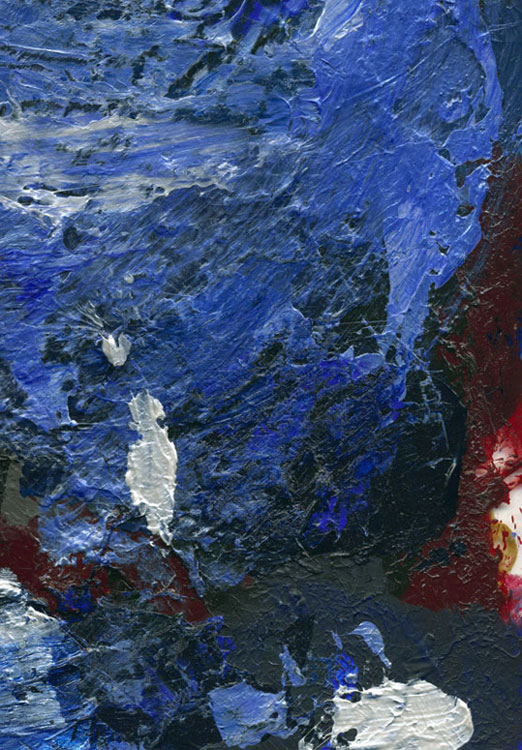
Teach Me Your Paths: Entering Lent

February 13, 2012

Teach Me Your Paths © Jan L. Richardson

Make me to know your ways, O Lord; teach me your paths.
—Psalm 25.4

From a lectionary reading for Lent 1: Psalm 25.1-10

Advent and Christmas are not so very far behind us, and already the season of Lent draws close. The liturgical year can feel quite compressed right about now, but perhaps this is just as it should be. The season of Lent invites us, after all, to live into the Incarnation—to wrestle with what it means that God became flesh; to discern how God calls us to let the Word become flesh in us; to let go of what hinders us from recognizing Christ and finding and following the pathways he opens to us.

For me, these brief weeks between Christmas and the beginning of Lent this year have been a time of living into the paths that began to open up in my studio during the season of Advent. Those who have been journeying with me for some time know that last year was a relatively fallow one, art-wise. It was one of those seasons that happens periodically in the rhythm of the creative life—a time when not much seemed to be happening at the drafting table (and what was happening was vexing), but deep beneath the surface, preparation was taking place. Advent became a time for beginning to come to the surface, for experimenting and moving in some new directions, for finding and following the lines that presented themselves.

As I continued to follow those lines into this new year, new images came, arriving in forms I could not have predicted. And here at the outset of Lent, the studio teaches me anew the invitation that lies at the heart of the coming season: to pay attention, to keep practicing, to allow God to wear away what hinders us, to be open to the surprising turns and openings that draw us deeper into the path of God.

During this Lenten season, I’ll be sharing the images that have emerged in recent weeks. I’ll post an image daily throughout Lent. Brief reflections will accompany the images for the forty days of Lent, and I’ll also post images and my usual reflections for the Sundays of Lent (which aren’t counted in the forty days). I offer these not just to give you a glimpse of what’s been taking shape in my studio but as an invitation to you to engage your own path and to look for the openings that are waiting for you in the coming weeks. I’ll be posting each reflection about a week in advance of the day it’s intended for.

If you’d like to receive these reflections during Lent (and beyond), there’s a subscription signup form near the top of the sidebar; just submit your email address, then respond to the confirmation email that you’ll automatically receive, and each new reflection will be delivered to your inbox. Or, as usual, you can always find the reflections here at The Painted Prayerbook.

If you enjoy what you find here, there are several ways you can help sustain this ministry and enable it to continue. Doing any of these during this Lenten season would be a tremendous form of support:

  • Share a link to a reflection via Facebook, Twitter, email, blogs, or through other media. You’ll find share buttons at the end of each post, or you can simply copy the link for the reflection and share it.
  • Make use of the Jan Richardson Images website, or give a subscription as a gift to your pastor or church. Designed to make my artwork easily accessible for use in worship and related settings, the images site includes all the images I’ve created for my blogs. You can download individual images, or, with an annual subscription, you can have access to all the images for a year’s time. Please know I’m always happy to work with churches that may not be able to afford the full subscription price; just drop me a line through the images site. And thanks for including a credit line when you use an image; this is always a crucial way to support artists.
  • Become a patron of The Painted Prayerbook. Although I’m an ordained minister in the United Methodist Church, my ministry involves raising my entire income myself. Purchasing books and art prints (available at janrichardson.com) and using the Jan Richardson Images site are great ways to be a patron of my work and sustain my ministry; you can also become a patron by making a contribution. For more info, visit the Patron page on my main website.

Thank you so much for sharing in my ministry. Your presence here is an especially welcome form of support, as are your prayers! Know that I hold you in prayer and I look forward to sharing the season of Lent with you.  May God draw you down a wondrous path in the weeks ahead.

[To use the “Teach Me Your Paths” image, please visit this page at janrichardsonimages.com. Your use of janrichardsonimages.com helps make the ministry of The Painted Prayerbook possible. Thank you!]
Easter Sunday: Risen

April 20, 2011

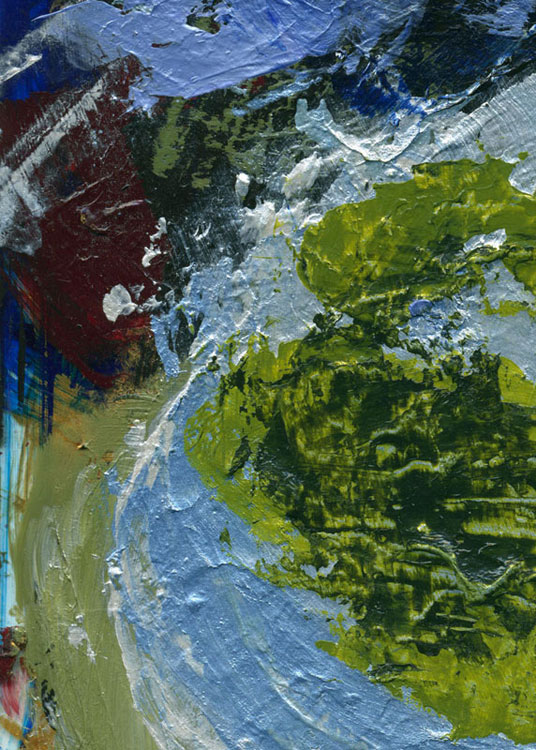
Image: Easter IIImage: Easter II © Jan Richardson

Reading from the Gospels, Easter Sunday:
John 20.1-18 or Matthew 28.1-10

Risen
For Easter Day

If you are looking
for a blessing,
do not linger
here.

Here
is only
emptiness,
a hollow,
a husk
where a blessing
used to be.

This blessing
was not content
in its confinement.

It could not abide
its isolation,
the unrelenting silence,
the pressing stench
of death.

So if it is
a blessing
you seek,
open your own
mouth.

Fill your lungs
with the air
this new
morning brings

and then
release it
with a cry.

Hear how the blessing
breaks forth
in your own voice,

how your own lips
form every word
you never dreamed
to say.

See how the blessing
circles back again,
wanting you to
repeat it,
but louder,

how it draws you,
pulls you,
sends you
to proclaim
its only word:

Risen.
Risen.
Risen.

—Jan Richardson

2016 update: “Seen” appears in my new book, Circle of Grace: A Book of Blessings for the Seasons.

P.S. For a previous reflection on Easter Sunday, see Easter Sunday: Out of the Garden. I am also offering daily reflections throughout Holy Week at the Sanctuary of Women blog and would be delighted to have your company there as well. And if you haven’t seen the videos that Garrison Doles and I recently released for Lent and Easter, I welcome you to check them out here: Listening at the Cross and The Hours of Mary Magdalene. Know that I’m holding you in prayer throughout this Holy Week, and I wish you a joyous Easter!

[To use the “Easter II” image, please visit this page at janrichardsonimages.com. Your use of janrichardsonimages.com helps make the ministry of The Painted Prayerbook possible. Thank you!]
Holy Saturday: The Art of Enduring

April 19, 2011

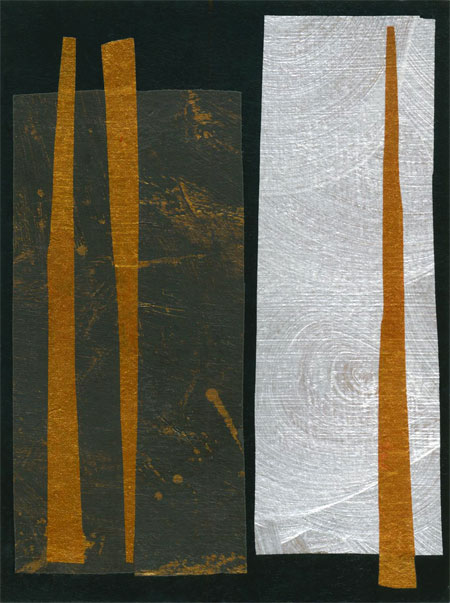
Image: Holy Saturday IIImage: Holy Saturday II © Jan Richardson

Reading from the Gospels, Holy Saturday:
Matthew 27.57-66 or John 19.38-42

The Art of Enduring
For Holy Saturday

This blessing
can wait as long
as you can.

Longer.

This blessing
began eons ago
and knows the art
of enduring.

This blessing
has passed
through ages
and generations,
witnessed the turning
of centuries,
weathered the spiraling
of history.

This blessing
is in no rush.

This blessing
will plant itself
by your door.

This blessing
will keep vigil
and chant prayers.

This blessing
will bring a friend
for company.

This blessing
will pack a lunch
and a thermos
of coffee.

This blessing
will bide
its sweet time

until it hears
the beginning
of breath,
the stirring
of limbs,
the stretching,
reaching,
rising

of what had lain
dead within you
and is ready
to return.

—Jan Richardson

2016 update: “The Art of Enduring” appears in my new book, Circle of Grace: A Book of Blessings for the Seasons.

For a previous reflection on Holy Saturday, see Holy Saturday: A Day Between. I’m also offering daily reflections throughout Holy Week at the Sanctuary of Women blog.

[To use the image “Holy Saturday II,” please visit this page at janrichardsonimages.com. Your use of janrichardsonimages.com helps make the ministry of The Painted Prayerbook possible. Thank you!]
Good Friday: What Abides

April 19, 2011

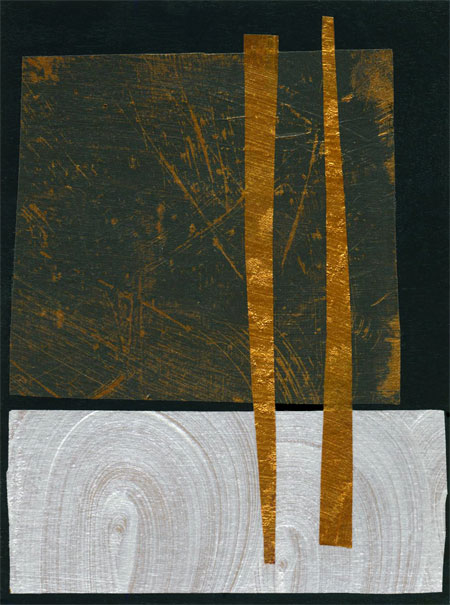
Image: Good Friday IIImage: Good Friday II © Jan L. Richardson

Reading from the Gospels, Good Friday:
John 18.1-19.42

What Abides
For Good Friday

You will know
this blessing
by how it
does not stay still,
by the way it
refuses to rest
in one place.

You will recognize it
by how it takes
first one form,
then another:

now running down
the face of the mother
who watches the breaking
of the child
she had borne,

now in the stance
of the woman
who followed him here
and will not leave him
bereft.

Now it twists in anguish
on the mouth of the friend
whom he loved;

now it bares itself
in the wound,
the cry,
the finishing and
final breath.

This blessing
is not in any one
of these alone.

It is what
binds them
together.

It is what dwells
in the space
between them,
though it be torn
and gaping.

It is what abides
in the tear
the rending makes.

—Jan Richardson

2016 update: “What Abides” appears in my new book, Circle of Grace: A Book of Blessings for the Seasons.

P.S. For a previous reflection on Good Friday, see Good Friday: In Which We Get Nailed. And blogging daily throughout Holy Week at the Sanctuary of Women blog.

[To use the “Good Friday II” image, please visit this page at janrichardsonimages.com. Your use of janrichardsonimages.com helps make the ministry of The Painted Prayerbook possible. Thank you!]
Holy Thursday: Take a Blessing

April 18, 2011

Image: Holy Thursday IIImage: Holy Thursday II © Jan Richardson

Reading from the Gospels, Holy/Maundy Thursday:
John 13.1-17, 31b-35

The story is told of St. Brigid, the beloved Celtic saint and leader of the early church in Ireland, that a man with leprosy came to her one day. Knowing the saint’s reputation for hospitality, the man says to Brigid, “For God’s sake, Brigid, give me a cow.” Brigid’s response suggests this man may have made a habit of such requests; though normally lavish with her generosity, Brigid tells the man to leave her alone. He persists.

Brigid asks the man how it might be if they prayed that God would heal him of his leprosy. “No,” the man tells her, “I get more this way than if I were clean.” Brigid, in her turn, persists with him, urging him to “take a blessing and be cleansed.” The man acknowledges he is indeed in much pain; he gives in and accepts the blessing and the gift of healing it brings. So great is his gratitude to Brigid—and to God—that he vows his devotion to Brigid and pledges to be her servant and woodman.

Sometimes it can be daunting to receive a blessing. As this man with leprosy recognized, a blessing requires something of us. It does not leave us unchanged. A blessing offers us a glimpse of the wholeness that God desires for us and for the world, and it beckons us to move in the direction of this wholeness. It calls us to let go of what hinders us, to cease clinging to the habits and ways of being that may have become comfortable but that keep us less than whole.

This can take some work.

Part of the challenge involved with a blessing is that receiving it actually places us for a time in the position of doing no work—of simply allowing it to come. For those who are accustomed to constantly doing and giving and serving, being asked to stop and receive can cause great discomfort. To receive a blessing, we have to give up some of our control. We cannot direct how the blessing will come, and we cannot define where the blessing will take us. We have to let it do its own work in us, beyond our ability to chart its course.

On the night that Jesus takes up his basin and towel and begins to wash the feet of his disciples, Simon Peter learns how difficult and how wondrous it can be to “take a blessing,” as Brigid put it. He resists, then allows himself to receive, the grace of it dripping from his toes.

This blessing will indeed require something of Simon Peter and of his fellow disciples. When Jesus has finished the washing, put on his robe, put away his towel and bowl, he turns to them and says, “Do you know what I have done to you?…If I, your Lord and Teacher, have washed your feet, you also ought to wash one another’s feet. For I have set you an example, that you also should do as I have done to you. Very truly, I tell you,” Jesus continues, “servants are not greater than their master, nor are messengers greater than the one who sent them. If you know these things, you are blessed if you do them.”

You are blessed if you do them.

A blessing is not finished until we let it do its work within us and then pass it along, an offering grounded in the love that Jesus goes on to speak of this night. Yet we cannot do this—as the disciples could not do this—until we first allow ourselves to simply receive the blessing as it is offered: as gift, as promise, as sign of a world made whole.

During this Holy Week, I am offering a series of blessings for Holy Thursday, Good Friday, Holy Saturday, and Easter Sunday. As we move through these days, may these blessings come as gift, as grace. In this week, may we take a blessing, and become one in turn.

Blessing You Cannot Turn Back
For Holy Thursday

As if you could
stop this blessing
from washing
over you.

As if you could
turn it back,
could return it
from your body
to the bowl,
from the bowl
to the pitcher,
from the pitcher
to the hand
that set this blessing
on its way.

As if you could
change the course
by which this blessing
flows.

As if you could
control how it
pours over you—
unbidden,
unsought,
unasked,

yet startling
in the way
it matches the need
you did not know
you had.

As if you could
become undrenched.

As if you could
resist gathering it up
in your two hands
and letting your body
follow the arc
this blessing makes.

—Jan Richardson

2016 update: “Blessing You Cannot Turn Back” appears in my new book Circle of Grace: A Book of Blessings for the Seasons.

P.S. For an earlier reflection for Holy Thursday, visit Holy Thursday: Feet and Food. I am also offering daily reflections at the Sanctuary of Women blog, where this week we’re traveling in the company of the women of Holy Week and Easter.

[To use the “Holy Thursday II” image, please visit this page at janrichardsonimages.com. Your use of janrichardsonimages.com helps make the ministry of The Painted Prayerbook possible. Thank you!]

The Hours of Mary Magdalene

April 13, 2011

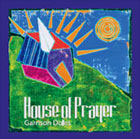
Just in time for Holy Week, Gary and I have released a new video today that we’re excited to share with you. The Hours of Mary Magdalene features images from my mixed media series of the same name, combined with Gary’s enchanting song “Mary Magdalena” from his CD House of Prayer. The video draws from the life Mary Magdalene, whose story is so intertwined with the dying and rising of Christ. Called by Christ to be the first to proclaim the news of his resurrection, Mary Magdalene became known in the Middle Ages as the “apostle to the apostles.”

The video draws also from the fascinating body of legends about the Magdalene—stories that may be slim on facts but convey something of our centuries-old fascination with this woman who played a distinctive role as a follower of Christ. As a preacher chick, I’m especially fond of the legend in which Mary Magdalene moves to France and becomes a famous preacher. (I like to imagine her going for a cappuccino and a chocolate croissant after holding forth.) She is also said to have released prisoners from a French jail. In the video you’ll find glimpses of these and other legends, including one that tells that she spent her final years as a hermit in the wilderness, clad only in her long hair; at the canonical hours, angels would come and whoosh her up to heaven for the liturgy, then would whoosh her back down again.

The Magdalene series found much inspiration in Books of Hours, those exquisite illuminated prayerbooks that became so popular among medieval folk as a companion for prayer. You can find out more about the original series and the influences and legends behind it on the Magdalene page in my online gallery.

We have launched the video at the splendid Vimeo site; if you click the Vimeo logo in the player embedded above, it will take you directly to a larger version of the video. We have also released the video on YouTube, where you can view it here. To share the video in worship and related settings, you can find a high-resolution version by visiting The Hours of Mary Magdalene on the Jan Richardson Images website. As always, using the Jan Richardson Images site helps make possible the ministry that I offer at The Painted Prayerbook and beyond. And downloading the video will support Gary’s ministry as well!

As Holy Week approaches, Gary and I hope you will enjoy a few moments in the contemplative company of the Magdalene, and that she may inspire us all to tell forth the words we are called to speak. Blessings!