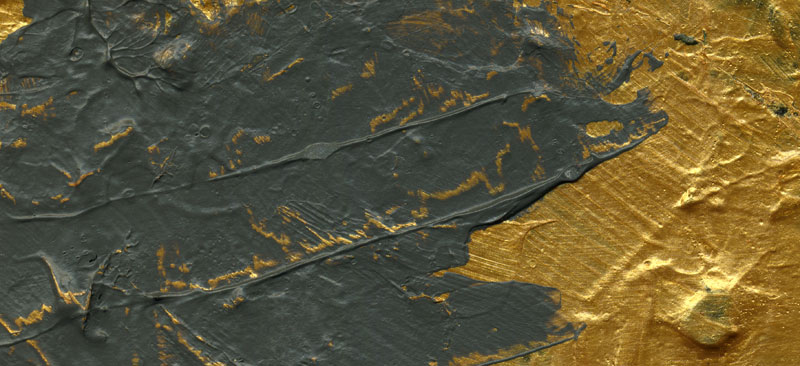
Day 11: Who Brought You Out of Slavery

March 1, 2012

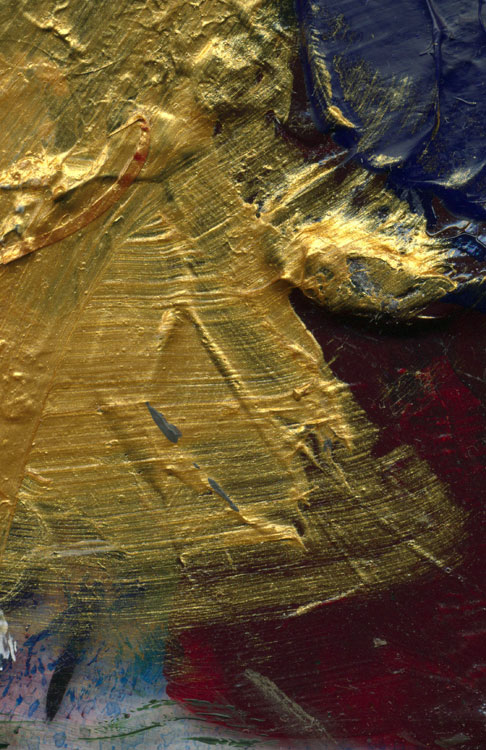
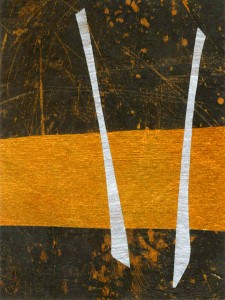
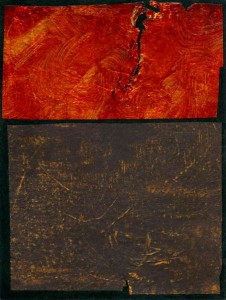
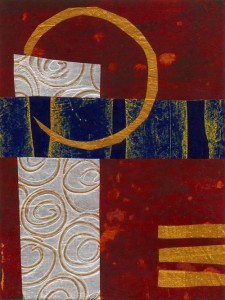
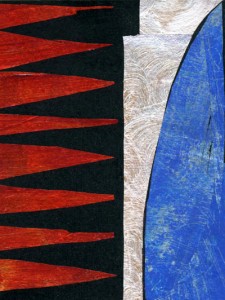
Image: Out of Slavery © Jan Richardson (click image to enlarge)

I am the Lord your God, who brought you out of the land of Egypt,
out of the house of slavery.

—Exodus 20.2

From a lectionary reading for Lent 3: Exodus 20.1-17

Reflection for Monday, March 5 (Day 11 of Lent)

Repeatedly in the story of the Exodus, God reminds the people who God is by describing what God has done for them. God’s saving action becomes a kind of name for the Holy One; what God does is intimately intertwined with who God is, and is how the people come to know God.

I am the Lord, and I will free you…and deliver you from slavery, God tells Moses to say to the people of Israel (Exodus 6.6).

I am the Lord your God, who brought you out of the land of Egypt, out of the house of slavery, God says in today’s reading.

I am the Lord your God, who brought you out of the land of Egypt, to be your God (Numbers 15.41).

Throughout the Exodus and beyond, God continues to use this kind of naming as God continues to work among the people and reveal more and more of who God is:

I am the Lord who heals you (Exodus 15.26).

I am the Lord; I sanctify you (Leviticus 22.32).

I am the Lord, who made all things, who alone stretched out the heavens, who by myself spread out the earth (Isaiah 44.24).

I am the Lord your God, who stirs up the sea so that its waves roar (Isaiah 51.15).

I am the Lord your God, who teaches you for your own good, who leads you in the way you should go (Isaiah 48.17).

In the sacred story that is your own life, how does the name of God appear? How do you describe God based on what God has done for you, how God has become known to you, where God has brought you out of?

This reflection is part of the series Teach Me Your Paths: A Pilgrimage into Lent.

[To use the image “Out of Slavery,” please visit this page at janrichardsonimages.com. Your use of janrichardsonimages.com helps make the ministry of The Painted Prayerbook possible. Thank you!]
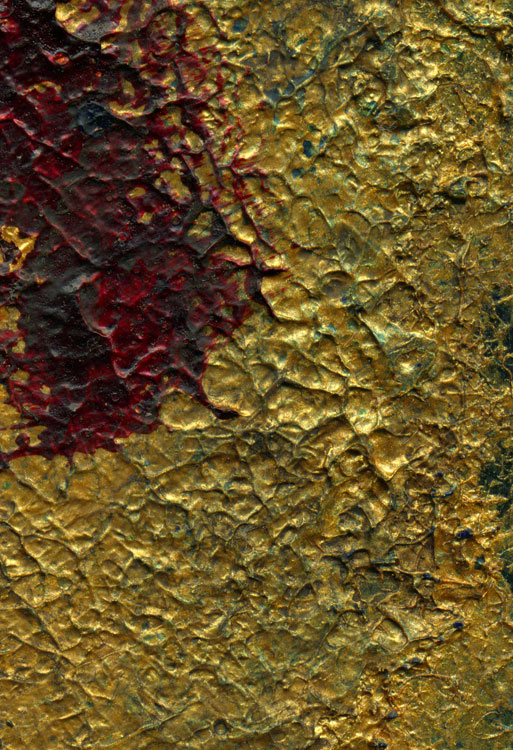

2nd Sunday in Lent: For the Sake of the Gospel

February 28, 2012

Image: For the Sake of the Gospel © Jan Richardson

For those who want to save their life will lose it, and those who lose their life for my sake, and for the sake of the gospel, will save it.
—Mark 8.35

From a lectionary reading for Lent 2: Mark 8.31-38

Reflection for the Second Sunday in Lent (March 4)

Blessing in the Round

This blessing
cannot help it;
it’s the way
it was designed.

Lay it down
and it rises again.

Release it
and it returns.

Give it away
and it makes a path
back to you.

There is no explaining
how it delights
in reappearing
when you have ceased
to hold it,
no hiding the sly smile
it wears
when it shows up
at your door,
no mistaking the wonder
when it circles back around
just at the moment
you thought you had
spent it completely,
had poured it out
with abandon
where you saw
the deepest thirst for it,
had put it entirely
in the hands
of those desperate
in their hunger.

But here it is,
the perfect circle of it
pressing into your hand
that curls around it
and then lets go,
receiving
and releasing
and receiving again,
like the breath
that does not belong to us
but sets us in motion.

—Jan Richardson

2016 update: “Blessing in the Round” appears in my new book Circle of Grace: A Book of Blessings for the Seasons. You can find the book here.

This reflection is part of the series “Teach Me Your Paths: A Pilgrimage into Lent.” If you’re new to the series, welcome! You can visit the first post, Teach Me Your Paths: Entering Lent, to pick it up from the beginning.

P.S. For previous reflections on this story (including Matthew’s version), click the images or titles below:


Blessing in the Shape of a Cross


Lent 2: In Which We Set Our Mind Somewhere


To Have without Holding

[To use the image “For the Sake of the Gospel,” please visit this page at janrichardsonimages.com. Your use of janrichardsonimages.com helps make the ministry of The Painted Prayerbook possible. Thank you!]



Day 10: Divine Things and Human Things

February 27, 2012

Image: Divine Things and Human Things (click image to enlarge)

For you are setting your mind not on divine things but on human things.
—Mark 8.33

From a lectionary reading for Lent 2: Mark 8.31-38

Reflection for Saturday, March 3 (Day 10 of Lent)

And how do we untangle the two? So immersed in a world created by God and infused with the divine, how do we distinguish what is of God from what is not?

In our pilgrimage through Lent, the path keeps inviting us to practice discernment, to enter into the sorting and sifting that lie at the heart of this word and this season. These Lenten days ask us to open our eyes and to see our landscape—the world around us, the world within us—with greater clarity. As I move through these days, I pray for vision that will help me perceive the edges of things and for courage to make wise choices among them; choices that draw me deeper into the divine, from which it is so easy to become distracted.

But I pray also for this: that I may recognize the presence of God that infuses what is human and earthly. That I may have eyes to perceive how the lines blur. That I may work for a day when it will be impossible to discern and distinguish between the human and the divine, a day when we will no longer be able to say, This is of God, and this is not.

This reflection is part of the series “Teach Me Your Paths: A Pilgrimage into Lent.” If you’re new to the series, welcome! You can visit the first post, Teach Me Your Paths: Entering Lent, to pick it up from the beginning.

[To use the image “Divine Things and Human Things,” please visit this page at janrichardsonimages.com. Your use of janrichardsonimages.com helps make the ministry of The Painted Prayerbook possible. Thank you!]

Day 9: Hoping Against Hope

February 26, 2012

Image: Hoping Against Hope © Jan Richardson (click image to enlarge)

Hoping against hope, he believed.
—Romans 4.18

From a lectionary reading for Lent 2: Romans 4.13-25

Reflection for Friday, March 2 (Day 9 of Lent)

Rough Translations

Par’ elpida ep’ elpidi.
—Romans 4.18, Greek New Testament
(Literally, “Against hope with hope.”)

Hope nonetheless.
Hope despite.
Hope regardless.
Hope still.

Hope where we had ceased to hope.
Hope amid what threatens hope.
Hope with those who feed our hope.
Hope beyond what we had hoped.

Hope that draws us past our limits.
Hope that defies expectations.
Hope that questions what we have known.
Hope that makes a way where there is none.

Hope that takes us past our fear.
Hope that calls us into life.
Hope that holds us beyond death.
Hope that blesses those to come.

—Jan Richardson

2016 update: “Rough Translations” appears in my new book Circle of Grace: A Book of Blessings for the Seasons. You can find the book here.

This reflection is part of the series “Teach Me Your Paths: A Pilgrimage into Lent.” If you’re new to the series, welcome! You can visit the first post, Teach Me Your Paths: Entering Lent, to pick it up from the beginning.

[To use the image “Hoping Against Hope,” please visit this page at janrichardsonimages.com. Your use of janrichardsonimages.com helps make the ministry of The Painted Prayerbook possible. Thank you!]
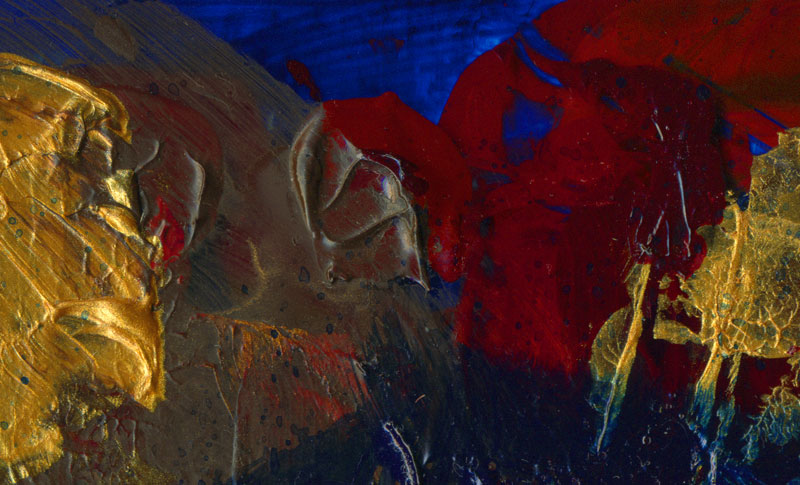
Day 8: Who Gives Life to the Dead

February 25, 2012

Image: And Calls Into Existence the Things That Do Not Exist
© Jan Richardson

. . . in the presence of the God in whom he believed, who gives life to the dead and calls into existence the things that do not exist.
—Romans 4.17

From a lectionary reading for Lent 2: Romans 4.13-25

Reflection for Thursday, March 1 (Day 8 of Lent)

Who Quickens the Dead

Who quickeneth the dead, and calleth those things which be not as though they were. —Romans 4.17, King James Version

As if
dealing with the living
were not enough.

As if
we were ready
for what we have
released
and grieved

to suddenly wake,
open its eyes,
and turn its face
toward us again.

As if
we believed
the hand that
wakes the dead
could wake us.

As if
the voice
that calls
into being
what does not exist
could call to us.

As if
we could let it.

—Jan Richardson

This reflection is part of the series “Teach Me Your Paths: A Pilgrimage into Lent.” If you’re new to the series, welcome! You can visit the first post, Teach Me Your Paths: Entering Lent, to pick it up from the beginning.

[To use the image “And Calls Into Existence the Things That Do Not Exist,” please visit this page at janrichardsonimages.com. Your use of janrichardsonimages.com helps make the ministry of The Painted Prayerbook possible. Thank you!]
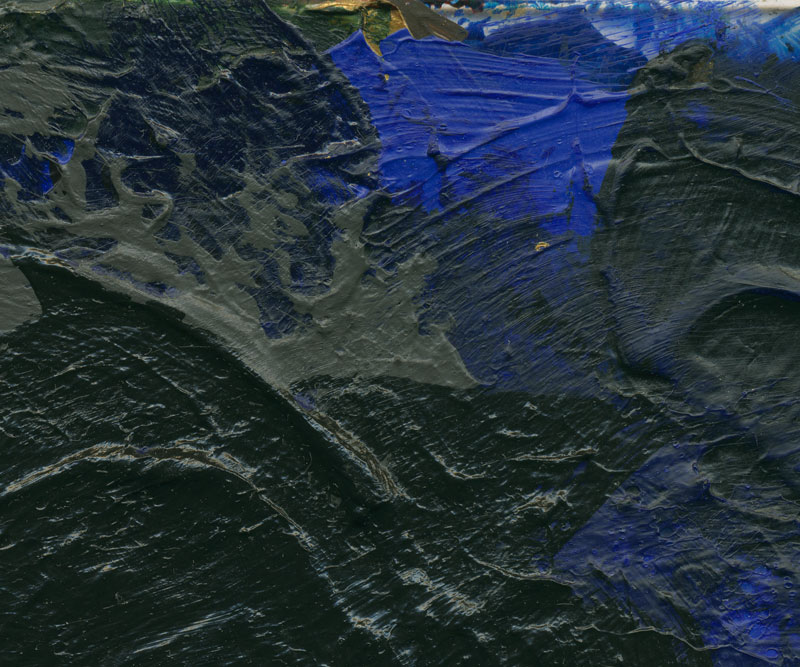
Day 7: The Ends of the Earth Shall Remember

February 24, 2012

Image: The Ends of the Earth Shall Remember (click image to enlarge)

All the ends of the earth shall remember and turn to the Lord.
—Psalm 22.27

From a lectionary reading for Lent 2: Psalm 22.23-31

Reflection for Wednesday, February 29 (Day 7 of Lent)

I once met a woman who works with a group designed for people whose memories have become damaged. Living with Alzheimer’s disease, traumatic brain injuries, or other conditions that have eroded their ability to remember, these people gather together to help one another navigate a once-familiar path now made strange and often fearsome by the holes and fissures that have opened up. At the heart of this woman’s work lay the questions: Who are we if we cannot remember? How do we help others know who they are by holding their memories for them, and finding ways to help them know their lives?

I was fascinated to hear this woman talk about the group and the tools she invites them to use in their work together. Art, photographs, conversation, writing: each word, each image becomes a tangible piece to hold onto. These pieces cannot fill all the holes, cannot mend all the gaps in the individual memories of the group members. But together, the work of the group helps make a larger kind of memory possible—a memory that does not reside entirely in the individual but can be glimpsed in the pieces created and shared with the group members, with friends, with family, with those who help them know who they are.

Who are we if we cannot remember? As the people of God, what have we forgotten, and what knowing—of God, of ourselves—have we lost as a result? Psalm 22 tells us that we are held within a larger memory that extends across time and encompasses all creation. All the ends of the earth shall remember, the psalmist writes, and turn to the Lord. In this time, how will we tell the story of who and whose we are? In words, in images, how will we reclaim the pieces of memory and hold them for and with one another, and so become whole?

This reflection is part of the series “Teach Me Your Paths: A Pilgrimage into Lent.” If you’re new to the series, welcome! You can visit the first post, Teach Me Your Paths: Entering Lent, to pick it up from the beginning.

[To use the image “The Ends of the Earth Shall Remember,” please visit this page at janrichardsonimages.com. Your use of janrichardsonimages.com helps make the ministry of The Painted Prayerbook possible. Thank you!]
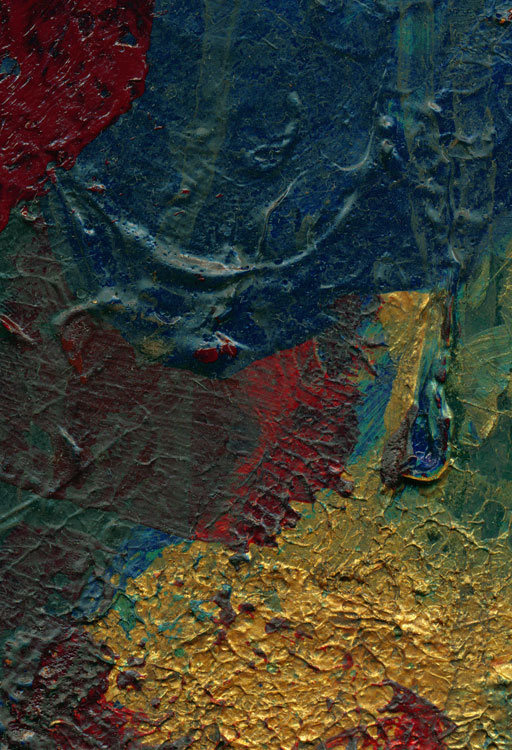
Day 6: I Will Bless Her

February 24, 2012

Image: I Will Bless Her © Jan Richardson (click image to enlarge)

I will bless her, and she shall give rise to nations.
—Genesis 17.16

From a lectionary reading for Lent 2: Genesis 17.1-7, 15-16

Reflection for Tuesday, February 28 (Day 6 of Lent)

In my studio, a piece of work may lie dormant for a long, long time. A scrap of an idea, a shred of painted paper, a pattern: it shimmers for a moment, then says wait. Months pass, years, and suddenly it comes to life. It lands next to another scrap that causes me to see it differently, or a shift in my style enables me to know what to do with it now, or the sheer passage of time does its work, and now the piece is ready—or, finally, I am.

But to experience this awakening in one’s body, to know old dreams blazing anew in one’s own flesh, to feel the sensation of life making itself known within the wilderness of a womb that has ached for birthing for years, for decades, long beyond all reason… Who can fathom how life takes hold in the places we had stopped looking?

Hildegard of Bingen, that great medieval mystic, had a word for it: veriditas. The greening power of God.

This reflection is part of the series “Teach Me Your Paths: A Pilgrimage into Lent.” If you’re new to the series, welcome! You can visit the first post, Teach Me Your Paths: Entering Lent, to pick it up from the beginning.

[To use the image “I Will Bless Her,” please visit this page at janrichardsonimages.com. Your use of janrichardsonimages.com helps make the ministry of The Painted Prayerbook possible. Thank you!]
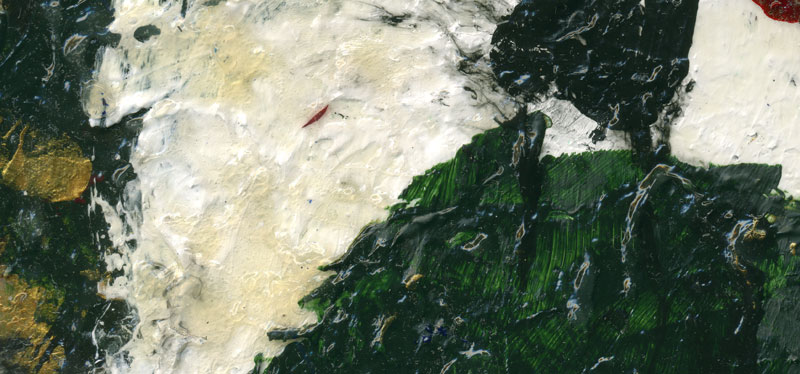
Day 5: I Will Establish My Covenant

February 23, 2012

Image: I Will Establish My Covenant © Jan Richardson

I will establish my covenant between me and you.
—Genesis 17.7

From a lectionary reading for Lent 2: Genesis 17.1-7, 15-16

Reflection for Monday, February 27 (Day 5 of Lent)

That word, again: covenant. We encountered it just a few days ago in the story of Noah, and now it returns, a persistent reminder of how God seeks us, takes our side, desires to become bound to us. This time the covenant brings new names: Abraham. Sarah. The names that Abram and Sarai had borne for decades fall away, their new names a sign of the altering and transforming and new life that God brings, far beyond the time we might have looked for it.

To be God to you, the Holy One says, and to your offspring after you. God will keep making the covenant, the promise, the berit of the Hebrew scriptures, where the word occurs again and again throughout the story of the people of Israel. Will keep being God to us, keep binding Godself to us, renewing us and revealing our true names.

This reflection is part of the series “Teach Me Your Paths: A Pilgrimage into Lent.” If you’re new to the series, welcome! You can visit the first post, Teach Me Your Paths: Entering Lent, to pick it up from the beginning.

[To use the image “I Will Establish My Covenant,” please visit this page at janrichardsonimages.com. Your use of janrichardsonimages.com helps make the ministry of The Painted Prayerbook possible. Thank you!]
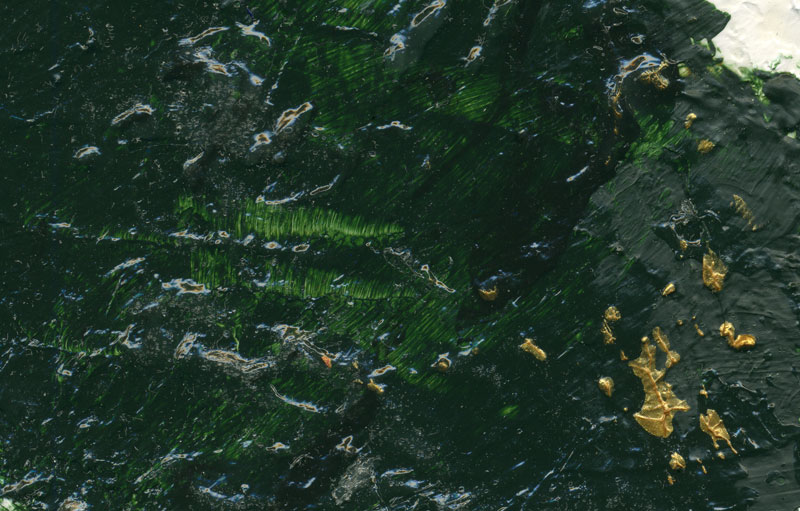
First Sunday of Lent: And the Angels Waited

February 23, 2012

Image: And the Angels Waited © Jan Richardson

And the angels waited on him.
—Mark 1.13

From a lectionary reading for Lent 1: Mark 1.9-15

Reflection for the First Sunday in Lent (February 26)

How will we see the angels if we don’t go into the wilderness? How will we recognize the help that God sends if we don’t seek out the places beyond what is comfortable to us, if we don’t press into terrain that challenges our habitual perspective? How will we find the delights that God provides even—and especially—in the desert places?

Blessing that Meets You
in the Wilderness

After the
desert stillness.

After the
wrestling.

After the
hours
and days
and weeks
of emptying.

After the
hungering
and the
thirsting.

After the
opening
and seeing
and knowing.

Let this blessing be
the first sweetness
that touches
your lips,

the bread
that falls into
your arms,

the cup
that welcoming hands
press into
yours.

Let this blessing be
the road that
returns you.

Let it be
the strength to carry
the wilderness
home.

—Jan Richardson

2016 update: “Blessing That Meets You in the Wilderness” appears in my new book Circle of Grace: A Book of Blessings for the Seasons. You can find the book here.

This reflection is part of the series “Teach Me Your Paths: A Pilgrimage into Lent.” If you’re new to the series, visit the first post, Teach Me Your Paths: Entering Lent, to pick it up from the beginning.

P.S. For reflections on this story from previous years, click the images or titles below:

Lent 1: A Blessing for the Wilderness
(Includes a blessing that you’re welcome to use in worship.)

Lent 1: Into the Wilderness

Lent 1: A River Runs through Him

Lent 1: Discernment and Dessert in the Desert
(Includes “Desert Prayer,” which you’re welcome to use in worship.)

[To use the image “And the Angels Waited,”  please visit this page at janrichardsonimages.com. Your use of janrichardsonimages.com helps make the ministry of The Painted Prayerbook possible. Thank you!]

 

Day 4: With the Wild Beasts

February 22, 2012

Image: With the Wild Beasts © Jan Richardson
(click image to enlarge)

And he was with the wild beasts.
—Mark 1.13

From a lectionary reading for Lent 1: Mark 1.9-15

Reflection for Saturday, February 25 (Day 4 of Lent)

I do not know why I should have it in my mind that these wild beasts come to comfort Jesus rather than eat him. But there it is. Perhaps it’s that word with. The wild beasts come not to stalk or attack or devour—as can happen in wild places, so let us not wax too romantic about the outdoors. They seem to come, rather, to be present to Jesus. To serve as companions. To be witnesses to his wrestling and provide solace in this space apart.

In this threshold place between what Jesus has known and the life that lies ahead of him, the creatures come as a reminder that God will not be domesticated, will not be tamed, is friendly with what lives by instinct and intuition. Within the God who fashioned and ordered the universe, something yet remains wild.

[To use the image “With the Wild Beasts,” please visit this page at janrichardsonimages.com. Your use of janrichardsonimages.com helps make the ministry of The Painted Prayerbook possible. Thank you!]