Archive for the ‘art’ Category

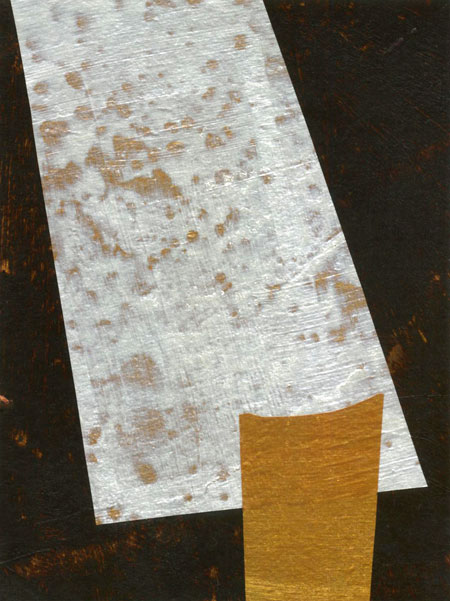
The Humble Seat

August 22, 2010


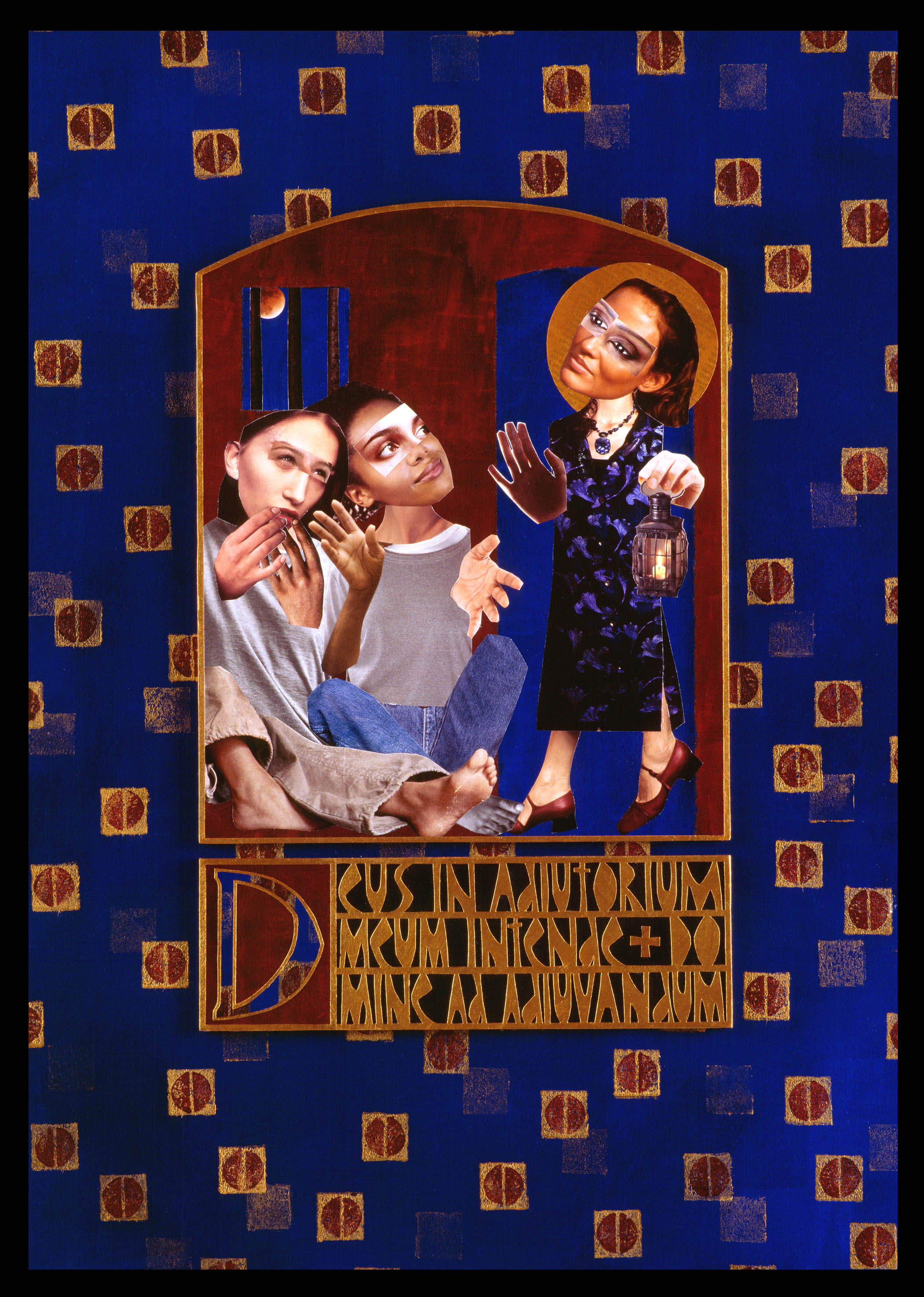
The Humble Seat © Jan L. Richardson

Reading from the Gospels, Proper 17/Ordinary 22/Pentecost +14, Year C (August 29): Luke 14.1, 7-14

Ah, the endless wisdom of the table! Throughout Jesus’ ministry, we see again and again how in much the same way that he never passes up an opportunity to share a meal with others, he rarely misses the chance to use a table as an occasion to teach. Whether it’s welcoming a woman who anoints him, or using the table as a way to talk about the kingdom of God, or employing the elements of a meal to describe who he himself is: the table, for Jesus, is always about right relationship, about how we are to live in community and communion with one another.

At the table that Luke tells of in next Sunday’s gospel lection, Jesus turns his attention not only to the kind of hosts we are to be—inviting those who owe us nothing—but also to the kind of guests we ought to be. When we receive an invitation to share in the table of another, Jesus says (a wedding banquet, in this case: Jesus’ ultimate image of the kingdom of God) we should come with no expectations, no intent to grasp at a seat of honor—from which, Jesus says, we might be ejected. When approaching the table, Jesus says, our stance, is to be one of humility, a posture that leaves room for surprise and for grace.

When it comes to humility, and discerning how we are called to embody this sometimes perplexing quality as the people of Christ, I often find myself turning back to the desert mothers and fathers, those ammas and abbas of the early church who articulated this disposition with such clarity. Of all the practices and habits that these early Christians engaged in, humility was the one that surpassed all others, and upon which all other practices depended. We see this, for instance, in Amma Theodora. In The Sayings of the Desert Fathers we read that Amma Theodora said, “Neither asceticism, nor vigils nor any kind of suffering are able to save, only true humility can do that.” She went on to say, “There was an anchorite who was able to banish the demons; and he asked them, ‘What makes you go away? Is it fasting?’ They replied, ‘We do not eat or drink.’ ‘Is it vigils?’ They replied, ‘We do not sleep.’ Is it separation from the world?’ ‘We live in the deserts.’ ‘What power sends you away then?’ They said, ‘Nothing can overcome us, but only humility.’ ‘Do you see how humility is victorious over the demons?’” Amma Theodora recognized that without humility, all our practices become hollow.

The desert folk, however, understood humility in a rather different way than we tend to in the 21st century. Where we sometimes equate humility with being a doormat, Roberta Bondi points out in her book To Love as God Loves: Conversations with the Early Church that “humility did not mean for them [the ammas and abbas] a continuous cringing, cultivating a low self-image, and taking a perverse pleasure in being always forgotten, unnoticed, or taken for granted. Instead, humility meant to them a way of seeing other people as being as valuable in God’s eyes as ourselves. It was for them a relational term having to do precisely with learning to value others, whoever they were. It had to do with developing the kind of empathy with the weaknesses of others that made it impossible to judge others out of our own self-righteousness.”

At the root of humility is the Greek word humus. Earth. The earth that God made and called good, the earth from which, as one of the creation stories goes, God fashioned us. Humility is our fundamental recognition that we each draw our life and breath from the same source, the God who made us and calls us beloved. Humility does not only prevent us from seeing ourselves as more deserving or graced or better than another. It compels us also to recognize that we are no less deserving or graced than another. For women, so often conditioned to take on roles and attitudes of subservience, this is a particular point that the desert teachers would have us understand. Humility draws us into mutual relation in which we allow no abuse, no demeaning, no diminishment of others or of ourselves.

And when we bungle it, or see others bungle it, humility gives us a break. “When it comes to living together,” Bondi writes in her book To Pray and to Love, “humility is the opposite of perfectionism. It gives up unrealistic expectations of how things ought to be for a clear vision of what human life is really like. In turn, this enables its possessors to see and thus love the people they deeply desire to love.”

Humility invites us to stay low to the ground so that we can find the treasures there. Not so low that we become a doormat, subject to whatever treatment others may mete out to us. Instead, humility helps us remain grounded in the best sense of the word: centered in the humus from which we have been created, the gloriously ordinary earth from which God made each one of us. Humility enables us to recognize our dependence on the One who fashioned us as well as our kinship with those who share this earth, this humus. In practicing humility, we leave room for the surprising and graced ways that God works—beyond expectation, beyond privilege, beyond status—at the table and in every place beyond it.

So how’s your humus these days? In what are you centering and grounding yourself—your earth? Are you leaving God enough room to work beyond your expectations and assumptions? How might God be challenging you not only to offer hospitality but also to receive it in ways that bring wholeness?

Blessings to you at the table and beyond.

[To use the “Humble Seat” image, please visit this page at janrichardsonimages.com. Your use of janrichardsonimages.com helps make the ministry of The Painted Prayerbook possible. Thank you!]
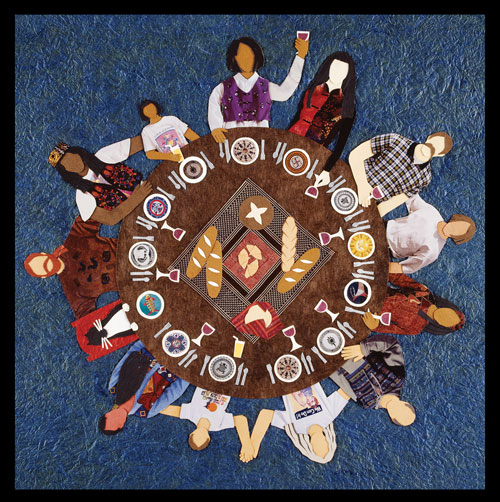
For more table imagery, visit this page.
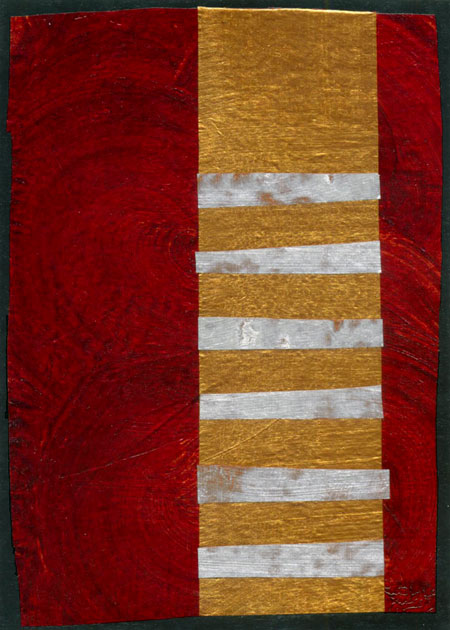
Freedom in My Bones

August 15, 2010


Freedom in My Bones © Jan L. Richardson

Gospel reading, Proper 16/Ordinary 21/Pentecost +13, Year C (August 22): Luke 13.10-17

I’ve heard it said that every preacher has only one sermon, and that each message is simply a variation on it. I know this about myself, not only as a preacher but also as a writer and artist. I’m not sure what the title of my core sermon would be, but I know it has something to do with these questions: What are the habits, patterns, and rhythms by which we live our lives? Do they enable us to live in freedom, fully open to the presence of God? Or does our way of life hinder us from this? Are there patterns and habits that, over time, have become confining, keeping us bound and bent and feeling less than whole?

As a preacher, writer, and artist, I may venture far afield in my work, but I always seem to return to these core questions about what we shape and build and construct—and sometimes constrict—our lives around. And I find myself pondering these questions again as I contemplate the upcoming gospel lection, which is among my favorites: the story of the bent-over woman that Luke gives us in his Gospel.

Luke tells us that the source of the woman’s crippling illness lay beyond her control; he describes it as a spirit that had kept her bound for eighteen years (“eighteen long years,” Jesus points out). There was nothing, it seems, that she did to cause her condition, and little she could do to remedy it. There is no habit, no pattern, no routine that this woman can change that will free her—except to place herself in Jesus’ path.

I find myself curious about the community around this woman, wondering what their habits toward her had been. Did they hold her responsible for her condition, thinking—as people so often thought in that time, and still often do in ours—that her physical appearance was a manifestation of an inner fault? Did they take any notice of her as she made her painful way among them, or did they allow her to travel below their line of sight? Did they ever pause to look her in the eye, alter the shape of their own body in order to meet her gaze? Did they keep their distance, concerned that her state might pass all too easily to them? How much of this did the woman absorb into her own body and soul?

I know my wonderings reflect my own assumptions, largely born of my noticings about how in our own day we still so often look around, look through, look away from those in our midst whose bodies look different than whatever we consider the norm. And maybe I’m taking a too dismal view here; maybe this woman, whose name we do not know, did in fact have kinfolk and allies. Yet it’s clear that there were those in her community who allowed themselves to be locked into patterns that worked against her wholeness and freedom. When Jesus dares to heal the bent-over woman on a sabbath day, he meets resistance and outrage. In turn, he challenges those present to consider what sabbath really means: that in its fullness, the laws regarding sabbath are designed not just for rest but for release from all that keeps us in bondage.

Yesterday morning I returned home from my three-week trip to the other side of the country. After spending two weeks at the Grünewald Guild, a place I think of as another home, I went to Lake Tahoe to serve as the keynote speaker for the Companions on the Inner Way retreat. Both places offered remarkable experiences of community and hospitality. And in each place I witnessed the power of what happens when people are invited to live and move and work in ways that lie beyond their customary habits, patterns, and assumptions about who they are and what they can do.

In my retreat work, I often encounter folks who claim that they don’t have a creative bone in their bodies. I understand this; can see all too readily how our culture chips away at the creative spirit that is innate to us. It is alarming, how easily we participate—however unconsciously—in societal patterns that seek to keep us within certain confines; that keep us from being too distinctive, too creative, too noticeable. That keep us from standing upright.

But in these past weeks, I watched a woman create a sculpture for the first time since her mother’s death more than a decade before; I heard a woman in her 80s declare that she was going to spend the rest of her life painting; I saw people take the scriptures into their bones as they sang and worshiped and prayed and danced the sacred texts of our tradition; I saw them piece together words and images that drew them more deeply into their internal terrain where they found the presence of God in ways they had not noticed before. I saw them holding one another in community, walking with one another into new landscapes.

As these scenes and moments of the past weeks play through my memory once again, I see, too, among them a shadow: a woman bent, moving, rising, standing, praising. Healed and free.

And so I, the preacher and writer and artist who perpetually circles around the same message, am come this day to ask you: What are the patterns you are enacting in your life and your community? Do you have any habits and routines that, once comfortable, have become constricting and confining? Are there ways that you participate in keeping others in rhythms that are comfortable for you? Do you allow others to do this to you, letting yourself absorb assumptions and prejudices that keep you bound, however subtly? Do you resist moving in ways that might challenge and conflict with the patterns of others? What would it look like to place yourself in the healing path of Jesus, and know sabbath down to your very bones?

Prayer for All Things Rising

For all things rising
out of the hiddenness of shadows
out of the weight of despair
out of the brokenness of pain
out of the constrictions of compliance
out of the rigidity of stereotypes
out of the prison of prejudice;

for all things rising
into life, into hope
into healing, into power
into freedom, into justice;

we pray, O God,
for all things rising.

In the coming days, may you place yourself in the path of the Christ who desires our wholeness. Together. Blessings to you!

[“Prayer for All Things Rising” © Jan L. Richardson from Sacred Journeys: A Woman’s Book of Daily Prayer (Nashville: Upper Room Books, 1995). To use the “Freedom in My Bones” image, please visit this page at janrichardsonimages.com. Your use of janrichardsonimages.com helps make the ministry of The Painted Prayerbook possible. Thank you!]

The Feast of the Magdalene

July 21, 2010


Release: Mary Magdalene Freeing Prisoners
© Jan L. Richardson

We’re on the cusp of a splendid summer celebration: the Feast of Mary Magdalene falls tomorrow, July 22. So I’m taking a quick break from reading editor’s proofs and getting ready for my upcoming travels to wish you a most happy feast day.

The image above, which comes from my series The Hours of Mary Magdalene, depicts one of my favorite legends about the Magdalene. According to the medieval tale, Mary Magdalene—having moved to France and become a famous preacher—visits a prison and releases those who have been unjustly held captive there.

To help celebrate this woman whose story is so intriguingly intertwined with the life of Jesus, I’m sharing my sweetheart’s song “Mary Magdalena,” which you can hear by clicking the audio player below. It’s from his CD House of Prayer and is one of my very favorites.

A blessed Feast of Mary Magdalene to you!

Entering the Mysteries

June 27, 2010


Mapping the Mysteries © Jan L. Richardson

Year C, Proper 9/Ordinary 14/ Pentecost + 6 (July 4): Luke 10.1-11, 16-20

Ah, how I have been traveling on the Road of Good Intentions these past weeks. I’ve been hopeful of blogging more regularly here at The Painted Prayerbook now that I am post-wedding, but amidst settling into our new home, entering into the blessed rhythms of marriage, taking care of details related to my new book’s publication this fall, and preparing for summer travels (not to mention doing lovely things like sleeping and taking walks and enjoying summer reading), I haven’t been able to get much further than looking longingly at the lectionary readings and thinking about what I would write and collage if I could just somehow manage it.

Know that I’ll show up here when I can, and even when I’m not adding new reflections and artwork, I’m contemplating the texts with you and praying for you as you ponder your way into and through the words that the lectionary offers to us from week to week. For this week, I invite you to stop by an earlier reflection, one that I wrote for Matthew’s version of the story that the lectionary gives us from Luke for next Sunday. You can visit it here: Mapping the Mysteries. (Does recycling blog material count as going green?)

Speaking of mapping and mysteries . . . this is going to be the theme of one of the events I’m greatly looking forward to leading this summer. During the week of August 8-13, I’ll be at Zephyr Point Conference Center in Lake Tahoe, Nevada, as the main speaker of the Companions on the Inner Way retreat. Our theme for the week will be Mapping the Mysteries of Faith. For more info on the retreat, please visit Upcoming Events.

On that page you can also find info about another event I’m anticipating with much delight: I’ll be returning to the wondrous Grünewald Guild in Washington State, where I teach each summer; this year I’ll serve as the keynote speaker during their first-ever Liturgical Arts Week during July 26-August 1. Each of these events will offer a welcoming space for contemplation, creative exploration, and conversation with an engaging community amidst a beautiful place. I hope you’ll think about joining us for either week . . . or both!

And, as always, I have lots of goodies available at janrichardson.com in the form of art prints, greeting cards, and books. I invite you to stop by and have a browse anytime . . . always open, 24/7! And, no matter where I may be, images are always available for your use in worship, education, and other settings at Jan Richardson Images.

Many blessings to you as you navigate the mysteries of your unfolding path.

Trinity Sunday: Into the Sacred Ordinary

May 25, 2010


A Spiral-Shaped God © Jan L. Richardson

Greetings from amidst the boxes! A month into my marriage, I’m finally getting serious about packing up the cozy studio apartment where I have lived for more than a decade. (It’s not just procrastination; I’ve had a few things going on!) I’m thrilled about having more space now that my sweetheart and I have moved into our new home, where I have a whole room that I’ll use as my studio/office. Yet I have loved living in the lovely, light-filled space of my wee apartment (300 square feet on a good day) and know there will be a certain poignance when I close the door here for the last time.

Sitting among the boxes during this afternoon of packing, taking a break with a cup of tea, I’m still thinking about the beginnings and threshold-crossings that I pondered here at The Painted Prayerbook a couple of weeks ago. As I wrap up (literally) the life that I’ve lived within these walls and carry my belongings and myself into a new space and a new season, we are crossing a threshold in the Christian calendar as well. In the rhythm of the Christian year, this Sunday is Trinity Sunday, which marks the beginning of the season that’s often called Ordinary Time. Ordinary Time is a loooong season that’s sometimes hard to get our liturgical brains around because there aren’t any major holy days that help us know where we are in the year and what we’re supposed to do. Yet this can be a rich time, because this season beckons us to ponder how and where we find the presence of the sacred in the ordinary dailiness of our lives.

For me, it’s a good time to be crossing into some new spaces both in the physical realm and in the terrain of my soul. Heading into this ordinary season (which, honestly, comes as something of a relief in the wake of the past months that have been wondrous but intense), I find myself wondering where I’ll meet the holy in the coming weeks and months. As I unpack these boxes and settle into the new rhythms that are emerging as Gary and I make a home together, how might the face of God reveal itself, challenging me to see in ways I haven’t seen before?

How about you? Where might God be hiding out in the midst of the moments—ordinary or otherwise—that will make up your life in the days to come?

As we move toward Trinity Sunday and into Ordinary Time, I invite you to visit my earlier reflection: Trinity Sunday: A Spiral-Shaped God. May you find many blessings amid the sacred ordinariness of the coming season.

In Which We Begin Again: Ascension & Pentecost

May 11, 2010

Marrying, moving, making a home with my sweetheart: these days are full of new beginnings. As I move through the changes and transitions that this season offers, I am mindful, too, that the Christian calendar is telling us much the same thing: this is a time that beckons us to start anew.

We are approaching the end of the Easter season. This week gives us the Feast of the Ascension (which falls on May 13; many churches will celebrate it on the 16th), and next week we will celebrate Pentecost. For the followers of Jesus, these two events—Jesus’ physical departure from earth and the descent of the Holy Spirit at the festival of Pentecost—were pivotal ones in the life of their community. These events called them to wrestle with questions they had not had to face during Jesus’ life. How would they follow Jesus when he was no longer physically present? What did it mean to become the body of Christ in this world? Enlivened by the Spirit, what new beginning were they being called to make?

As for the early followers of Jesus, and for all those who have sought Christ across the ages, the feasts of the Ascension and Pentecost beckon us to consider how God continually invites and inspirits us to begin again. These days challenge us to discern and imagine anew the life to which God calls us, both individually and in community. As we move through the coming days, what new beginning—large or seemingly small—might God be drawing you toward? What do you need in order to cross this threshold? Who could help?

Things may continue to be a bit sporadic here at The Painted Prayerbook as I cross this new threshold, settle in, and gear up for the travels and projects scheduled for this summer, but I look forward to easing back into the swing of things in cyberspace and being in conversation with you here. In the meantime, I invite you to stop by my earlier reflections for the feasts of the Ascension and Pentecost. Clicking the images or the reflection titles below them will take you to the posts.

Peace to you as we celebrate these festive days, and a blessing upon your beginnings!

Ascension/Easter 7: A Blessing at Bethany

Pentecost: Fire and Breath

A Blessing in Springtime

May 10, 2010


The Blessing Cups: Mary Magdalene and Jesus at Tea
© Jan L. Richardson

Hello, dear ones, and thank you for stopping by amidst my long absence from The Painted Prayerbook! What a wild and wondrous stretch of weeks (months) it has been. My sweetheart and I were married just over two weeks ago, on a bright spring day on the beautiful farm that has been in the Richardson family for several generations. It was an amazing day of being surrounded by family and friends who have shared this journey with us.

As Gary and I planned the celebration, the word that kept coming to mind was blessing. We wanted this to be a time of gathering up the folks who have been such blessings to us; to offer thanks; and for the day to be a blessing to them in turn. Toward that end, we invited a number of friends and family to offer blessings during our ceremony and reception. The words they offered—words of blessing for the community as well as for Gary and me—will linger with me for a long, long time.

I wanted to offer a blessing of my own for that day—to find some words to wrap around the extraordinary moment that Gary and I had been journeying toward for so long. Somehow, amidst the intensities of preparing for the wedding, some words showed up just in time, and I included them on the back of our printed wedding program. I offer them to you in gratitude for the ways that you bless me by sharing this path.

Here: A Blessing

Some other day, perhaps,
I could draw you a map of this place:
could show you the stand of trees
that has always seemed to me
haunted by those
whose arrowheads still surface
now and again by the lake;
could show you the spot
where eagles keep their nest;
the silo
where my grandfather and his siblings
carved their names
into the new concrete;
the place where I stood
the night the old depot burned.

But I think today is a day
for remembering
how all our history
comes down to our hands,
how we carry the lines
that our ancestors
pressed into our palms:
a geography of the generations
inscribed upon us like a map.

And so let it be
that before we leave
this place
this day
we lay our hands—
the cartography
ever etched into our skin—
upon this ancient terrain
in gratitude and praise

and then, rising,
turn them skyward:
a blessing
a benediction
a prayer
that the wind will carry
far and far
from here.

In these spring days (and in these autumn days, for my friends in the southern hemisphere), where are you finding blessings? How are you offering them in turn?

On another note, I want to let you know that as I move into our new house, I have a few pieces of art that I’m feeling ready to send on their way. These are pieces that have had a special place in my space and my life, but as Gary and I make a new home together, it feels like time for them to find a new home of their own. Perhaps yours? I have a few of the pieces remaining from the series The Hours of Mary Magdalene, along with The Lenten Series (created for Peter Storey’s book Listening at Golgotha), and am offering them at a reduced price for a limited time. Through June 15, pieces from the Magdalene series are available individually for $900 (originally $1200), and the entire Lenten series is available for $2400 (originally $3000). To view the Magdalene series, I invite you to visit The Hours of Mary Magdalene and click on the individual images to see what’s available. You can visit the Lenten pieces by clicking The Lenten Series. Thanks for giving thought to whether any of these images might be inviting you to take them home. If so, I welcome you to contact me by leaving a comment here (I won’t publish any comments related to an art purchase) or emailing me via my website at janrichardson.com. And know that art prints of these and other images are always available at that site and at janrichardsonimages.com.

Much gratitude and many blessings to you in these May days!

Celebrations All Around

March 17, 2010

In between wedding preparations (T minus 6 weeks and counting) and writing the final bits of my new book—both celebrations in themselves—I want to take a moment to give a shout out to two of my favorite fellows, whose feast days both fall this week: Saint Patrick (March 17) and Saint Joseph (March 19). To aid in your saintly festivities, here are a few resources.

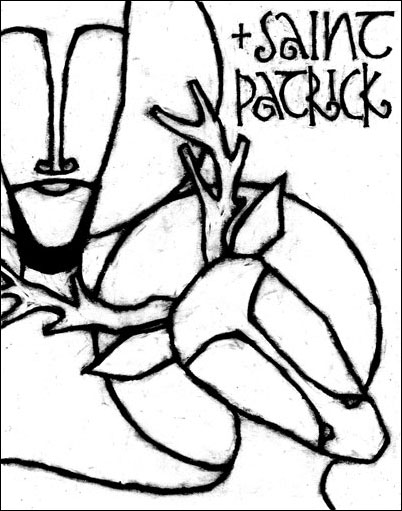
For my reflection on St. Patrick, visit Feast of Saint Patrick. As an added audio bonus, here’s a wondrous song about St. Patrick by my singer-songwriter sweetheart. It incorporates the ancient prayer of encompassing known as “St. Patrick’s Breastplate” or “Deer’s Cry.” Click this audio player to hear “Patrick on the Water” (from Gary’s CD House of Prayer).

As I’ve been navigating the journey of making a life not only with my sweetheart but also with his son, I have found a good companion in Joseph, this amazing man who was willing to listen to angels, to rethink his decisions, and to care for the child of the woman whom he loved. Joseph has made a number of appearances in my artwork; I invite you to stop by and see him at The Advent Hours and The Advent and Christmas Series. While you’re visiting, you can listen to yet another wondrous song of Gary’s, this one about Joseph, from his CD The Night of Heaven and Earth. Just click this audio player.

Blessed feast days to you!

Lent 1: Into the Wilderness

February 14, 2010

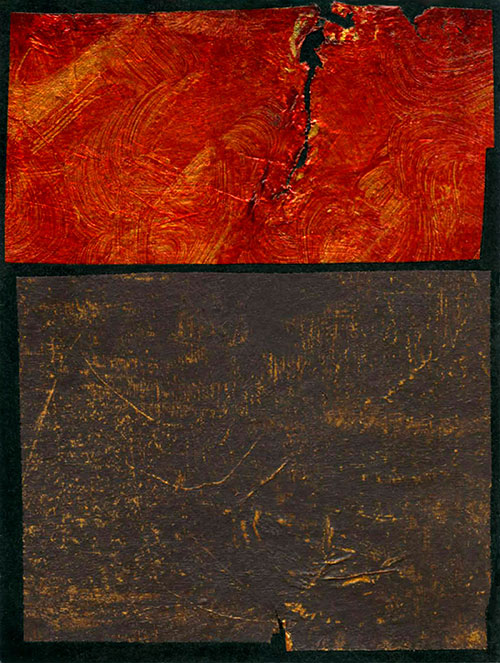
Into EarthImage: Into Earth © Jan Richardson

Reading from the Gospels, Lent 1, Year C (Feb. 14): Luke 4.1-13

From time to time I receive requests to create new artwork for a project. I love receiving these inquiries and am always grateful when they come my way. I sometimes find myself intrigued, however, by the assumptions within a request.

“We need it quite soon, but it’s pretty simple,” the lovely person might say.

So you can dive right in and it shouldn’t take you long, I hear between the lines.

I will tell you this: it’s often the pieces that look the simplest that take the longest to create. It seems counterintuitive, I know. It came as something of a surprise to me when I first began to learn it, and I sometimes wrestle with the truth of it still. How can an image that has only a few parts sometimes take so much time and space to make?

The answer lies on my drafting table, in the pile of discarded scraps that grows larger each time I work on a collage. The challenge of creating a piece of art lies not just in deciding what to include but also in discerning what to leave out. Every piece of art involves a process of choosing: not this, not this, not this. I can only find what belongs by clearing away everything that doesn’t.

This is no speedy endeavor.

On an intimate scale, it’s much like the kind of discernment that we see Jesus engaged in as we follow him into the wilderness on the first Sunday of Lent. Still dripping with the waters of the Jordan in which his cousin John has just baptized him, Jesus sets off on a sojourn that continues his initiation into his public ministry. For forty days, Luke tells us, the devil besets Jesus with temptations. Jesus’ adversary is cunning in the way he presents choices designed to appeal to someone with a desire for earthly power: Want to rule the world? the devil asks; this is what you need to do; this is what belongs to you.

The devil’s temptations show that he knows the words of scripture well. Jesus’ responses, however, reveal that he knows more: he understands the heart of the sacred texts. And here in the wilderness, the one who has steeped himself in those texts begins to understand how the ancient words of God are to take flesh in him as the living and incarnate Word of God. Once, twice, and yet a third time: with every temptation, Jesus responds to the devil: not this, not this, not this. With each response he names what does not belong to him; with each answer he gains clarity about what he needs to empty himself of in order to be who he has come here to be.

When he emerges from this wild space, when he has completed this liminal time of fasting and praying and wrestling and waiting, Jesus has a clarity that could not have come otherwise. It has taken a long time, this emptying, this clearing out, this letting go of what doesn’t belong in order to find what does. But in taking the time, in venturing into that place, Jesus has found what he needs. As he enters his public ministry, he possesses a picture that is more complete, more whole. From discerning not this, not this, not this, he can now say, this.

Since I’m telling creative secrets this week, I’ll tell you this one as well: as I worked on this week’s collage, I was thinking of Joan Sauro’s lovely book Whole Earth Meditation, in which she offers an evocative exploration of the connections between the landscape within us and the landscape around us. I wound up going in a different direction with my reflection than I had anticipated—and thus we come to another not-so-secret secret of the creative process (and life): things don’t always go as planned. We may have to empty ourselves even of our attachment to our hopes, our expectations, our desired outcomes; sometimes we have to say not this to what we have most treasured, in order to make way for what truly belongs.

Yet Sauro’s words infuse this collage, are embedded in its landscape, and go with me as I cross the season into Lent: words about entering our inner terrain and finding the presence of God amidst the layers. Go to the place called barren, she writes. Stand in the place called empty. And you will find God there.

The Spirit of God breathes everywhere within you, just as in the beginning, filling light place and dark…green earth and dry. Thus does God renew the face of the earth. God always breaks through at your weakest point, where you least resist. God’s love grows, fullness upon fullness, where you crumble enough to give what is most dear. Your earth.

As we enter into the landscape that the season of Lent offers us, what’s stirring in your own interior terrain? What part of your earth might God be inviting you to open up or allow to give way? Is there something you need to let go of, something(s) to which you need to say not this, not this, not this, in order to make way for this? Is there a wild space—inner or outer—that would help you choose what you need for a more whole life?

May your Lenten path draw you deep into the landscape that God desires for you. Blessings.

[For earlier reflections on this story in Matthew and Mark, please see Lent 1: Discernment and Dessert in the Desert and Lent 1: A River Runs through Him. To use the “Into Earth” image, please visit this page at janrichardsonimages.com. Your use of janrichardsonimages.com helps make the ministry of The Painted Prayerbook possible. Thank you!]

Resources for the season: Looking toward Lent

Upon the Ashes

February 12, 2010

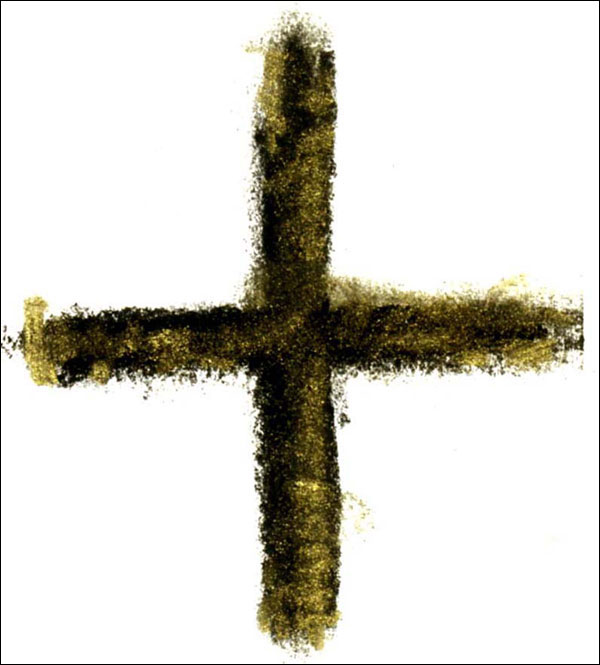
Image: Ash Wednesday © Jan Richardson

Readings for Ash Wednesday: Joel 2:1-2, 12-17; Psalm 51:1-17;
2 Corinthians 5:20b – 6:10
; Matthew 6:1-6, 16-21

As we approach Ash Wednesday, I’ve found myself thinking about Sojourner Truth.

Born into slavery in New York around 1797 with the name Isabella Baumfree, the girl who would become Sojourner had ten or twelve siblings whom she only knew from stories told by her mother, “Mau-mau Bett.” Their slaveholder had sold away all the children except for Isabella and her younger brother Peter. In 1828, after being sold herself and later escaping, Isabella was emancipated and moved to New York City.

After living there for more than a decade, Isabella experienced a call from the Spirit to travel and lecture. She desired a new name that would reflect her new vocation. Saying that she had left everything behind, and wasn’t going to keep anything of Egypt on her, she went to the Lord and asked him for a new name. “And the Lord gave me Sojourner,” she said, “because I was to travel up and down the land, showing the people their sins, and being a sign unto them. Afterward I told the Lord I wanted another name, because everybody else had two names; and the Lord gave me Truth, because I was to declare truth to the people.” Sojourner Truth became a fiery preacher, orator, and abolitionist.

One day, while preparing for a speech at the town-house in Angola, Indiana, she heard that someone had threatened to burn down the building if she spoke there. “Then I will speak upon the ashes,” Sojourner replied.

They are a curious thing, ashes; they are terrible and remarkable by turns.

Ashes come as a reminder of the ways that humans across history have been horrible to one another, of how we have, with an awful finesse, reduced to literal ashes one another’s homes, buildings, cities, histories, and very bodies.

Ashes can also be a thing of wonder. This day in the Christian year, this day of ashes, tells us that ashes—dust, dirt, earth—are the stuff from which we have been made, and to which we will return. This day, and the season it heralds, seeks to ground us, to make us mindful of the humus, the humility, the earthiness of which our bones and flesh are made. And yet, in the midst of this, the season calls us to open ourselves to the God who brings life from ashes, who works wonders amid destruction, who cries out and grieves in the presence of devastation and terror, and who breathes God’s own spirit into the rubble. It is this God who breathes into us, calling our awful and glorious ash-strewn selves to speak words of life and freedom and healing amid violence and pain. Like Sojourner. Like Jesus.

As servants of God we have commended ourselves in every way, Paul writes in a passage the lectionary gives us for this day:

through great endurance, in afflictions, hardships, calamities,
beatings, imprisonments, riots, labors, sleepless nights, hunger;

and I can hear Sojourner, who knew such conditions so well, calling out in answer,

Then I will speak upon the ashes.

by purity, Paul writes, knowledge, patience, kindness, holiness of spirit,
genuine love, truthful speech, and the power of God;

and I can imagine Sojourner, speaker of Truth, crying out in response,

Then I will speak upon the ashes.

with the weapons of righteousness for the right hand and for the left;
in honor and dishonor, in ill repute and good repute.

I will speak upon the ashes.

We are treated as impostors, and yet are true;
as unknown, and yet are well known;

I will speak

as dying, and see—we are alive;
as punished, and yet not killed;
as sorrowful, yet always rejoicing;

upon the ashes.

as poor, yet making many rich;
as having nothing, and yet possessing everything.

Then I will speak upon the ashes.

On this day of ashes, we do well to remember that we, who are made of such stuff, are capable—every one of us—of inflicting pain and destruction. Thinking we are above it makes us all the more prone to it. Yet this day reminds us, too, that God knows what to do with ashes, knows what can come from them. As we cross into the season of Lent, how will we give our ashy selves to the God who longs to breathe new life into us and into the world? Where is God calling us to be a presence of healing amid devastation? How is God challenging us to stand against the forces that deny freedom, the forces that still, more than a century after Sojourner, seek the silence and captivity of others? What ashes is God calling us to speak upon?

In this season, what will we say?

May God work wonders amid our ashes in these coming Lenten days. Blessings.

[For earlier reflections on Ash Wednesday, please see The Artful Ashes and Ash Wednesday, Almost. To use the “Ash Wednesday” image, please visit this page at janrichardsonimages.com. Your use of janrichardsonimages.com helps make the ministry of The Painted Prayerbook possible. Thank you!]

Resources for the season: Looking toward Lent