Archive for the ‘art’ Category

Trinity Sunday: Into the Sacred Ordinary

May 25, 2010


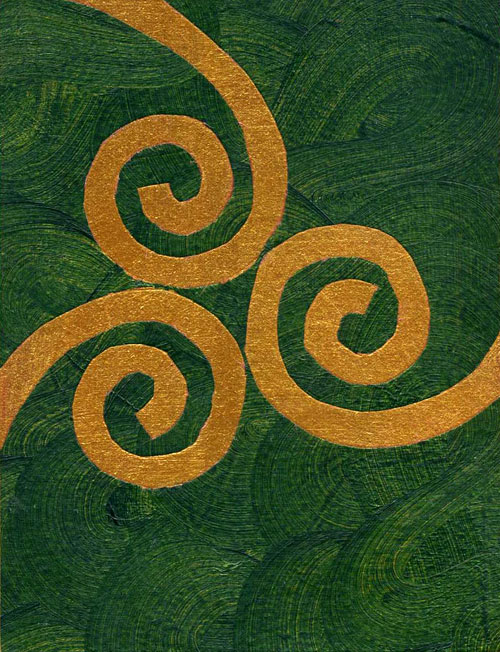
A Spiral-Shaped God © Jan L. Richardson

Greetings from amidst the boxes! A month into my marriage, I’m finally getting serious about packing up the cozy studio apartment where I have lived for more than a decade. (It’s not just procrastination; I’ve had a few things going on!) I’m thrilled about having more space now that my sweetheart and I have moved into our new home, where I have a whole room that I’ll use as my studio/office. Yet I have loved living in the lovely, light-filled space of my wee apartment (300 square feet on a good day) and know there will be a certain poignance when I close the door here for the last time.

Sitting among the boxes during this afternoon of packing, taking a break with a cup of tea, I’m still thinking about the beginnings and threshold-crossings that I pondered here at The Painted Prayerbook a couple of weeks ago. As I wrap up (literally) the life that I’ve lived within these walls and carry my belongings and myself into a new space and a new season, we are crossing a threshold in the Christian calendar as well. In the rhythm of the Christian year, this Sunday is Trinity Sunday, which marks the beginning of the season that’s often called Ordinary Time. Ordinary Time is a loooong season that’s sometimes hard to get our liturgical brains around because there aren’t any major holy days that help us know where we are in the year and what we’re supposed to do. Yet this can be a rich time, because this season beckons us to ponder how and where we find the presence of the sacred in the ordinary dailiness of our lives.

For me, it’s a good time to be crossing into some new spaces both in the physical realm and in the terrain of my soul. Heading into this ordinary season (which, honestly, comes as something of a relief in the wake of the past months that have been wondrous but intense), I find myself wondering where I’ll meet the holy in the coming weeks and months. As I unpack these boxes and settle into the new rhythms that are emerging as Gary and I make a home together, how might the face of God reveal itself, challenging me to see in ways I haven’t seen before?

How about you? Where might God be hiding out in the midst of the moments—ordinary or otherwise—that will make up your life in the days to come?

As we move toward Trinity Sunday and into Ordinary Time, I invite you to visit my earlier reflection: Trinity Sunday: A Spiral-Shaped God. May you find many blessings amid the sacred ordinariness of the coming season.

In Which We Begin Again: Ascension & Pentecost

May 11, 2010

Marrying, moving, making a home with my sweetheart: these days are full of new beginnings. As I move through the changes and transitions that this season offers, I am mindful, too, that the Christian calendar is telling us much the same thing: this is a time that beckons us to start anew.

We are approaching the end of the Easter season. This week gives us the Feast of the Ascension (which falls on May 13; many churches will celebrate it on the 16th), and next week we will celebrate Pentecost. For the followers of Jesus, these two events—Jesus’ physical departure from earth and the descent of the Holy Spirit at the festival of Pentecost—were pivotal ones in the life of their community. These events called them to wrestle with questions they had not had to face during Jesus’ life. How would they follow Jesus when he was no longer physically present? What did it mean to become the body of Christ in this world? Enlivened by the Spirit, what new beginning were they being called to make?

As for the early followers of Jesus, and for all those who have sought Christ across the ages, the feasts of the Ascension and Pentecost beckon us to consider how God continually invites and inspirits us to begin again. These days challenge us to discern and imagine anew the life to which God calls us, both individually and in community. As we move through the coming days, what new beginning—large or seemingly small—might God be drawing you toward? What do you need in order to cross this threshold? Who could help?

Things may continue to be a bit sporadic here at The Painted Prayerbook as I cross this new threshold, settle in, and gear up for the travels and projects scheduled for this summer, but I look forward to easing back into the swing of things in cyberspace and being in conversation with you here. In the meantime, I invite you to stop by my earlier reflections for the feasts of the Ascension and Pentecost. Clicking the images or the reflection titles below them will take you to the posts.

Peace to you as we celebrate these festive days, and a blessing upon your beginnings!

Ascension/Easter 7: A Blessing at Bethany

Pentecost: Fire and Breath

A Blessing in Springtime

May 10, 2010


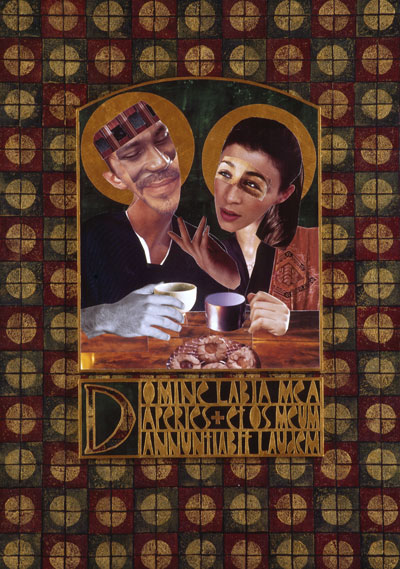
The Blessing Cups: Mary Magdalene and Jesus at Tea
© Jan L. Richardson

Hello, dear ones, and thank you for stopping by amidst my long absence from The Painted Prayerbook! What a wild and wondrous stretch of weeks (months) it has been. My sweetheart and I were married just over two weeks ago, on a bright spring day on the beautiful farm that has been in the Richardson family for several generations. It was an amazing day of being surrounded by family and friends who have shared this journey with us.

As Gary and I planned the celebration, the word that kept coming to mind was blessing. We wanted this to be a time of gathering up the folks who have been such blessings to us; to offer thanks; and for the day to be a blessing to them in turn. Toward that end, we invited a number of friends and family to offer blessings during our ceremony and reception. The words they offered—words of blessing for the community as well as for Gary and me—will linger with me for a long, long time.

I wanted to offer a blessing of my own for that day—to find some words to wrap around the extraordinary moment that Gary and I had been journeying toward for so long. Somehow, amidst the intensities of preparing for the wedding, some words showed up just in time, and I included them on the back of our printed wedding program. I offer them to you in gratitude for the ways that you bless me by sharing this path.

Here: A Blessing

Some other day, perhaps,
I could draw you a map of this place:
could show you the stand of trees
that has always seemed to me
haunted by those
whose arrowheads still surface
now and again by the lake;
could show you the spot
where eagles keep their nest;
the silo
where my grandfather and his siblings
carved their names
into the new concrete;
the place where I stood
the night the old depot burned.

But I think today is a day
for remembering
how all our history
comes down to our hands,
how we carry the lines
that our ancestors
pressed into our palms:
a geography of the generations
inscribed upon us like a map.

And so let it be
that before we leave
this place
this day
we lay our hands—
the cartography
ever etched into our skin—
upon this ancient terrain
in gratitude and praise

and then, rising,
turn them skyward:
a blessing
a benediction
a prayer
that the wind will carry
far and far
from here.

In these spring days (and in these autumn days, for my friends in the southern hemisphere), where are you finding blessings? How are you offering them in turn?

On another note, I want to let you know that as I move into our new house, I have a few pieces of art that I’m feeling ready to send on their way. These are pieces that have had a special place in my space and my life, but as Gary and I make a new home together, it feels like time for them to find a new home of their own. Perhaps yours? I have a few of the pieces remaining from the series The Hours of Mary Magdalene, along with The Lenten Series (created for Peter Storey’s book Listening at Golgotha), and am offering them at a reduced price for a limited time. Through June 15, pieces from the Magdalene series are available individually for $900 (originally $1200), and the entire Lenten series is available for $2400 (originally $3000). To view the Magdalene series, I invite you to visit The Hours of Mary Magdalene and click on the individual images to see what’s available. You can visit the Lenten pieces by clicking The Lenten Series. Thanks for giving thought to whether any of these images might be inviting you to take them home. If so, I welcome you to contact me by leaving a comment here (I won’t publish any comments related to an art purchase) or emailing me via my website at janrichardson.com. And know that art prints of these and other images are always available at that site and at janrichardsonimages.com.

Much gratitude and many blessings to you in these May days!

Celebrations All Around

March 17, 2010

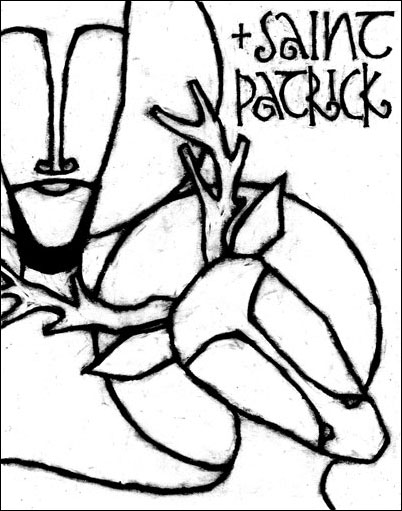
In between wedding preparations (T minus 6 weeks and counting) and writing the final bits of my new book—both celebrations in themselves—I want to take a moment to give a shout out to two of my favorite fellows, whose feast days both fall this week: Saint Patrick (March 17) and Saint Joseph (March 19). To aid in your saintly festivities, here are a few resources.

For my reflection on St. Patrick, visit Feast of Saint Patrick. As an added audio bonus, here’s a wondrous song about St. Patrick by my singer-songwriter sweetheart. It incorporates the ancient prayer of encompassing known as “St. Patrick’s Breastplate” or “Deer’s Cry.” Click this audio player to hear “Patrick on the Water” (from Gary’s CD House of Prayer).

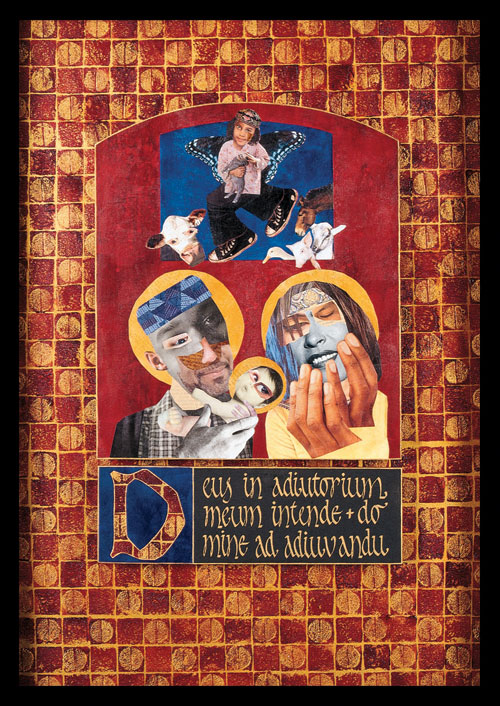
As I’ve been navigating the journey of making a life not only with my sweetheart but also with his son, I have found a good companion in Joseph, this amazing man who was willing to listen to angels, to rethink his decisions, and to care for the child of the woman whom he loved. Joseph has made a number of appearances in my artwork; I invite you to stop by and see him at The Advent Hours and The Advent and Christmas Series. While you’re visiting, you can listen to yet another wondrous song of Gary’s, this one about Joseph, from his CD The Night of Heaven and Earth. Just click this audio player.

Blessed feast days to you!

Lent 1: Into the Wilderness

February 14, 2010

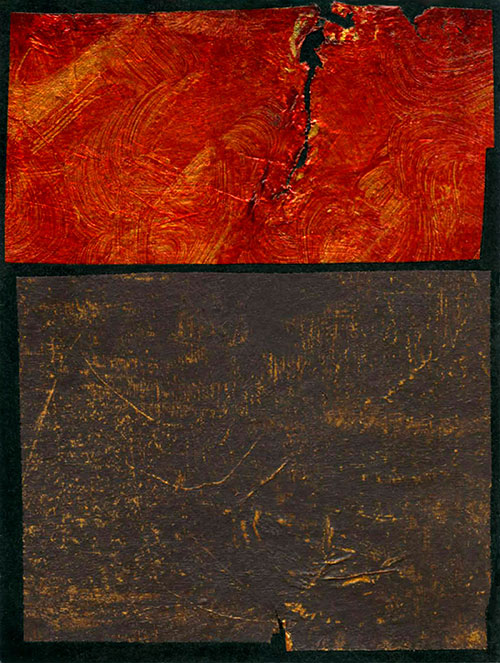
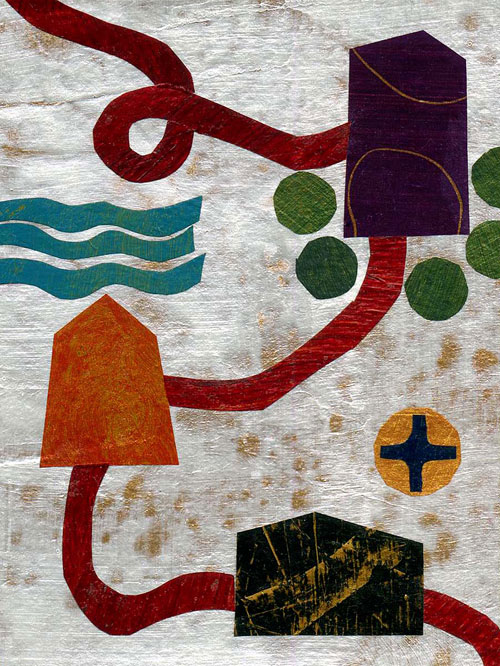
Into EarthImage: Into Earth © Jan Richardson

Reading from the Gospels, Lent 1, Year C (Feb. 14): Luke 4.1-13

From time to time I receive requests to create new artwork for a project. I love receiving these inquiries and am always grateful when they come my way. I sometimes find myself intrigued, however, by the assumptions within a request.

“We need it quite soon, but it’s pretty simple,” the lovely person might say.

So you can dive right in and it shouldn’t take you long, I hear between the lines.

I will tell you this: it’s often the pieces that look the simplest that take the longest to create. It seems counterintuitive, I know. It came as something of a surprise to me when I first began to learn it, and I sometimes wrestle with the truth of it still. How can an image that has only a few parts sometimes take so much time and space to make?

The answer lies on my drafting table, in the pile of discarded scraps that grows larger each time I work on a collage. The challenge of creating a piece of art lies not just in deciding what to include but also in discerning what to leave out. Every piece of art involves a process of choosing: not this, not this, not this. I can only find what belongs by clearing away everything that doesn’t.

This is no speedy endeavor.

On an intimate scale, it’s much like the kind of discernment that we see Jesus engaged in as we follow him into the wilderness on the first Sunday of Lent. Still dripping with the waters of the Jordan in which his cousin John has just baptized him, Jesus sets off on a sojourn that continues his initiation into his public ministry. For forty days, Luke tells us, the devil besets Jesus with temptations. Jesus’ adversary is cunning in the way he presents choices designed to appeal to someone with a desire for earthly power: Want to rule the world? the devil asks; this is what you need to do; this is what belongs to you.

The devil’s temptations show that he knows the words of scripture well. Jesus’ responses, however, reveal that he knows more: he understands the heart of the sacred texts. And here in the wilderness, the one who has steeped himself in those texts begins to understand how the ancient words of God are to take flesh in him as the living and incarnate Word of God. Once, twice, and yet a third time: with every temptation, Jesus responds to the devil: not this, not this, not this. With each response he names what does not belong to him; with each answer he gains clarity about what he needs to empty himself of in order to be who he has come here to be.

When he emerges from this wild space, when he has completed this liminal time of fasting and praying and wrestling and waiting, Jesus has a clarity that could not have come otherwise. It has taken a long time, this emptying, this clearing out, this letting go of what doesn’t belong in order to find what does. But in taking the time, in venturing into that place, Jesus has found what he needs. As he enters his public ministry, he possesses a picture that is more complete, more whole. From discerning not this, not this, not this, he can now say, this.

Since I’m telling creative secrets this week, I’ll tell you this one as well: as I worked on this week’s collage, I was thinking of Joan Sauro’s lovely book Whole Earth Meditation, in which she offers an evocative exploration of the connections between the landscape within us and the landscape around us. I wound up going in a different direction with my reflection than I had anticipated—and thus we come to another not-so-secret secret of the creative process (and life): things don’t always go as planned. We may have to empty ourselves even of our attachment to our hopes, our expectations, our desired outcomes; sometimes we have to say not this to what we have most treasured, in order to make way for what truly belongs.

Yet Sauro’s words infuse this collage, are embedded in its landscape, and go with me as I cross the season into Lent: words about entering our inner terrain and finding the presence of God amidst the layers. Go to the place called barren, she writes. Stand in the place called empty. And you will find God there.

The Spirit of God breathes everywhere within you, just as in the beginning, filling light place and dark…green earth and dry. Thus does God renew the face of the earth. God always breaks through at your weakest point, where you least resist. God’s love grows, fullness upon fullness, where you crumble enough to give what is most dear. Your earth.

As we enter into the landscape that the season of Lent offers us, what’s stirring in your own interior terrain? What part of your earth might God be inviting you to open up or allow to give way? Is there something you need to let go of, something(s) to which you need to say not this, not this, not this, in order to make way for this? Is there a wild space—inner or outer—that would help you choose what you need for a more whole life?

May your Lenten path draw you deep into the landscape that God desires for you. Blessings.

[For earlier reflections on this story in Matthew and Mark, please see Lent 1: Discernment and Dessert in the Desert and Lent 1: A River Runs through Him. To use the “Into Earth” image, please visit this page at janrichardsonimages.com. Your use of janrichardsonimages.com helps make the ministry of The Painted Prayerbook possible. Thank you!]
Resources for the season: Looking toward Lent

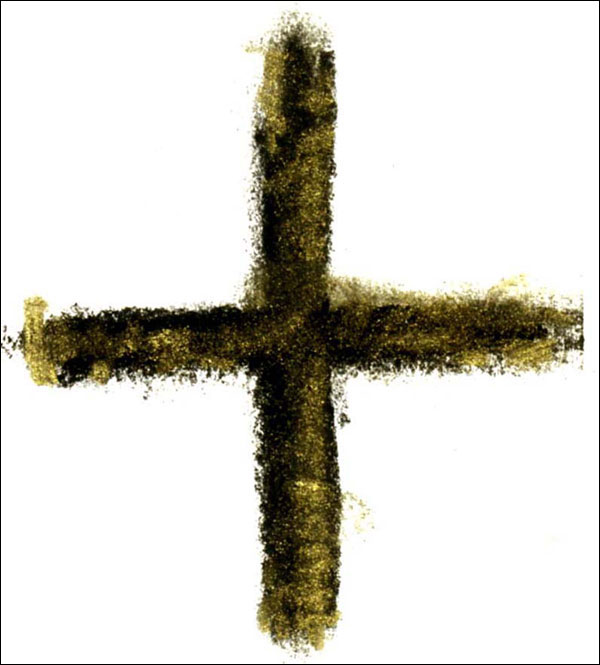
Upon the Ashes

February 12, 2010

Image: Ash Wednesday © Jan Richardson

Readings for Ash Wednesday: Joel 2:1-2, 12-17; Psalm 51:1-17;
2 Corinthians 5:20b – 6:10
; Matthew 6:1-6, 16-21

As we approach Ash Wednesday, I’ve found myself thinking about Sojourner Truth.

Born into slavery in New York around 1797 with the name Isabella Baumfree, the girl who would become Sojourner had ten or twelve siblings whom she only knew from stories told by her mother, “Mau-mau Bett.” Their slaveholder had sold away all the children except for Isabella and her younger brother Peter. In 1828, after being sold herself and later escaping, Isabella was emancipated and moved to New York City.

After living there for more than a decade, Isabella experienced a call from the Spirit to travel and lecture. She desired a new name that would reflect her new vocation. Saying that she had left everything behind, and wasn’t going to keep anything of Egypt on her, she went to the Lord and asked him for a new name. “And the Lord gave me Sojourner,” she said, “because I was to travel up and down the land, showing the people their sins, and being a sign unto them. Afterward I told the Lord I wanted another name, because everybody else had two names; and the Lord gave me Truth, because I was to declare truth to the people.” Sojourner Truth became a fiery preacher, orator, and abolitionist.

One day, while preparing for a speech at the town-house in Angola, Indiana, she heard that someone had threatened to burn down the building if she spoke there. “Then I will speak upon the ashes,” Sojourner replied.

They are a curious thing, ashes; they are terrible and remarkable by turns.

Ashes come as a reminder of the ways that humans across history have been horrible to one another, of how we have, with an awful finesse, reduced to literal ashes one another’s homes, buildings, cities, histories, and very bodies.

Ashes can also be a thing of wonder. This day in the Christian year, this day of ashes, tells us that ashes—dust, dirt, earth—are the stuff from which we have been made, and to which we will return. This day, and the season it heralds, seeks to ground us, to make us mindful of the humus, the humility, the earthiness of which our bones and flesh are made. And yet, in the midst of this, the season calls us to open ourselves to the God who brings life from ashes, who works wonders amid destruction, who cries out and grieves in the presence of devastation and terror, and who breathes God’s own spirit into the rubble. It is this God who breathes into us, calling our awful and glorious ash-strewn selves to speak words of life and freedom and healing amid violence and pain. Like Sojourner. Like Jesus.

As servants of God we have commended ourselves in every way, Paul writes in a passage the lectionary gives us for this day:

through great endurance, in afflictions, hardships, calamities,
beatings, imprisonments, riots, labors, sleepless nights, hunger;

and I can hear Sojourner, who knew such conditions so well, calling out in answer,

Then I will speak upon the ashes.

by purity, Paul writes, knowledge, patience, kindness, holiness of spirit,
genuine love, truthful speech, and the power of God;

and I can imagine Sojourner, speaker of Truth, crying out in response,

Then I will speak upon the ashes.

with the weapons of righteousness for the right hand and for the left;
in honor and dishonor, in ill repute and good repute.

I will speak upon the ashes.

We are treated as impostors, and yet are true;
as unknown, and yet are well known;

I will speak

as dying, and see—we are alive;
as punished, and yet not killed;
as sorrowful, yet always rejoicing;

upon the ashes.

as poor, yet making many rich;
as having nothing, and yet possessing everything.

Then I will speak upon the ashes.

On this day of ashes, we do well to remember that we, who are made of such stuff, are capable—every one of us—of inflicting pain and destruction. Thinking we are above it makes us all the more prone to it. Yet this day reminds us, too, that God knows what to do with ashes, knows what can come from them. As we cross into the season of Lent, how will we give our ashy selves to the God who longs to breathe new life into us and into the world? Where is God calling us to be a presence of healing amid devastation? How is God challenging us to stand against the forces that deny freedom, the forces that still, more than a century after Sojourner, seek the silence and captivity of others? What ashes is God calling us to speak upon?

In this season, what will we say?

May God work wonders amid our ashes in these coming Lenten days. Blessings.

[For earlier reflections on Ash Wednesday, please see The Artful Ashes and Ash Wednesday, Almost. To use the “Ash Wednesday” image, please visit this page at janrichardsonimages.com. Your use of janrichardsonimages.com helps make the ministry of The Painted Prayerbook possible. Thank you!]
Resources for the season: Looking toward Lent

Looking toward Lent

February 12, 2010

With Ash Wednesday just around the corner, it seems a good time to do a spot of housekeeping here at The Painted Prayerbook. I have a few artful offerings for Lent that I want to let you know about, along with some related news.

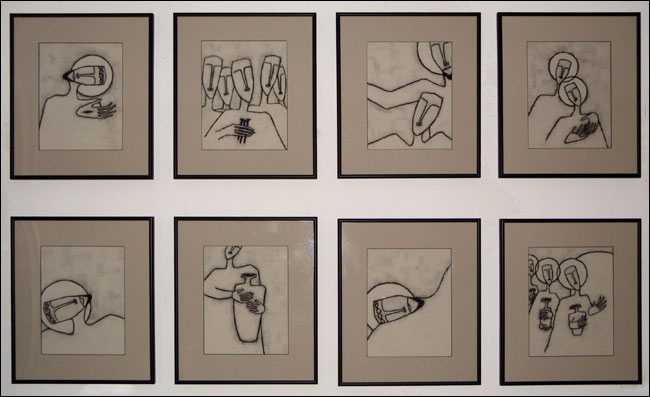
ORIGINAL ART: The artwork above is a series of charcoals that I did a few years ago for Peter Storey’s book Listening at Golgotha. Peter is a former bishop of the Methodist Church of Southern Africa and served as the chaplain to Nelson Mandela during his years in prison. In this book, Peter offers a powerful series of reflections on the Seven Last Words of Jesus. The original artwork is available for sale (as an intact series), beautifully matted and framed. Great for a church, chapel, or other space for devotion/worship, especially during Lent and Holy Week. For more information, visit The Seven Last Words Series. [Update: I am delighted to share that the series is now permanently installed at Duke Divinity School.]

ART PRINTS: All of the images from The Seven Last Words Series are available as prints; check out the Art Prints page on my website. Prints of The Lenten Series (illustrations from my book Garden of Hollows) are also available on my site, along with plenty of other images. You can also now order prints at janrichardsonimages.com (including prints of all the artwork on this blog); go to any image and click “Prints & Products.”

A LITERARY LENT: Published through my small press, Garden of Hollows: Entering the Mysteries of Lent & Easter offers artwork and reflections on the sacred texts and themes of the coming season. You can read excerpts and order at Wanton Gospeller Press.

IMAGES ONLINE: The site Jan Richardson Images makes all my artwork easily accessible for use in worship, education, and related settings. You’ll find lots of images for Lent and Easter as well as the rest of the year.

eNEWSLETTER: I send out an occasional e-newsletter. It includes a seasonal reflection, artwork, information about current offerings and upcoming events, and whatever else strikes my creative fancy. I would be delighted to include you in my mailing list if you haven’t already subscribed. You can sign up here.

COMING ATTRACTIONS: I’m looking forward to heading to Virginia to offer some events next week (if the weather is willing!) and will head to Washington State and Nevada later this year. If you’re in the vicinity, please come join us! More info at Upcoming Events.

GRATITUDE: Deep thanks to you for visiting The Painted Prayerbook and for the sustenance and companionship you provide along the way. Your comments, emails, prayers, and presence are manna on my path. Know that you are present in my prayers, and I wish you a most blessed Lenten season.

Transfiguration: Back to the Drawing Board

February 7, 2010

Image: Transfigure © Jan Richardson

Reading from the Gospels, Transfiguration Sunday, Year C:
Luke 9:28-36 (37-43)

I was nearly finished with the collage before it occurred to me that the design perhaps owes as much to the snow I was recently in as it does to next Sunday’s gospel text. Gary and I have returned from Minnesota, and although we (and they) joked about the wisdom of importing Floridians at this time of year, it was a great gift to be in a lovely winter’s landscape and to receive wondrous hospitality as we shared a morning at Hennepin Avenue United Methodist Church (including a worship service that takes place in their art gallery, what a concept) and in events at Wisdom Ways Center for Spirituality and United Theological Seminary of the Twin Cities.

At the events, I had occasion to share images of some of my artwork from the past 15+ years. It was the first time I had brought these images together in quite this way, from early work such as Wise Women Also Came (made when I was still using construction paper!) to the more recent collages I’ve created for this blog and The Advent Door. Looking back over this body of work prompted me to do some reflecting on how my style has changed. Although paper collage remains my first love, my technique and my style have both shifted considerably, taking an increasingly abstract turn since I began creating artwork for my blogs more than two years ago.

When it comes to the creative process, I can’t say I have a lot of control. Trying to wield too much control, in fact, is one of the worst things an artist can do (which doesn’t always keep me from trying). I didn’t exactly set out to do abstract work. The technique, which involves painting tissue paper, emerged from creative necessity as I was working on The Welcome Table: the scale was so large (4.5 x 6.5 feet) that I couldn’t snip the characters’ clothes out of magazines; I had to fashion them myself. I can’t explain the ensuing turn toward abstraction, except in part: once the painted papers showed up, that’s the path they took me down. That, and these lectionary texts that take me to places that so often resist traditional depictions. I experience abstract art as being more like poetry in the space that it creates. “Tell all the Truth but tell it slant,” Emily Dickinson wrote. I’m not trying to explain these passages, but to evoke, to invite, to sidle up alongside the texts and offer a doorway into them amidst line and shape and color.

Along the way, what I keep working and hoping to do is to give myself to the mysteries involved in the process of making: to pay attention to what emerges among the papers and to follow where they lead; to keep clearing out a space within myself that leaves enough room for something new to show up; and to avoid growing so attached to a particular style or technique that it becomes overworked and ossified.

In my artful work and elsewhere, the challenges that the disciples encounter in this passage from Luke are my own challenges. Like Peter, John, and James at prayer with Jesus on the mountain, I sometimes struggle to stay awake when it’s easier to be lulled into sleep and to miss the thin places, the meetings of heaven and earth, that open up in the midst of daily life. And when those thin places come—when a burst of inspiration opens a new world, say, or, after hours or months or sometimes years of experimentation, something finally comes together at the drafting table, and both the work and I myself are transformed—it can be tempting to want to set up shop there, to preserve the moment, as Peter longed to do. I recognize his impulse in my own self, his desire to want to linger in the wonder. And why shouldn’t he? Yet the persistent invitation of Jesus is to take what we have seen, what we have found, down into the trenches of everyday life.

It’s not a new message; I’ll wager that the greater percentage of the sermons preached on this text will offer a variation on the theme of navigating the transition from the mountaintop to the flatlands. And yet we need to keep practicing that transition, to keep rehearsing the journey that moves us from being recipients of wonder to becoming people who, transformed and—shall we say it?—transfigured by what we have received, can then offer these wonders to a broken world.

When the disciples come down from the mountain, they still have plenty of struggles ahead. They’ve hardly gotten their feet back on flat land when, Luke tells us, they encounter, and fail to heal, a boy in the grip of what Luke describes as an unclean spirit. In juxtaposing the stories, Luke suggests that the disciples’ own spirits are still struggling between holding on and letting go, are still struggling to leave a space for the wonders that Christ seeks to do within and through them. It will take rehearsing, and practicing, and rehearsing some more. In my own life, cultivating this space is something that, quite literally, I keep going back to the drawing board to learn.

This is a great passage to lead us toward Lent, a season that is all about discerning what it is that we cling to, and what we need to practice letting go of in order for Christ to become more clear in us. But Lent will come around soon enough. In the meantime, where does the story of Peter and John and James connect with your own? How are you navigating the journey that their own feet trace between the mountaintop and the flatlands? What do you find yourself tempted to cling to, and how do you practice letting go of it? Do you have habits and spaces that invite you to cultivate an openness to the new ways that God desires to work in and through you? Where and how do you rehearse the transfiguration that God seeks to bring in your life?

As we move toward Transfiguration Sunday, may we keep awake to the wonders in our midst, let ourselves be transformed by them, and follow the path they open to us. Blessings.

[For an earlier reflection on the Transfiguration, please see Transfiguration Sunday: Show and (Don’t) Tell. To use the image “Transfigure,” please visit this page at janrichardsonimages.com. Your use of janrichardsonimages.com helps make the ministry of The Painted Prayerbook possible. Thank you!]
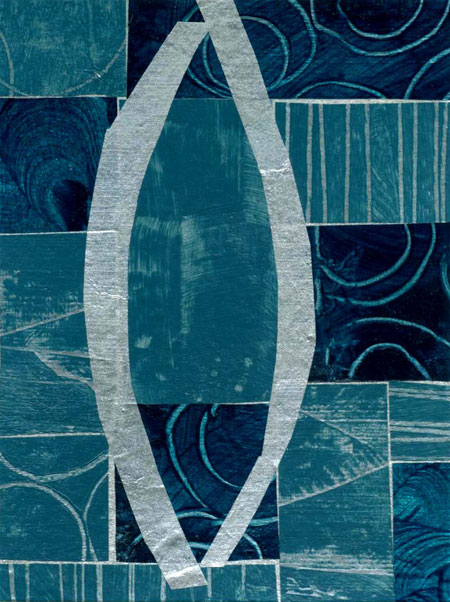
Update: Speaking of the creative process, the very cool site patheos.com has recently reprinted an interview that Christine Valters Paintner did with me at her also-very-cool Abbey of the Arts, in which she invited me to reflect on my practice as an artist. Here’s the reprint at Patheos: Sacred Artist Interview: Jan Richardson.

Epiphany 5: The Wildest Bounty

January 31, 2010


The Willing Catch © Jan L. Richardson

Reading from the Gospels, Epiphany 5, Year C (Feb. 7): Luke 5.1-11

As I write this, I’m winging my way toward Minnesota, where my sweetheart and I will be leading several events over the next few days. With a few generations of Florida blood running through my veins, I’m questioning the sanity of going to Minnesota at this time of year. (“Are you crazy?” one of my Minnesota friends asked upon hearing I was heading his way). The timing of the trip, however, was determined by the sanctoral calendar: one of the events that Gary and I will be leading is a celebration of St. Brigid, whose feast day is February 1. While the prospect of spending several days in below-freezing temperatures has me wishing that Brigid’s day fell in midsummer, I’m thrilled by the opportunity to celebrate her feast in the company of friends, both longtime ones and those yet to be made.

I have long been intrigued by and devoted to this Irish saint who has been beloved in her homeland and beyond for more than a millennia and a half. Born in the middle of the fifth century, Brigid became a formidable leader who helped to shape the landscape of Irish Christianity when it was still relatively new to the island. She traveled widely in her ministry and established a number of monasteries, the most famous one being the double monastery (comprised of women and men) at Cill Dara (“The Church of the Oak”), now known as Kildare.

Brigid was renowned for her hospitality and generosity. In her biography of the saint, Alice Curtayne describes how Brigid found the poor “irresistible” and ministered to them with “a habit of the wildest bounty.” Accounts of Brigid’s life are replete with stories of how, in places of lack, Brigid’s actions help to bring forth abundance, whether of food or drink or healing or justice. In these accounts, Brigid is a worker of wonders; her miracles echo the miracles of Christ and draw upon the same power by which he provided for those in need. She reminds us of the ways that God is so often profligate toward us: how God, out of sheer, inexplicable delight and love for us, provides for us in ways that have the power to stun us.

Though she was known for not turning anyone away (“Every guest is Christ,” Brigid said), Brigid nonetheless brought a spirit of discernment to her generosity: she knew that miracles don’t always look like we expect them to look, and they often require something of us beyond what we had anticipated. The Irish Life of St. Brigid relates that one day, a man with leprosy approaches St. Brigid and says, “For God’s sake, Brigit, give me a cow.” With the air of someone who has perhaps been approached by the man a number of times before, Brigid tells him to leave her alone. He persists. Brigid asks him how it would be if they prayed to God for the removal of the man’s leprosy. “No,” he replies, “I get more this way than if I were clean.” Brigid disagrees with his priorities and insists that he “take a blessing and be cleansed.” The man acquiesces, acknowledging that he is in much pain. Upon receiving his cure, the man vows his devotion to Brigid, pledging to be her servant and woodman.

I’m quite enjoying the fact that in the same week that we are celebrating Brigid’s feast, the lectionary gives us this passage from Luke. Put out into the deep water, Jesus says to Simon, and let down your nets for a catch. Simon tells him what Jesus already likely knows: Master, we have worked all night long but have caught nothing. Yet if you say so, I will let down the nets. And what comes up sends Simon to his knees: net-breaking, boat-sinking abundance. In the place where Simon and his fellow fishermen had already been laboring, in the landscape they thought they knew, in the place where they had come up empty: a stunning catch, lavish beyond measure.

Fish weren’t the only catch of the day; Simon and his companions were hooked. Captivated. Called. And that’s what miracles are meant to do: they meet us at our point of need, but they do not leave us there. They call us to move from being recipients to being participants, to share in the ways that God pours out Godself for the life of the community and the healing of the world.

In this week, Luke’s fish tale and the feast of St. Brigid have me wondering, what do I really believe about the ways that God works in this world? Have I grown fixed in my expectations about what God is up to? Do I have eyes to see the surprising ways in which God moves in the midst of situations whose outcome I think I already know? Is there deep water I need to put my net into—beyond what I can see, beyond what I know, beyond my familiar limits—to bring up an abundance that God has in store? What am I willing to leave behind in order to participate in such a miracle and to pass it along to others? What habits of wildest bounty might God be inviting me to practice?

In these coming days, may you participate and pass along the wildest bounty of God. Blessings!

P.S. As Brigid’s feast day approaches, I invite you to visit a reflection I wrote for her feast day last year:


Feast of St. Brigid: A Habit of the Wildest Bounty

This is a doubly festive week: the Feast of the Presentation, also called Candlemas, falls the day after Brigid’s feast. For an earlier reflection on this feast day, please click below:


Feast of the Presentation/Candlemas

[The image “The Willing Catch” is from the reflection Hooked. To use this image, please visit this page at janrichardsonimages.com. Your use of janrichardsonimages.com helps make the ministry of The Painted Prayerbook possible. Thank you!]
Epiphany 4: Get Real

January 25, 2010


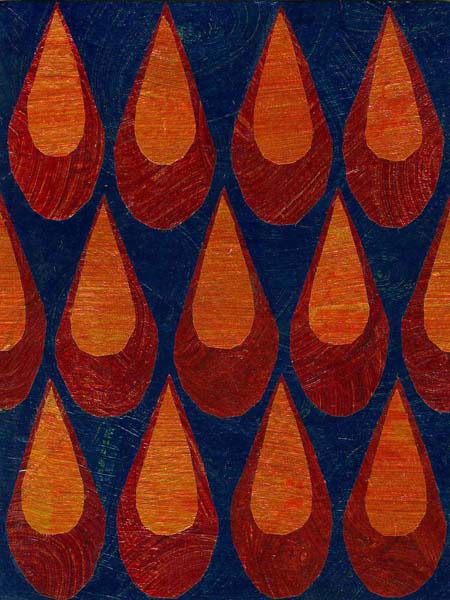
Get Real © Jan L. Richardson

Reading from the Gospels, Epiphany 4, Year C: Luke 4.21-30

In an interview with Terry Gross on her radio program Fresh Air some years ago, author Stephen King talked about how the adulation he encounters among readers sometimes turns so quickly to animosity. Acknowledging that he has become a lightning rod that draws a certain kind of fan psychology, he described how it occasionally happens that, for instance, “they want your autograph, they want to tell you how much they enjoy your stuff, and if you say look, I’d love to sign your books, but I can’t right now, I’m taking my family out to dinner, or I really have to be over here…their reaction is, go to hell, you son of a…. Just like that, it changes.”

Although it’s pretty easy to spot this adulation-animosity dynamic in its more dramatic forms (“We keep files on them,” King says of some of his readers who live at the farther, scarier reaches of this spectrum), I suspect we each carry this tendency within us. There’s something in our human psychology—more pronounced in some folks, to be sure, but present to a degree in us all—that tempts us to either idolize or demonize others. In particular, those who are in the public eye become, as Stephen King put it, lightning rods for this kind of phenomenon. Seeing bits and pieces of the life of another—a politician, a movie star, or even—as we observe in today’s gospel lesson—a preacher, we extrapolate from those pieces, put them together in a picture of who we think that person is, often magnifying certain traits (real or imagined) and ignoring others. In the process, we create a caricature that becomes easy to laud or to vilify.

Such responses are rooted in our illusions, in our projections, in our failure to see another for who they are. And because these perceptions are rooted in such shaky ground, it can become stunningly easy to flip from one pole of emotion to the other, usually in the direction of lambasting the one we once lauded.

We see this in today’s gospel lesson, which continues the story from last week of Jesus’ return to his hometown, where he reads from the scroll of Isaiah—those stunning words of good news to the poor, release to the captives, sight to the blind, and freedom to the oppressed—and proclaims to the gathering that these words have been fulfilled in their hearing. As Luke tells the story, Jesus’ teaching initially inspires awe, and then incredulity at what this hometown boy—“Is not this Joseph’s son?”—is speaking.

Jesus challenges their reaction with two stories. Again, as with last week, we see the power of how Jesus the Word carries the scriptures of his people within himself. The stories that Jesus tells to the gathering in the synagogue are stories of two people—one a widow, one a military commander—to whom God sends aid. God sees these people as they are. God knows their need. God meets their need in a way they don’t anticipate and, in the case of Naaman the commander, initially resists.

The subjects of Jesus’ two stories are also foreigners, strangers, people who live outside the covenant that God has with Israel. In telling these stories, and in observing that “no prophet is accepted in the prophet’s hometown,” Jesus challenges his hearers to remember that God crosses all boundaries and borders, including those that exist only in our own minds and hearts. Jesus challenges the way in which we often construct our beliefs about others and how God works in them: not only do we carry assumptions about those who are foreign to us, we also grow fixed in our understandings of those in our midst whom we think we know well. In both cases, our illusions and presumptions can prevent us from seeing the person who is really there, and can hinder us from receiving the sometimes surprising ways by which God is working in the life of this person, and wanting to work in our own life.

The incarnation and work of Jesus, to which we give particular attention in this season of Epiphany, was God’s way of saying to us, I see you. I see you, I know your need, I so want to be with you in your need that I will come among you in your own flesh, a body meeting your body, to see you, to be seen by you. To know you and to be known.

Some of the most powerful moments in the gospels come on those occasions, fairly rare, when someone recognizes who Jesus is: really sees him, knows him, understands what he’s about, perceives him in a balanced way absent of the extremes of adulation or denigration. Think of Peter, proclaiming, “You are the Christ.” Or the women who anoint Jesus in his final days, perceiving who he is and ministering to him in anticipation of the suffering he will soon endure. Or Mary Magdalene on Easter morning, exclaiming “Rabboni!” after Jesus has called her by name. One gets the sense from such stories that these people recognize Jesus because he has recognized them, has truly seen who they are: without illusion, without projection, without judgment, and with the utter and complete love that calls them to move more deeply into the heart of God and into the person God has created and called them to be.

The other lectionary texts this week speak with such brilliance to the power of what it means to seek and be seen by this God who knows us fully. “Before I formed you in the womb I knew you,” God says to Jeremiah, “and before you were born I consecrated you….” “Upon you I have leaned from my birth,” sings the psalmist; “it was you who took me from my mother’s womb.” “For now we see in a mirror, dimly,” Paul writes in his first letter to the Corinthians, “but then we will see face to face. Now I know only in part; then I will know fully, even as I have been fully known.”

The spiritual practices we find in the Christian tradition are treasures that help us seek this kind of seeing, this kind of knowing, even if partial: they help us to wipe at least a few of the smudges from the mirror. Amid what is strange and what is familiar—both of which can blind us to what is really present—practices of prayer, silence, spiritual direction, fasting, and the like help us strip away the layers of illusion and false perception. What we find through these practices can be uncomfortable and sometimes painful: who wants to have this kind of mirror, even a dim one, held up to ourselves?

And it is, in part, this experience of seeing themselves in Jesus’ mirror that infuriates the crowd in Luke’s story, flips them from amazement to agony, and prompts them to drive Jesus to the nearest cliff, intending to fling him over the side. We do well here to check our own assumptions and to heed the caution that Sarah Dylan Breuer offers in her excellent reflection on this passage: “And whatever we say about this Sunday’s gospel, please let’s not say that it is in any way about the small-mindedness of Jews in Jesus’ day or any other.” (She also suggests that “It can be dangerous to choose a pulpit too close to a cliff.”) The impulse to switch from adulation to assault isn’t reserved to any particular group; instead, it’s frighteningly pervasive.

Yet when we allow ourselves to truly see and be seen—when the Christ in me meets and knows and is known by the Christ in you—there is nothing in the world that compares with that. When we can move past our assumptions, our projections, our impulse to build perceptions on paltry fragments and partial sight; when we can open ourselves to the ways that God comes to us both in the stranger and in the one we think we know so well; when we can recognize and respond to the presence of God in another and, in that reflection, recognize the presence of God in our own selves: well, that’s enough to change the world.

So where is God hiding out for you these days? How do you keep your eyes open to the holy that goes in the guise not only of strangers but also of those who are so familiar to you? Upon what do you build your impressions of others? Are there practices that help you see others and yourself more clearly, that help you move beyond assumptions and illusions and imaginings and to see what and who is really there?

In this Epiphany season, in the strange and in the familiar, may we see and know the presence of the Christ who seeks us. Blessings.

[To use this image, please visit this page at janrichardsonimages.com. Your use of the Jan Richardson Images site helps make the ministry of The Painted Prayerbook possible. Thank you!]