Archive for the ‘art’ Category

Circling around Again

June 21, 2009

blog2008-06-06
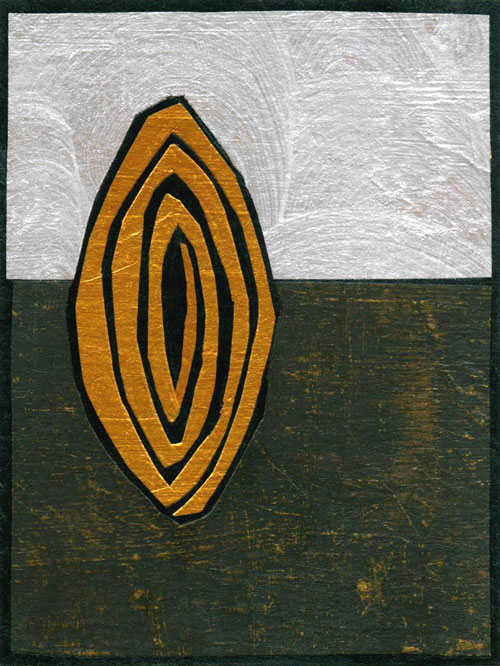
Stories and Circles © Jan L. Richardson

Reading from the Gospels, Year B, Proper 8/Ordinary 13/Pentecost +4: Mark 5.21-4

This coming Sunday, the lectionary gives us a reading that’s among my favorites in all of scripture. In this passage, a version of which Matthew and Luke include in their gospels, Mark gives us the story of two healings that are intertwined with one another. This text stands among my favorites because, in addition to giving us a double dose of remarkable healings, the gospels structurally connect them in a way that reminds us of a crucial element in our search for wholeness: our healing must be linked to the healing of others. Healing is not solely a personal endeavor, this passage tells us; it occurs in the context of community. We seek it not only for ourselves but as part of the flourishing of the wider world. Our wholeness is bound together.

I offered a reflection on Matthew’s telling of this story last year, so, particularly as I’m continuing to direct most of my writing energies toward my book-in-progress (prayers very welcome!), I invite you to visit that post by clicking here. I wish you many blessings in these days of Ordinary Time.

Stirring the Sleeping Savior

June 15, 2009

Reading from the Gospels, Proper 7/Ordinary 12/Pentecost +3: Mark 4.35-41

As often happens, I find myself struck by the ways that the landscape of the lectionary intersects with the landscape of my own life. Pondering Mark’s telling of how Jesus stills the windstorm that springs up during their evening crossing of the sea, I think of doing battle last week with a bout of anxiety that had pressed hard upon me. I generally experience myself as a pretty calm person, blessed both with a natural disposition and acquired skills that enable me to move through my days with relative equanimity. Yet last week, as I grappled with a summertime deadline for the new book I’m working on [In the Sanctuary of Women], my stress exacerbated by preparing for a trip that would disrupt my already-tight schedule, I experienced a level of anxiety that was foreign to me. In the midst of it, I had trouble recognizing my normally calm self.

Like the disciples, I called on some help in the midst of the storm. A series of conversations with my wise sweetheart helped me return my focus to where it needed to be: on the book, not on the looming deadline. As I became able to reorient my attention, my anxiety began to slide away. I modified my travel plans in a way that reduced my stress, gave myself to the delights of reconnecting with friends and family in the places I visited, and when I returned over the weekend, I took some Sabbath time before diving back into the book.

We Christians sometimes describe anxiety and fear as the flip side of faith, casting them as opposites and chastising one another—or ourselves—for not having enough faith to still our fears. It’s true that faith and fear have a hard time living together. Fear and anxiety can seduce us into a frantic loop in which our perceptions grow so distorted that we may completely lose the path that would carry us through our fears. Like the disciples, we become swamped. They were right to feel afraid. Yet their perception that their reality was defined solely by the storm only increased their experience of being overwhelmed. The presence of the storm was not the whole truth of their situation—a fact that the sleeping savior in the stern would soon remind them of.

There is plenty of cause to be anxious and fearful in these days, and for better reasons than a looming book deadline. Anyone who’s not feeling some anxiety probably isn’t paying enough attention to what’s going on. Living in denial is not the same as having faith. Whatever the sources of our anxiety, faith helps to provide the tools we need to maintain our vision and to see the truth within the waves that seek to command our whole attention. Faith asks us where we are turning our sight, and what we are allowing to define our reality.

Pondering all this, I revisited an article that Sharon Salzberg, the noted author and Buddhist teacher, wrote for the January 2002 article of O Magazine. In her article, titled “Choosing Faith over Fear,” Salzberg writes,

Faith demands that, despite our fear, we get as close as possible to the truth of the present moment so that we can offer our hearts fully to it, with integrity. Faith is willing to engage the unknown, not shrink back from it. Faith doesn’t mean the absence of fear. It means having the energy to go ahead, right alongside the fear. The word courage in English has the same etymological root as the French coeur, which means “heart.” With courage we openly acknowledge what we can’t control, and place our hearts wisely on our ability to connect with the truth of the moment and to move forward into the uncharted terrain of the next moment.

We might (and often must) hope and plan and arrange and try, but faith enables us to be fully engaged while also realizing that we are not in control. To be able to make an intense effort—to heal, to speak, to create, to alleviate our suffering or the suffering of others—while guided by a vision of life with all its mutability, evanescence, dislocations, and unruliness, is the particular gift of faith.

When the sleeping savior stirs in response to his disciples’ cries, he doesn’t tell them to have no fear. He instead invites them to examine why they are afraid—in essence, to consider how and why they have let the windstorm rule their reality—and calls upon them to have a measure of faith that will accompany them amid their fears and help to restore their vision.

How’s the weather in your world this week? Are there any storms raging that have you feeling overwhelmed with anxiety or fear? Where might you find help amid the storm? How might God be inviting you to shift your attention in a way that helps you recognize that the storm does not have the final word? Instead of experiencing fear and anxiety as bullies that leave us feeling helpless, how might it be to receive them as messengers who invite us to refocus our vision? How would it be to pray that God would turn your anxiety into energy for moving forward?

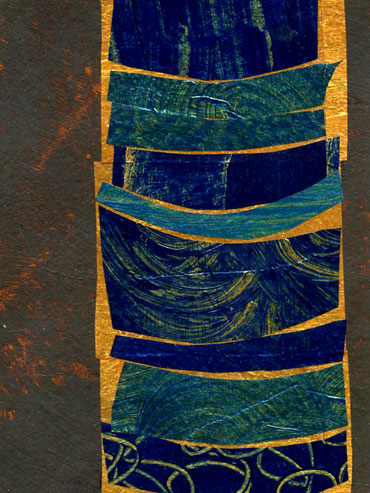
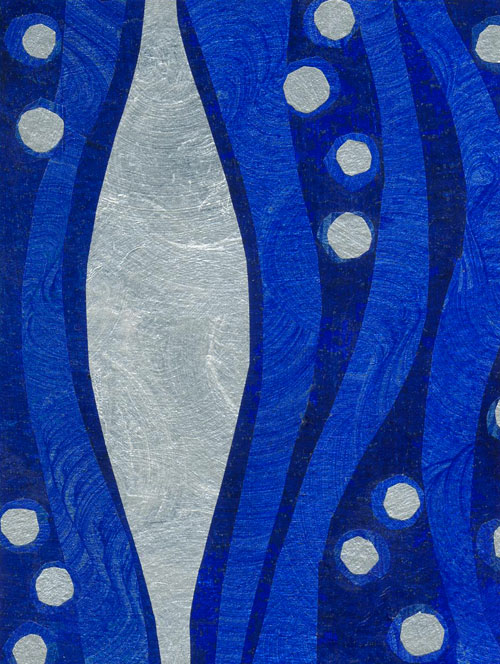
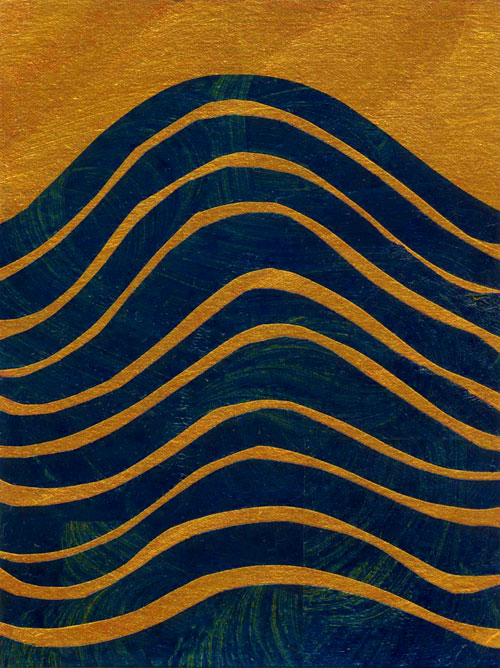
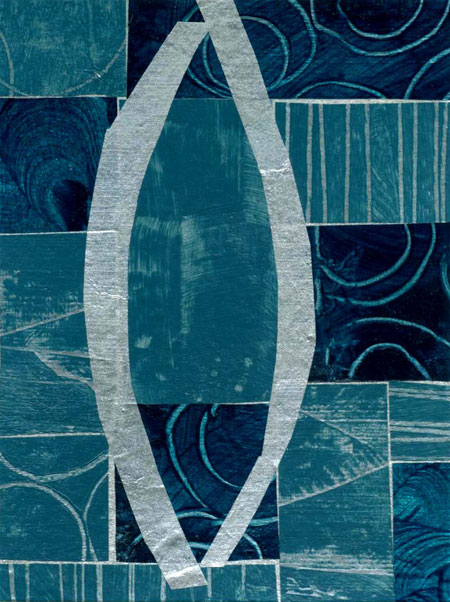
Time for me to return to the book. Letting go of my anxiety is helping me work better, but it doesn’t lessen the amount of work yet to be done! No new collage this week, but if you’re looking for some artwork to accompany this passage, I invite you to visit several earlier collages that I created for watery themes. Clicking on each image below will take you to that image’s page on my new website, janrichardsonimages.com. Clicking the title below each image will take you to the reflection where the collage originally appeared.

In every landscape, may you know the gift of faith. Blessings.

Lent 2: In Which We Get Goosed

blog2008-02-20

Lent 3: The Way of Water

blog2008-08-03

Night Passage

blog-2009-01-07

Epiphany 1: Take Me to the River

P.S. A belated Happy Ordinary Time to you! For a reflection on crossing into the season of Ordinary Time last year, I invite you to visit this post.

Ascension & Coming Attractions

May 22, 2009

Happy Feast of the Ascension! As we prepare to cross into the long season of Ordinary Time, the liturgical calendar offers us a few chances for celebration. Along with today’s observance of the Ascension of the Lord (which many churches will celebrate this coming Sunday), we also have Pentecost coming up on May 31 and Trinity Sunday on June 7. As most of my creative energies are still going toward my new book, I invite you to visit the reflections I offered for this trio of celebrations last year.

Clicking the titles below the images will take you to the reflections. Clicking on the image itself, either here or at the reflection, will take you to that image’s page on my new website, janrichardsonimages.com. I’d love for you to visit this new site, which makes my artwork available to churches and other communities for use in worship, education, and other settings. As I mentioned in my previous post, I’m offering a “sneak preview” price on an annual subscription, to celebrate the launch of the site. Through May 31, a subscription will be $100 (normally $165).

Many blessings to you as we celebrate the gifts of these days!

blog2008-04-29

Ascension/Easter 7: A Blessing at Bethany

blog2008-pentecost2

Pentecost: Fire and Breath

blog2008-trinity-sunday

Trinity Sunday: A Spiral-Shaped God

New Website!

April 27, 2009

nl-janrichardsonimages

After months of gestation, I am delighted to share the news that I’ve launched a new website today. Jan Richardson Images enables churches and other communities to download high-resolution files of my artwork for use in worship, education, and other settings. I am thrilled about the opportunity to share mutual creative support with congregations and other organizations in this way.

The images on this new site are available for $15 per image (for one-time use), or, with an annual subscription, you can have unlimited access to the images for a year (within the Guidelines for Use).

By way of thanks for your support of The Painted Prayerbook, I want to let you know that for a limited time, I’m offering a special sneak preview price for an annual subscription. Through May 31, you can subscribe to Jan Richardson Images for $100. (After May 31, an annual subscription will be $165.)

I want to make my work available to a variety of congregations and other groups, regardless of size, so if you’re connected with an organization that would like a subscription but would have difficulty with the discounted price, please drop me a line at jan(AT)janrichardsonimages(DOT)com, and I’ll be happy to work with you.

I would be pleased and grateful for you to share this news with anyone who might be able to make use of this new website and the sneak preview rate.

On another note, I want to let you know that I’ll be taking a wee bit of a break from offering my weekly lectionary art and reflections. I am leaning hard on a deadline to finish a new book this summer (due to be published in Fall 2010), and after months of trying to do both the book and the blog (and the new website and…) at the same time, I’ve realized that if I have any hope of making the deadline (and keeping body and soul in one piece), I need a blog sabbatical. (A blogabattical?)

Please don’t go far! I do plan to continue to post here while I work on the book—just not the weekly lectionary-art-and-writing that I love to do but that consumes so much energy. As I work to complete the book, it would be a great gift to continue to have your presence here, which provides so much sustenance on my path. And I would be deeply grateful for your prayers along the way. I look forward to returning to our regularly scheduled programming by late summer/early fall.

In the meantime, I welcome you to have a browse around Jan Richardson Images. Though I won’t be creating new lectionary art for a while, the cool thing about art, especially abstract art, is that it invites a multiplicity of interpretations. My hope is that in the months to come, you’ll find images on this new website that will grace your worship or other settings, even if the images weren’t designed for the specific scripture or theme that you’re pondering.

I also invite you to stay in touch by signing up for my e-newsletter, if you haven’t already. I send it out every month or two, usually in connection with the liturgical year. Click e-newsletter signup to receive this. And I’d be delighted for you to visit my other website at janrichardson.com, where I always have books, art prints, and greeting cards available, along with other info about my ministry through The Wellspring Studio, LLC.

Thanks so much for your support of The Painted Prayerbook and of me. I wish you many blessings in these Easter days!

*P.S. If you’re looking for a reflection on the gospel lection for this Sunday, I invite you to visit Easter 4: In Which We Do Some Sheep Wrestling. Written as a reflection on John 10.1-10 (last year’s Easter 4), it explores the sheep-and-shepherd imagery that continues into this Sunday’s gospel lection, John 10.11-18.

Easter 2: The Secret Room

April 13, 2009

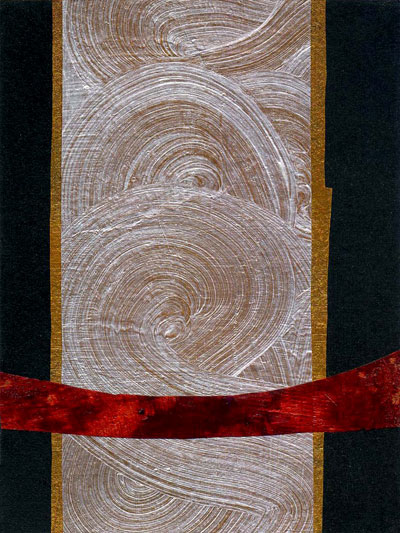
blog-thesecretroomImage: The Secret Room © Jan Richardson

Reading from the Gospels, Easter 2: John 20.19-31

In his book The Art of Pilgrimage, Phil Cousineau writes that in every pilgrimage, there is a secret room, a place along the path that gives us insight into the deep mystery of our journey. In describing this hidden room, Cousineau draws on a story that poet Donald Hall tells of friends who purchased an old farmhouse. Cousineau writes,

It was a ‘warren of small rooms,’ and once they settled in and began to furnish their new home they realized that the lay of the house made little sense. ‘Peeling off some wallpaper, they found a door that they pried open to reveal a tiny room, sealed off and hidden, goodness knows why: They found no corpses nor stolen goods.’ For Hall, the mystery of poetry to evoke powerful feelings finds its analogy here, in its ability to be sealed away from explanation, this is the place where ‘the unsayable gathers.’

And so it is on the pilgrim’s path. Everywhere you go, there is a secret room. To discover it, you must knock on walls, as the detective does in mystery houses, and listen for the echo that portends the secret passage. You must pull books off shelves to see if the library shelf swings open to reveal the hidden room.

I’ll say it again: Everywhere has a secret room. You must find your own, in a small chapel, a tiny cafe, a quiet park, the home of a new friend, the pew where the morning light strikes the rose window just so.

As a pilgrim you must find it or you will never understand the hidden reasons why you really left home.

It is the day after Easter Sunday. I savored sleeping in this morning and am now in my writer’s nook at the top of the stairs, gazing out the window as I ponder the season past. I think of the pilgrimage these forty Lenten days led me on, the twists and turns they offered, the questions and challenges they posed, the graces they beckoned me to see.

Where was the secret room?

I think of a day in the week just past, when I went with my sweetheart to the Morse Museum of American Art in Winter Park, not far from where I live. The primary draw of the Morse is its collection of works by Louis Comfort Tiffany, the artist famed for his stained glass designs. I have always liked Tiffany well enough—a poster of one of his windows accompanied me through a succession of dorm rooms and apartments in college—but in more recent years found I had a somewhat limited affinity for this kind of work. I thought it was pretty, in an ornamental fashion, but didn’t go much beyond that.

I had, however, changed as an artist since the last time I had walked through the museum’s doors, had begun to work in ways that—I came to realize—altered the way that I saw Tiffany’s work. And so I found myself in front of one of his windows last week, leaning in close, pulling back, leaning in again. I was stunned by his line work, the loose style so markedly different from the stained glass designs of previous centuries. His lines captivated the part of me that had begun to work in charcoal since I’d last been to the museum, and had become fascinated with how the lay of a line—how it turns this way, then that—can convey a whole world.

And, between the lines, was the remarkable glass, so distinctive of Tiffany, who radicalized the manufacture of stained glass and turned each fragment into an art form in itself. I spent a long moment at a table that offered pieces of Tiffany glass to touch. Every piece a different texture—smooth, coarse, rippled, ridged. A fragment that so looked like flame that its coolness seemed incongruous. I ran my hand over each piece, each a living link with its maker, each an embodiment of his vision and daring, each a window onto the mysterious crucible that gives rise to art, each a threshold beckoning me deeper into my own creative path and reminding me why I set out on it in the first place.

This week’s gospel lection offers us a secret room, and, with it, an invitation to touch, to cross more deeply into Jesus’ story and our own. John tells of a room in which the disciples gather—a locked room, for fear. For secrets. And there, in their midst, Jesus appears, offering his hands and side, offering peace, offering the Holy Spirit, breathing into them (“and God breathed into his nostrils the breath of life,” John means for us to remember). But Thomas is gone, John tells us, and will not believe unless he sees. So Jesus returns a week later, slides through the shut doors of the secret room, shows himself to Thomas. “Put your finger here and see my hands,” Jesus says, as if touching and seeing are one and the same. “Reach out your hand and put it in my side. Do not doubt but believe.”

History has labeled this disciple Doubting Thomas, as if his uncertainty were the most memorable thing about this follower of Jesus who, elsewhere, is the first to step up and say he is willing to die with him (John 11.1-16). Yet Jesus, as is his way, gives Thomas what he needs. In Jesus’ hands, in Jesus’ side, Thomas reaches into a secret room, a place that, though “sealed away from explanation,” as Cousineau writes, makes some kind of sense of the long pilgrimage that Thomas has undertaken with Jesus, to whom he is now able to say, “My Lord and my God!”

And you? Did the pilgrimage through Lent offer you a secret room? Somewhere along the way, did you find a place that offered, not an explanation of your path, but a window onto it, a space within it that enabled you to see it anew, and the one who called you there? Where was it, and what did you find there? How does it illuminate the way before you?

In the weeks to come, may we remember that Easter is not just a day but rather a season. May the gift and challenge of resurrection go with you, and may the path ahead be graced with secret rooms.

[To use the image “Secret Room,” please visit this page at janrichardsonimages.com. Your use of janrichardsonimages.com helps make the ministry of The Painted Prayerbook possible. Thank you!]

Crossing into Holy Week

April 5, 2009

Reduce, reuse, recycle, so the saying goes. I’m taking the slogan to heart as we prepare to head into Holy Week. Having expended vast quantities of energy in this Lenten season, I’m going to seek some much-needed Sabbath during the coming week. Toward that end, I’m reaching back to the art and reflections that I offered during Holy Week last year. Call it my personal plan to avert an energy crisis.

Clicking the titles below will take you to the recycled reflections for Holy Week. May you find some some sustenance there.

Know that I’m holding you in prayer as we enter the mysteries of the coming days. Blessings to you!

blog-holythursday

Holy Thursday: Feet and Food

blog-goodfriday

Good Friday: In Which We Get Nailed

blog-holysaturday

Holy Saturday: A Day Between

blog-easter

Easter Day: Out of the Garden

If you would like to make use of this artwork, or any of the images on my blog or website, please visit Copyright Permissions. Thanks!

Mysteries of the Magdalene

April 5, 2009

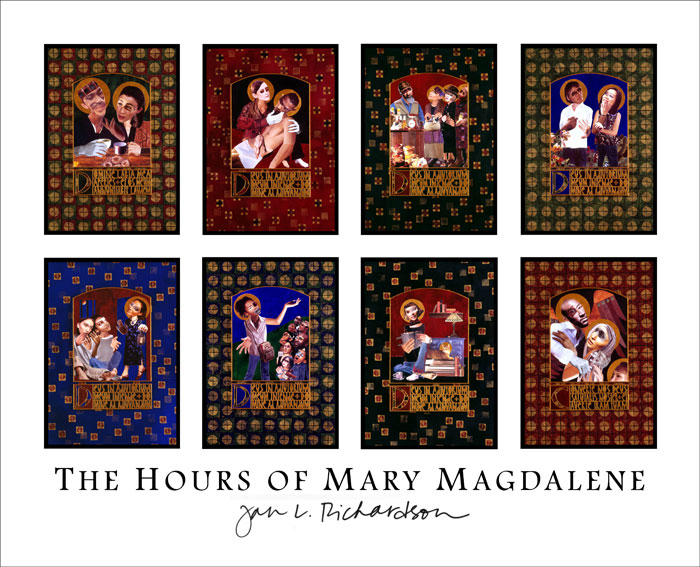
blog-hoursofmarymagprint

Here on the threshold of Holy Week, I’ve had Mary Magdalene on my mind. Scripturally speaking, what we know of her story comes almost entirely from the gospel accounts of the final days of Jesus, where the Magdalene emerges as a faithful disciple who journeys with Jesus from the cross to the empty tomb. She is the first to proclaim the news of Christ’s resurrection.

As if the scriptural accounts of her story weren’t intriguing enough, an imaginative web of legends gathered around the Magdalene in the centuries that followed. Short on fact but long on fascination, many of them tell of a woman of power and courage whose life was marked by devotion and mystery.

The legends gave rise to some wondrous medieval art, which in turn inspired my series The Hours of Mary Magdalene a few years ago. I’ve just finished a new print that brings together all eight images in the series, and I’d love to share it with you. It’s available on my website, where you can find it on the main page at janrichardson.com. You can also go straight to the Color Prints page, where prints of the individual pieces are available as well. Purchasing prints—or anything else on my website—goes directly toward supporting my ministry through The Wellspring Studio, LLC, and I am grateful beyond measure for your sustenance in this way!

Peace to you.

Palm Sunday: The Temple by Night

March 29, 2009

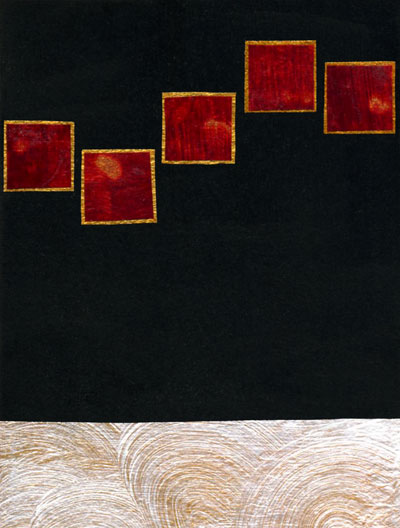
 Image: The Temple by Night © Jan Richardson

Reading from the Gospels, Palm Sunday: Mark 11.1-11

After sending for the colt.
After the procession.
After the palms.
After the cloak-strewn road.
After the hosannas.
After blessed is he who comes
in the name of the Lord.

After all this, Mark—alone of all the gospels—tells us that Jesus goes into the temple and looks around at everything.

He does not teach. He does not preach. He does not heal. He does not confront or challenge. He does not even speak; neither does he cross the path of anyone who requires his attention. Mark conveys the impression that here, in this sacred space that lies at the heart of his people, Jesus is quite alone, and that it is night.

Jesus simply looks around. What is it that he sees in the temple by night?

The gospels vary in their account of Jesus’ relationship with the temple, and how much time he has spent there. Taking together their accounts, we know Mary and Joseph took him there as an infant for the rituals that occurred forty days after a birth. He made the journey to the temple every year with his family for Passover, most memorably at the age of twelve, when his parents, missing him on the way home, went back and discovered him in conversation with the teachers. Matthew tells us that the devil took Jesus to the pinnacle of the temple, urging him to jump, that angels would catch him. John in particular emphasizes Jesus’ presence at the temple earlier in his ministry, where the temple features in such stories as Jesus’ encounter with a woman caught in adultery. It is at the temple, according to John, that Jesus proclaims himself as the river of life and as the light of the world, beginning to take into his own self, as Richard Hays has pointed out, the purpose of the temple as the focal point of the liturgy and life of the people of Israel.

This is the place that holds the memories of Jesus and the collective memory of his people. And it is to this place that Jesus returns, after the palms, after the procession, after the shouts of proclamation have vanished into the air. He will come back tomorrow, Mark tells us, and he will turn over the tables and drive out the buyers and sellers and castigate the people for turning this house of prayer into a robbers’ den. He will return yet again over the next few days to teach, to provoke, to watch a widow drop two precious coins into the offering box. And soon he will die.

But for now, for tonight, in this holy place at the heart of his people, Jesus merely looks. He peers into this sacred space that is inhabited and haunted by his own story. And perhaps it is this story he sees again this night. Perhaps he sees Mary and Joseph coming out of the shadows, carrying their infant son. Perhaps he sees Simeon gathering his young self into his arms, singing about salvation and a light for revelation, joined by the old prophet Anna, who raises her voice in praise. Perhaps Jesus sees again the twelve-year-old who conversed with the temple teachers, and the tempter who tried to lure him to fling himself from the pinnacle of this place. Perhaps a woman, once trapped and terrified, stands before him again, this time with the light of forgiveness and healing shining through her eyes.

And perhaps in this place, where Jesus is alone-but-not-alone, they gather about him, reminding him why he has come, calling him to remember, offering their blessing for the days ahead. Perhaps in this space, after the palms and before the passion, Jesus is able simply to rest. To remember. To breathe. To be between.

And you? What are you between? Where is the space that invites you to be alone but not alone, to allow the memories to gather and bless you, to offer strength for the days ahead? What is the place that beckons you to breathe, to rest, to look? What is it that you see in that space? What stirs in the shadows?

Blessings to you in the spaces between.

Resources for the Season: Looking toward Lent
[To use the image “The Temple by Night,” please visit this page at janrichardsonimages.com. Your use of janrichardsonimages.com helps make the ministry of The Painted Prayerbook possible. Thank you!]

Lent 5: Into the Seed

March 24, 2009

Image: Into the Seed © Jan Richardson

Reading from the Gospels, Lent 5, Year B: John 12.20-33

So do you remember that kerfuffle back in the 90s when Mattel brought out a new Barbie doll called Teen Speak Barbie? The Barbies were programmed to say what the company considered typical adolescent girl phrases. Some of the dolls were heard to utter, “Math class is tough!” A protest ensued, and Mattel excised that phrase. The story still circulates, with the troublesome phrase often (mis)quoted as “Math is hard!”

At this point in the Lenten journey, I find myself getting in touch with my Inner Barbie. Call her Ecclesiastical Barbie, perhaps, or Exegetical Barbie. (Ooooh, can’t you see her now, complete with the Barbie Dream Church and Deacon Ken?) These days, when someone pulls the string on my Inner Barbie, she’s likely to say, “Lent is tough!” or “These lections are hard!”

The scripture passages that this season presents to us are intense, dense, and complex. They are laden with metaphor and meaning, swirl with constellations of symbols and images, and shimmer with vivid emotion and crucial teaching. These texts challenge us to look with honesty at our lives, they confront us with our attachments, and—in a phrase I recently encountered—they urge us to sit with our own mirrors.

Lent is not for sissies.

In these past few weeks, we have traveled with Jesus into the wilderness, listened to his challenge to discern between the things of heaven and the things of earth, witnessed his outraged and outrageous cleansing of the temple, and overheard him liken himself to the serpent that Moses raised in the wilderness. Now he comes along, in this week’s gospel reading, speaking of grain and dying, losing one’s life and keeping it, hating and loving. We hear a thundering voice from heaven speaking of glory, and Jesus talking of being raised up from the earth.

The import of these Lenten texts is all the more intense for the surety of Jesus’ violent death that looms ahead. As we walk with Jesus through these weeks, we know what we are walking toward. And so his words carry extra weight, and we bend closer to capture them, as we do with someone we know is not long for this world—but who is already beginning to see things we cannot see, and speaking a language we do not yet understand.

Unlike others loosing the tethers that have held them to this life, however, Jesus retains a passionate interest in this world. Despite any impression he may give to the contrary (“those who hate their life in this world will keep it,” he says this week), Jesus does not perceive this world, this life, merely as a prelude to heaven or as a stockyard for weeding out the blessed from the damned. He seeks, rather, to train our eyes to perceive the kingdom of heaven tucked into the midst of this very world.

Teaching us to see the kingdom requires symbol, myth, metaphor, story. It requires the visual poetry that Jesus repeatedly uses as he turns to the things of earth to describe the things of heaven: yeast, seeds, dirt, water, fish, lilies of the field, birds of the air. Again and again he employs the ephemeral as he seeks to explain what is eternal. His doing so both comforts and unsettles; taking what is familiar to us, he turns it on its head, and us as well. How will we ever come to understand such a language?

We may feel daunted at this point in the season. I do. So suffused with meaning and messages, not to mention impending murder, these passages can overwhelm with their density and intensity and with their challenge to us to hold their paradoxes and untangle their meanings. Their lines somehow intertwine with the stuff of my days, drawing me deeper into the questions they pose about what my life is really about. There is so much to discern, to sort through, to sift.

In the midst of feeling daunted, I find myself thinking of the mystic poet who asked, “What is the cure for love? More love.” The formula holds true elsewhere. The cure for mystery? More mystery. The cure for paradox? More paradox. Last week’s readings from Numbers and the gospel of John reminded us that the cure for snakebite lay in looking upon a serpent. And in such a way this season beckons us to consider that we find our cure not by shrinking from what besets and befuddles and daunts us but by looking deeper into those very places, and finding the treasure that God has placed within them.

Go into the things you shrink from, Jesus tells his hearers—and us—in this passage. Go into the questions, the mysteries, the paradoxes, the seeming contradictions. Go into the Lenten dying that is not dying after all. We work so very hard at letting go, sometimes, trying to train ourselves to release our grip on all that is not God. But what if it is not about giving up but giving in? Falling into dirt, as Jesus says here. Going where grain is supposed to go. Following the spiral within the seed that takes us deeper into the dark but also—finally, fruitfully—out of it.

The lectionary interrupts this passage before its end; Jesus’ conversation with the crowd actually extends to verse 36. After Jesus finishes his discourse, here’s what John tells us Jesus did: he hid from them. And perhaps that’s what Jesus means for us to do at this point on the Lenten path: to hide. To not be set on figuring everything out but rather to let at least some part of ourselves, for some space of time, withdraw. To cease from wrestling with the questions and mysteries and simply rest with them and give in to them. To secret our souls like a seed in the earth. To see what grows.

How is it with your soul at this point on the Lenten path? As you work with these texts, how are these texts working on you? What questions have they stirred for you in these days? How do you respond to the mysteries and paradoxes they hold? Can you rest with those questions and mysteries? What do you need?

May you fall into, rest into, a place that will tend and nourish you in these days. Blessings.

Resources for the Season: Looking toward Lent
P.S. Happy Eve of the Feast of the Annunciation! Falling on March 25, this feast celebrates the radical yes that Mary said to Gabriel when the angel beckoned her to become the mother of Christ. For some of my artwork and reflections on the Annunciation, visit Getting the Message and The Hour of Matins: Annunciation.

[To use the image “Into the Seed,” please visit this page at janrichardsonimages.com. Your use of janrichardsonimages.com helps make the ministry of The Painted Prayerbook possible. Thank you!]

Lent 4: The Serpent in the Text

March 15, 2009

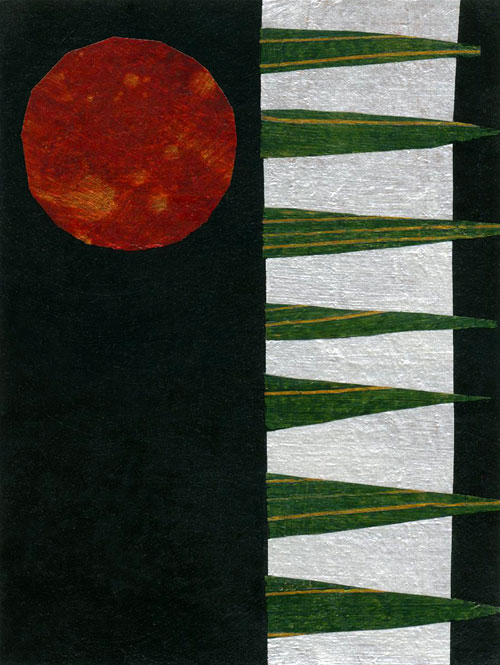
Image: The Serpent in the Text © Jan Richardson

Reading from the Gospels, Lent 4, Year B: John 3.14-21

One evening a bunch of years ago, I found myself in a New Zealand coffeehouse with some friends I was traveling with. We were there with a friend whose presence in New Zealand had occasioned our trip, plus that friend’s flatmates. It was a wonderfully funky coffeehouse, and as we settled into the couches and chairs with cups in hand, I commented, “Hey, it’s just like Friends!” One of my companions commented that she’d recently read that one of the indicators of contemporary culture was the rising frequency with which we compared our lives to television shows. And this was the 90’s; so-called reality TV, with its further blurring between life onscreen and off, had barely made its appearance.

The comment didn’t cause me to stop watching Friends, but it did set me to noticing the referents I use when I tell something of my life, or hear others use in telling about theirs. Ever since that New Zealand coffeehouse evening, I’ve found myself watchful of what we hook our stories onto, and how we locate ourselves within our cultural landscape.

So I could hardly get past the way that Jesus does this from the opening sentence of the gospel lection for next Sunday. The passage begins in the midst of Jesus’ nighttime conversation with Nicodemus. “And just as Moses lifted up the serpent in the wilderness,” Jesus says to Nicodemus, “so must the Son of Man be lifted up, that whoever believes in him might have eternal life.”

Jesus, like a serpent in the wilderness? Hunh?

That’s quite the referent that Jesus inserts into their chat, a potent image that he brings into a conversation already drenched with symbolism and metaphor. Jesus and Nicodemus have been talking, after all, about being born again, with its attendant imagery of birthing, water, womb, spirit, and wind.

Being a good Pharisee, however, Nicodemus would have known the snaky reference. It comes from Numbers 21.4-9, which serves as the lection from the Hebrew Scriptures for Sunday. Frankly, it’s a right bizarre tale, and steeped in a few layers of magical lore. In it, we find the people of Israel in the wilderness. They have been delivered from their captivity. And they are complaining. “Why have you brought us up out of Egypt,” they cry to Moses, “to die in the wilderness? For there is no food and no water, and we detest this miserable food.”

On a similar occasion in the book of Exodus, God hears the complaints of the people and rains down manna upon them.

This time, God sends fiery serpents. Or, depending on the translation of the Hebrew word seraphim, God sends poisonous serpents. Or winged serpents.

Whatever they are, they aren’t good.

And the serpents bite the people.

And many of the people die.

And the people are very, very sorry.

They come to Moses, full of remorse for being grumbly, and they beg him to pray to God to take the serpents away. Moses prays. In a curious move, God does not take the serpents away. Instead God sends a strange remedy. God tells Moses to make a fiery serpent—or a poisonous serpent, or a winged serpent; whatever it is, Moses makes one out of bronze. As God has told Moses, whenever a serpent bit someone, that person could look at the bronze serpent and live.

Did I mention it’s a strange tale? It’s a little tempting to wade a bit further into the mythological waters that gave rise to this piece of the story. For now, however, let’s just say that part of its point is this: the people are saved by seeing. When the fiery/poisonous/winged serpents come among them, those who succumb to snakebite know where to turn their attention, and thereby live.

In his conversation with Nicodemus, Jesus accrues this meaning to himself. Look on me and live, he says. Turn your gaze, your attention, your focus to me, and you will be saved by the hand of the God who sent me, not for the punishment of the world but for the utter love of it.

The imagery that Jesus offers Nicodemus could hardly be more potent in our own time. Amid the perils of the present, amid the terrors and dangers, God in the main chooses not to remove the hazards from us but continues to provide a remedy for us. In the person of Jesus, God put on flesh and came not only to walk among the dangers with us but also to help make a way through them.

Jesus’ words in this passage prompt me to ponder, where am I turning my attention these days? How do I seek to do what Jesus invited Nicodemus to do: to turn my attention, to turn my gaze toward him—not merely to escape punishment, but as my response to the love that impelled God to send us Christ?

Those questions alone would be enough to carry me through the rest of Lent, a season designed to help us discern what we’re giving our attention to. Yet Jesus’ reference to the snaky tale in Numbers prompts me to ponder, too, where I’m turning not only my attention but also my imagination these days. The presence of the serpent in the text beckons us to attend to the mythic matrix out of which the story of Jesus arises.

If we know Jesus only from reading the New Testament, we’re missing entire layers of meaning. The early hearers of the Jesus story—those who were familiar with the Hebrew scriptures—encountered and understood him in the context of the symbols, images, and metaphors upon which he drew. As we find in next Sunday’s text, those images can take us down some strange paths, to be sure. But they tug at and feed our imagination in crucial ways, telling us what words alone cannot convey.

The metaphors, images, and symbols that slither through our sacred texts beckon us also to consider what we steep our imaginations in—not only within the scriptures but also beyond them. In a culture in which our conversational referents tend to fit within a fairly narrow patch of common ground that’s dominated largely by television and other electronic media, how do we feed our imaginations—and our souls—with the things that will bring richness and depth?

I’m not going to give up the occasional episode of Friends, or the other shows that provide a break for a brain that spends probably way too much time pondering and processing and thinking about stuff. In these Lenten days, though, I’m going to give some thought to where I’m turning my attention and imagination, and to how Jesus calls me not only to turn them toward him, but also to the widespread wonders in which he can be found.

Where are you turning your gaze these days? What are you steeping your imagination in? What are you giving your eyeballs, your mind, your soul to? Stories, images, metaphors, poetry, art: what is the culture that you are creating and participating in, or long to be? How does this help you encounter the incarnate presence of the God who came solely for love of you?

A blessing upon your eyes this week, that you will find wonders along the way.

[To use the image “The Serpent in the Text,” please visit this page at janrichardsonimages.com. Your use of janrichardsonimages.com helps make the ministry of The Painted Prayerbook possible. Thank you!]

Resources for the Season: Looking toward Lent