Archive for the ‘Gospel of Matthew’ Category

Epiphany 5: Blessing of Salt, Blessing of Light

January 30, 2011


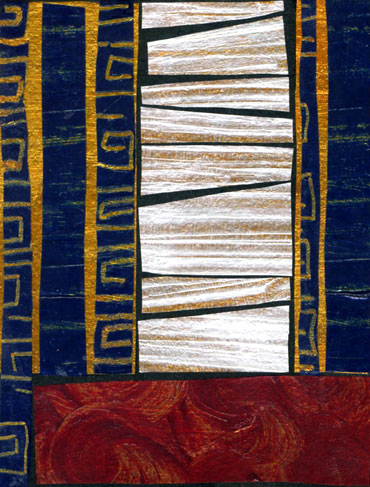
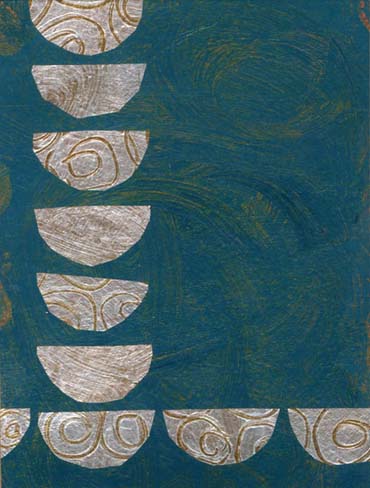
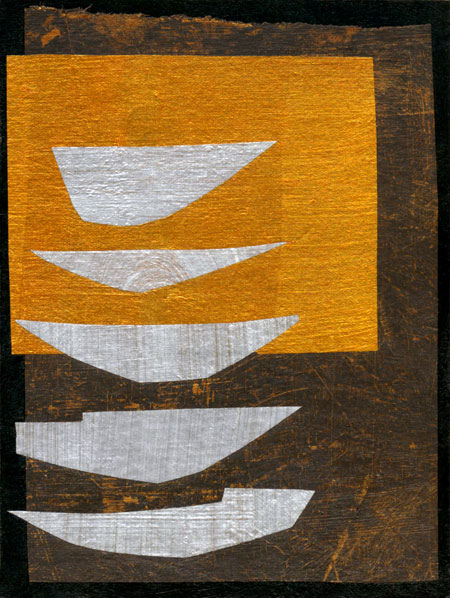
Blessing of Salt, Blessing of Light © Jan Richardson

Reading from the Gospels, Epiphany 5, Year A (February 6): Matthew 5.13-20

I cannot tell you what this week’s collage means—that’s not my job, not the job of any artist, as if we could know or say all that a piece of art might mean; as if meaning were even the main thing. I can tell you, though, that some while after I finished it, I found myself thinking of the word offering. And this is part of what the gospel text this week calls us to: to discern what God has created us to offer in this world, and to give that; to be salt that will provide savor, to be light through which the presence of God is known.

Epiphany—a word which itself means appearing or showing forth—is a season that beckons us to ponder what it is that God desires to manifest through us, and to wrestle with what hinders this. There is much, both within us and without, that works against savoring and shining. Recognizing and resisting the bushels that threaten the light is a practice and a journey all its own. It can be terrifying, these days, to see the ease with which so many of us accept the dimming, allow the bushels that diminish our light as we give over discernment and freedom in exchange for seeming security.

Jesus’ words this week are meant to wake us, to remind us of what we carry in our bones: the living presence of the God who bids us be salt in this world in all our savory particularity; to be light in the way that only we can blaze.

So how savory are you these days? How is light finding its way into you and through you? Is there anything—or anyone—that is working against this, that is tipping a bushel over your shining? Might there be some part of you that needs revealing, needs to unhide itself in this Epiphany season?

Blessing of Salt, Blessing of Light

By the time you come
to the end of this blessing
these words will be barely enough
to fit in the palm of your hand

but fold your fingers around them
and take them
as an offering
a sacrament
a sign:

touch the words
to your tongue
and taste how
they have traveled
through marrow and bone
to reach you,
how they have passed
through each chamber
of the heart,
how they have come
through the layers
that make up the soul:
the strata of stories
and questions,
longings and
dreams.

Savor the way the words
are not mere residue
or dross,
the bitter leavings
from the refining.

By their taste
you will know instead
they are the essence
they are the core
they are what has come
through the burning,

holding still
the memory of fire
and the imprint of light;
holding the clarity that comes
when all that is not needful
passes away.

So take these words
as a blessing; touch them
to your mouth
(may you taste)
your eyes
(may you see)
your ears
(may you hear)

and then let them go,
let them fall to earth
where all salt finally goes.

See the path they make
for you,
the path that blazes
inside of you,
lighting the way
ahead of you
that only you
can go.

[To use the “Blessing of Salt, Blessing of Light” image, please visit this page at janrichardsonimages.com. Your use of janrichardsonimages.com helps make the ministry of The Painted Prayerbook possible. Thank you!]

P.S. In a lovely bit of synchronicity, we have two celebrations coming up this week that are well-married to the gospel reading. February 1 brings us the Feast of St. Brigid, the beloved Celtic saint who was a light for the early church in Ireland and whose stories are often marked by the presence of fire. February 2 is Candlemas, also known as the Feast of the Presentation or the Feast of the Purification of Mary. For my reflections on these luminous days, which are among my favorites of the year, click on the images or titles below.
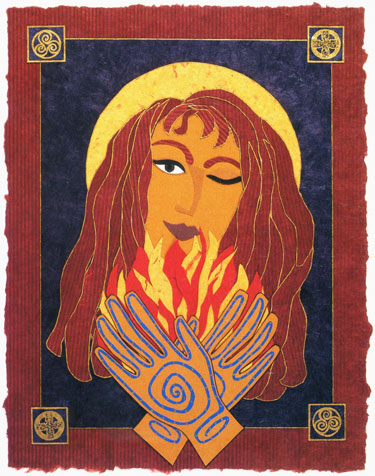
Golden, Sparkling Flame: Feast of St. Brigid
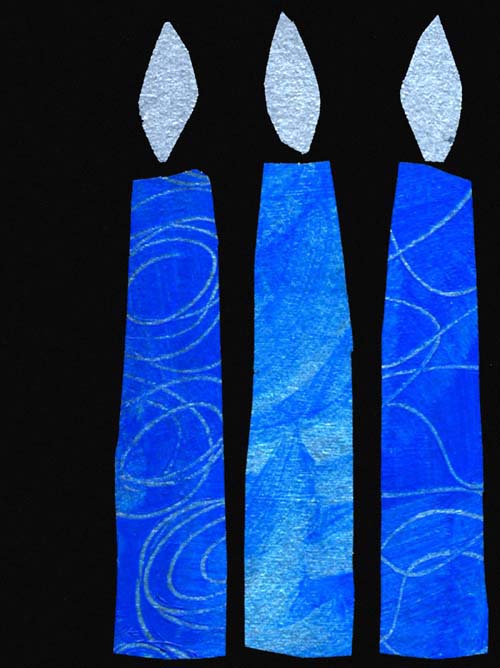
Feast of the Presentation/Candlemas
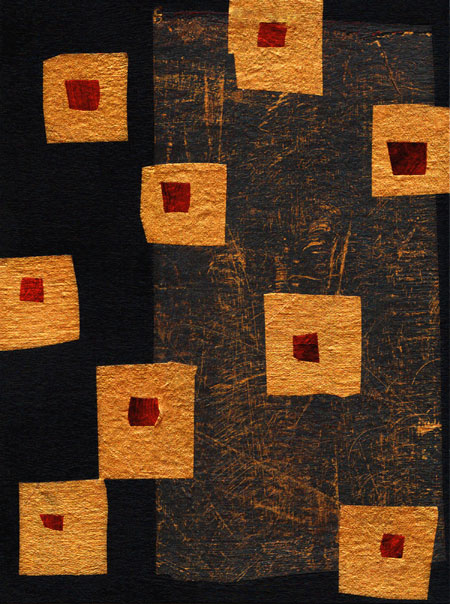

Epiphany 4: Litany of the Blessed

January 23, 2011


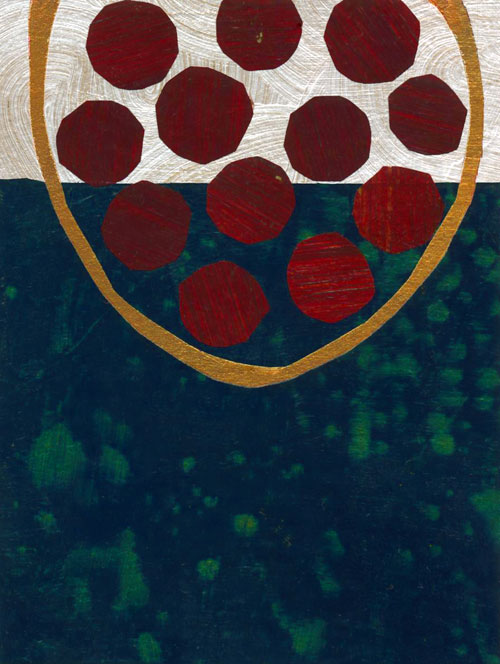
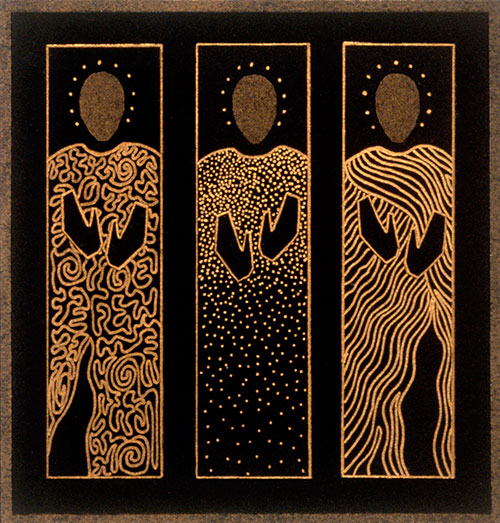
Litany of the Blessed © Jan Richardson

Reading from the Gospels, Epiphany 4, Year A (January 30): Matthew 5.1-12

Blessed.

The first time we encounter this word in the story of Jesus, it is in Luke’s gospel. Elizabeth offers this word—repeatedly—when Mary comes seeking sanctuary with her elder kinswoman amidst their mutually miraculous pregnancies.

Blessed are you
among women,

Elizabeth says to Mary,

and blessed
is the fruit
of your womb.

And blessed is she,

Elizabeth says soon after,

who believed.

Blessed, Elizabeth says to Mary: once, twice, and yet a third time.

Blessed blessed blessed.

Barely beginning to take form, Jesus feels the jolt that goes through Mary when she hears this word, blessed. Something in the growing Jesus feels the way the word settles inside Mary when she recognizes it to be true. When she knows it in her bones. When she claims the word for herself as she sings the Magnificat:

Surely, from now on
all generations will call me
blessed.

Blessed. Jesus absorbs this. Blessed seeps into his forming cells, blessed passes from Mary’s flesh into his own. From the womb, he knows the power of receiving a blessing, of living within it. He understands what it means to inhabit this word, to dwell within one who has been named blessed.

Jesus knows this word from the inside. And so there comes a time when he begins to say it. Again. And again.

Blessed are the poor in spirit,
Jesus says to his disciples on the mountain,
for theirs is the kingdom of heaven.

Blessed are those who mourn,
he tells his followers,
for they will be comforted.

Blessed are the meek,
he says to his friends,
for they will inherit the earth.

Again and again, Jesus says blessed, speaks blessed, proclaims blessed, pressing and imprinting it upon his listening disciples.

Blessed the hungry
and thirsty for righteousness,
he says.
Blessed the merciful.
Blessed the pure in heart.

The peacemakers:
blessed.

The persecuted for righteousness’ sake:
blessed.

And you—
you, when people revile you
and persecute you
and utter all kinds of evil
against you falsely on my account;
you—
rejoice and be glad.
You:
blessed.

What Elizabeth did for Mary, Jesus does here for his disciples. What Elizabeth spoke to the one who bore Jesus into the world, Jesus speaks to these whom he will call to become his body, to continue to bear him in this life, to become his hands and feet after his flesh is gone.

Jesus will not cease to say blessed after this passage, this litany, in Matthew 5. He will speak it yet again. When the imprisoned John the Baptist sends his disciples to ask Jesus, “Are you the one who is to come, or are we to wait for another?” Jesus tells them to return to his cousin and tell him what they see and hear, of the healing that comes to the blind, the lame, the lepers, and more.

And blessed,
Jesus says to John’s disciples,
is anyone
who takes no offense at me. (Matthew 11.6)

When Jesus’ disciples ask him why he speaks in parables, he speaks of those who have shut their eyes and closed their ears.

But blessed
are your eyes,
Jesus tells them,
for they see,
and your ears,
for they hear. (Matthew 13.6)

When Jesus asks his disciples, “Who do people say that the Son of Man is?” and they begin to tell of those who say he is the now-slaughtered John the Baptist, or Elijah, or Jeremiah, or another prophet, Jesus asks them, “But who do you say that I am?” Simon Peter answers, “You are the Messiah, the Son of the living God.” And Jesus says to him,

Blessed are you,
Simon son of Jonah!
For flesh and blood
has not revealed this to you,
but my Father in heaven. (Matt. 16.17)

Most often, the word blessed—from the Greek makarios—is linked with seeing, with hearing, with understanding. Jesus says blessed to those who recognize him and have responded to his call. He says blessed to those who have opened themselves to him, who have received him. He makes clear that being blessed is available to all. As he is teaching one day, a woman cries out to Jesus,

Blessed is the womb
that bore you
and the breasts
that nursed you!

Jesus responds to her,

Blessed rather
are those who hear
the word of God
and obey it. (Luke 11.27-28)

What Mary did—hearing, seeing, opening, receiving, responding—Jesus invites all his hearers to do. The blessing that imbued Mary—the blessing that Jesus absorbed in the womb and proclaimed throughout his ministry—Jesus tells the crowd is available to them as well.

We often talk about being blessed as if it is a reward, as if good fortune comes to us as just desserts. Much of Christian culture equates blessing with prosperity, with health, with satisfaction and obvious abundance. While it’s tempting to equate these gifts with the favor of God, this notion comes with a corresponding fallacy that says that those who are sick, those who are not prosperous, those whom misfortune has visited: these are not blessed.

With the beatitudes, Jesus utterly disrupts this line of thinking. Being blessed is not a reward for a job well done or for the accident of being born into fortunate circumstances. It is likewise not an accomplishment, an end goal, or a state of completion that allows us to coast along. And although the Greek makarios can be translated also as happy, being blessed does not rest solely upon an emotion: blessing does not depend on our finding or forcing ourselves into a particular mood.

Here in the beatitudes and throughout his ministry, Jesus proclaims that blessing happens in seeing the presence of Christ, in hearing him, in receiving him, in responding to him. And because Christ so often chooses places of desperate lack—those spaces where people are without comfort or health or strength or freedom, those places where they hunger for food or mercy or peace or safety—it is when we go into those places, when we seek and serve those who dwell there, that we find the presence of Christ. And, finding, then carry him with us.

To be blessed is not a static state. There is a dynamism within the word blessed: it implies an ability to be in the ongoing process of recognizing, receiving, and responding. To be blessed is to enter a kind of pregnancy: to take Christ in, to let him grow in us, to bear him forth, then to receive him and bear him yet again in our acts of mercy, of compassion, of solidarity, of love.

And you? Who or what do you name as blessed? Where do you encounter the blessing of Christ in this world? How do you seek to embody the blessing of God in your own life—to see and to hear Christ, to recognize him and bear him? Do you think of yourself as blessed? Who has given you this name? Who have you named as blessed?

May we have eyes to see and ears to hear, and may Christ have cause to say to us:

Blessed are you.
Blessed are you.
Blessed are you.

[To use the “Litany of the Blessed” image, please visit this page at janrichardsonimages.com. Your use of janrichardsonimages.com helps make the ministry of The Painted Prayerbook possible. Thank you!]

P.S. Coming Attractions: I’ve recently updated my Upcoming Events page. Would love for you to join us for any of these events if you’re in the vicinity!

Epiphany 3: Catch of the Day

January 16, 2011


Fresh Rainbow Trout © Scott Richardson

Reading from the Gospels, Epiphany 3, Year A (January 23): Matthew 4.12-23

Summer nights, Granddaddy would stand at the white enameled table on the back porch of the lake house, cleaning the fish he had caught that day. There was a rhythm to it as he removed the heads, scraped the scales, gutted the fish, sliced the fillets that would later be fried along with the hush puppies that Mommaw made in the small kitchen of the lake house. As a young girl, I once asked Granddaddy for the eyes of a trout he was cleaning; I thought they were like jewels. I still remember the crinkle of his nose as he declined my request (to his credit, without laughing), telling me the eyes would soon stink.

More than three decades later, the blade of my grandfather’s knife glints across next Sunday’s gospel passage. I find it difficult, after all, not to imagine the logical conclusion to Jesus’ call to the fraternal fishermen: “Follow me,” he says to Simon and his brother Andrew, “and I will make you fish for people.” And likewise to Simon and Andrew’s fishing colleagues James and his brother John, who immediately leave their boats, their nets, their father.

We know what happens to fish once they’re caught. And so how do we avoid wondering what the outcome of our fishing—or of our being netted—will be? How not to think of Christ standing at a white enameled table, his blade poised over the day’s catch? Or of ourselves, helpless beneath the gutting knife?

Yet it is no logical call that Jesus extends. To be sure, following Christ can, at times, leave us feeling filleted. The gospels and other writings of the New Testament have plenty to say about the losses and leave-takings involved in pursuing Christ, the letting go that he asks of us, the dying to all that is not of God. As Simon—soon to become Peter—and his fellow fisherfolk would learn, taking up with Jesus would not place them on a logical path with a predictable end. Jesus, in calling them to a different kind of fishing, likewise had a different sort of result in mind, though not without its hazards.

The image of the fish, so pervasive in the Gospels and in the early centuries of Christianity, often appeared as a symbol of life, of resurrection, of the miraculous, as Gail Ramshaw notes in her (must-have) book Treasures Old and New. Think of the feeding of the five thousand, or the stunning catch the disciples bring in after a long night of empty nets; think of the fish bake that Jesus shares with his disciples after his resurrection. The fish even became a symbol of Christ himself, owing, in part, to the fact that the Greek word for fish, icthus, is an acrostic for the title Jesus Christ, Son of God, Savior.

Christ means for us to share in the life and resurrection and presence of the miraculous that attends his path. We find a clue to this, a sign of this, within the placement of this passage. Jesus’ call to the fishermen falls close on the heels of his baptism in the Jordan, which we have just commemorated. I think of medieval images of John’s baptism of Jesus; of how, in so many of the depictions, the waters of the Jordan rise up to meet Jesus. And in those medieval paintings, fish swim in the baptismal waters, leaping in the presence of the drenched Messiah. (For one such image, see this page from a 13th-century English psalter.)

And we who share in Christ’s baptism are likewise gathered up in the life-giving waters. He draws us not for death and destruction, nor for mere consumption, but rather to find sustenance in the waters of baptism and in the presence of Christ, who offers living water. We see this notion in the Treatise on Baptism by Tertullian, from which Gail Ramshaw quotes in her reflection on fish imagery in the scriptures: “We, little fishes,” writes the early church father, “after the example of our icthus Jesus Christ, are born in water, nor have we safety in any other way than by permanently abiding in water.”

Though following after Christ will bring its perils and parings, and the gleam of the knife casts its presence yet across this passage, the knife does not have the final word. As this lection begins with words of hope, so does it end. Opening with Jesus’ quotation of Isaiah’s stunning words about light and life coming to those who have sat in darkness and death, the passage closes by telling of how he “went throughout Galilee, teaching in their synagogues and proclaiming the good news of the kingdom and curing every disease and every sickness among the people.” It is for life, finally, that Christ gathers us up; it is for wholeness that he sends us out.

Where does this week’s gospel leave you? What draws you to Christ? What sustenance do you find with him? Are there times you feel like you’re under the fisherman’s knife, and what do you do with this? As you contemplate Christ’s own call to you, in your own specific context and vocation, what images arise for you? What symbols capture the life and wholeness that Christ desires for us—for you?

I’m pleased to have a guest artist this week: my brother, Scott Richardson, who, along with our lifelong friend Lee Deaderick, owns a seafood market called Northwest Seafood in Gainesville, Florida. (Check them out at Northwest Seafood; these “Fanatics of Freshness” will ship anywhere in the U.S.! You can also find them on Facebook.) My artful brother makes the signs that hang in their store window. I have coveted these signs, and Scott gifted me with one last year. As we ponder the piscine passage this week, it’s a treat to share Scott’s sign with you.

In the coming days, may Christ gather you up, bless you with the depths of his love, and sustain you as you follow him. Blessings.

For a previous reflection on this passage, visit Epiphany 3: In Which We Visit Our Inner Library.

And for my reflection on Mark’s account of this story, see Epiphany 3: Hooked.

Baptism of Jesus: Following the Flow

January 4, 2011


Following the Flow © Jan L. Richardson

Reading from the Gospels, Baptism of Christ/Epiphany 1, Year A: Matthew 3.13-17

From Genesis to Revelation, water arcs through the Bible, courses through the scriptures, shapes the landscape of the sacred text, surfaces again and again in the story of the people of God. Nearly always it is a sign of God’s provision, God’s providence, God’s care for those whom God has claimed. By the time we see Jesus meeting John at the Jordan in this Sunday’s gospel lection, we have already been swimming in the stories: of God giving a stream to Eden, of Hagar receiving wellsprings in her desperate wilderness, of Moses striking the rock that gave water to a thirsty and wandering people. We have read the tale of Jacob meeting Rachel by a well, the psalmist’s words about still waters that comfort and restore, and the prophet’s proclamation of the God who “will pour water on the thirsty land, and streams on the dry ground.” Again and again, God’s provision breaks through and springs forth in the form of water.

And here, the first time Jesus takes the stage as an adult, we see him come to the Jordan. This is the river in which, generations before, priests bearing the ark of the covenant had stood, stopping the waters so that the entire, long-journeying children of Israel could pass through to the other side. This is the river that Elijah struck with his mantle so that he and Elisha could cross, moments before Elijah’s dramatic ascension amid the blazing horses and chariots of fire. It is Jordan that Elisha tells the leprous Naaman to wash himself in and be cleansed, Jordan that King David crosses with all of Israel as he prepares to fight the Arameans, Jordan that traces a path through Israel’s history. It is a mythic river that Jesus wades into, and we watch him become drenched in its very real waters as he receives John’s baptism.

As Jesus rises from this ancient river, he is the recipient of all the graces that water signifies, imbued with the layers of symbolism and story and blessing that these waters convey. Yet he is not only recipient of this; as the waters of baptism roll off him, Jesus is also sign: this drenched and dripping Messiah embodies and shows forth in fullness just how far God will go to provide for and restore God’s people.

Here at Jordan, I find my eye drawn to the yielding that takes place in this river. When Jesus first approaches him, John challenges this baptism-seeking savior: “I need to be baptized by you, and do you come to me?” he says to his cousin. “Let it be so now,” Jesus urges him, his words an echo of the “Let it be” that his mother offered to the angel long ago, on the day that the same Spirit descended upon her. And just like that, the locust-and-honey-eating Baptist of the wilderness, who only a few verses earlier was railing at the Pharisees and Sadduccees and speaking of vipers and axes, winnowing forks and fire, falls silent. Gives in. Yields to Jesus like a stone yielding to the river that washes over it.

Jesus, too, does his own yielding. He places himself in John’s hands, leans into the liminal space of the ritual, gives himself up to the river and what it offers, gives in to the path that lies ahead of him. It is not a passive action that Jesus undertakes here. This is not the gesture of a man resigned to his fate; he is not letting his circumstances wash over him. Christ does not take part in—or call us to—blind acceptance. The yielding that Jesus engages in—and John, too—requires a different kind of strength, a different set of muscles than those involved in straining and striving and struggling to move forward. This yielding calls forth a courage born of recognizing the path to which we are called, and ceasing to fight against it: to give ourselves to its flow, to let it work on us, as the river does with the stone.

As we move into this new year and this new liturgical season, what muscles are you using? In the midst of working and reaching and pushing, is there a place where God might be inviting you to yield, to give in, to give yourself up, so that the grace of God may wash over you? Is there a ritual, a sacramental act, a liminal space that you need to lean into? Who could you ask to meet you there; who could help you say, “Let it be”?

As we approach this Sunday’s celebration of the Baptism of Jesus, I invite you to spiral back around some earlier art and reflections for this day. Click on the image or the title below to find your way to them.

In these days, may you know when to push, and when to give in, and may the grace and the power of God drench you and bear you along. Blessings.

Epiphany 1: Baptized and Beloved

Epiphany 1: Take Me to the River

Epiphany 1: Ceremony (with a Side of Cake)

[To use the “Following the Flow” image, please visit this page at janrichardsonimages.com. Your use of janrichardsonimages.com helps make the ministry of The Painted Prayerbook possible. Thank you!]

Bonus round: As you ponder these things, click the player below to hear “Hymn of the Stone” by my husband, Garrison Doles, from his CD One Man.

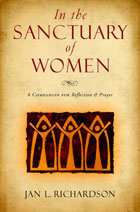
P.S. NEW YEAR, NEW BOOK! As we move into this year, my new book, In the Sanctuary of Women, provides good companions for your path. In the spirit of Sacred Journeys, this book draws from the often hidden wellsprings of women’s wisdom in Jewish and Christian traditions, inviting us to engage the mysteries that lie at the heart of who we are. Not only for personal reflection, In the Sanctuary of Women also offers a space to engage with others, whether in an organized setting such as a book group or prayer circle, or with a friend across the country or across the table.

The companion website, sanctuaryofwomen.com, offers info on where to purchase the book, and inscribed copies are available by request. More than being just about the book,  the site is designed to foster conversation and community through features including a guide for reading groups and an interactive blog. I would love for you to stop by and to join with others in the conversations that are happening about how we can create sanctuary for and with one another in the coming year.

Epiphany: Where the Map Begins

December 30, 2010

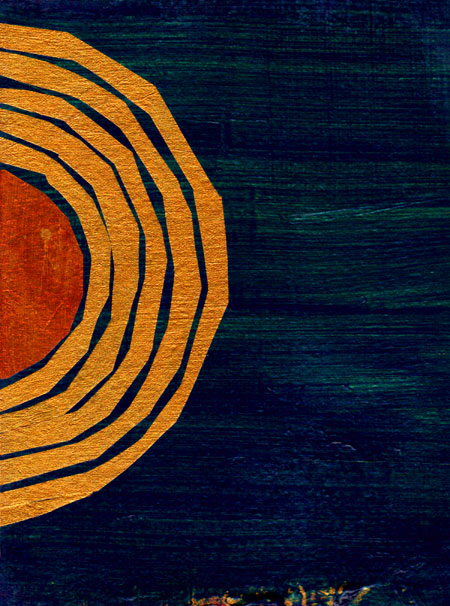
Image: An Ancient Light © Jan Richardson

Reading from the Gospels, Epiphany ABC: Matthew 2.1-12

I love this time between Christmas Day and Epiphany. Although the prospect of moving beyond the holidays is always a bit poignant for me, I take comfort in knowing that the festival of Christmas lasts not for one day but for twelve, and there is still cause for celebration before we leave this season. This year in particular I am grateful for the opportunity to rest and reflect, and to do some dreaming as well as playing before I dive into the coming year.

In these blissfully quiet days, I have spent time curled up with a few books. One that I am especially savoring was a Christmas gift from my parents. Mapping the World: Stories of Geography, written by Caroline and Martine Laffon, is a beautifully produced book that traces some of the history of how we humans have sought to chart the universe, and our place within it, over millennia. With images of maps from ancient to contemporary times, the book reveals how maps are never neutral documents: they provide a glimpse of the beliefs, myths, legends, and sometimes prejudices of those who created them.

I have spent much time this year thinking about maps. In retreats, workshops, worship, and conversation, the question has surfaced again and again: In a world that we enter with no map in hand, no blueprint, no book of instructions, how do we find our way? In the Wellspring service, the contemplative worship gathering that Gary and I lead, we recently finished a five-part series titled “Mapping the Mysteries of Faith.” As we explored this theme and the questions that it stirred, the conversations we had at Wellspring were rich and refreshing. We didn’t leave with many answers—that’s not the point of the Wellspring service—but I found myself reminded once again of how crucial it is to have the company of wise travelers as we make our own maps.

With Epiphany on the horizon, I find myself thinking of the magi, those ancient travelers who went in search of the Christ. Wise to the heavens, they still possessed no map, no ready-made chart that laid out their course.  As Matthew tells it, all that the magi had to illuminate their terrain and guide their way was a star. This was where their map began: with a burning light, with a step taken, with the company of others gazing in the same direction.

In that spirit, here’s a new poem. Composed while I was curled up among the books, it’s for Epiphany, and for you.

Where the Map Begins

This is not
any map you know.
Forget longitude.
Forget latitude.
Do not think
of distances
or of plotting
the most direct route.
Astrolabe, sextant, compass:
these will not help you here.

This is the map
that begins with a star.
This is the chart
that starts with fire,
with blazing,
with an ancient light
that has outlasted
generations, empires,
cultures, wars.

Look starward once,
then look away.
Close your eyes
and see how the map
begins to blossom
behind your lids,
how it constellates,
its lines stretching out
from where you stand.

You cannot see it all,
cannot divine the way
it will turn and spiral,
cannot perceive how
the road you walk
will lead you finally inside,
through the labyrinth
of your own heart
and belly
and lungs.

But step out
and you will know
what the wise who traveled
this path before you
knew:
the treasure in this map
is buried not at journey’s end
but at its beginning.

—Jan Richardson

As we travel through these Christmas days toward Epiphany and the coming year, where do you find yourself in your map? What are you giving your attention to? Are you looking in a direction that enables you to see possible paths? Is there a turn you need to take in your map? Where might you begin? Who can help?

As we travel toward Epiphany and beyond, blessings and good company to you.

[2016 update: The blessing “Where the Map Begins” appears in Jan’s new book, Circle of Grace: A Book of Blessings for the Seasons.]

For previous Epiphany reflections, visit Feast of the Epiphany: Blessing the House; Feast of the Epiphany: A Calendar of Kings; Inviting Epiphany; and The Feast of the Epiphany: Magi and Mystery.

[To use the image “An Ancient Light,” please visit this page at janrichardsonimages.com. Your use of janrichardsonimages.com helps make the ministry of The Painted Prayerbook possible. Thank you!]

Feast of the Epiphany: Blessing the House

December 31, 2009

Image: The Wise Ones © Jan Richardson

Reading from the Gospels, Epiphany, Years ABC: Matthew 2.1-12

In the rhythm of the liturgical year, the season of Christmas comes to an end with the Feast of the Epiphany on January 6. The word epiphany comes from the Greek word epiphaneia, meaning manifestation or appearance. In Western Christianity, we observe this day primarily as a commemoration of the wise men who journeyed to see Jesus. In the East, Epiphany is a major feast day that celebrates not only Christ’s manifestation to the world through his birth and to the magi in their visit but also the way in which he showed himself forth in his baptism and in his first recorded miracle, the changing of water to wine at the wedding at Cana.

In doing some reading about the Feast of the Epiphany recently, I’ve been intrigued by a custom that is often mentioned in connection with this day of celebration: the blessing and chalking of the house. Many versions of the ceremony that I’ve come across include these elements:

-The reciting of a blessing upon the house (or other dwelling) and those who inhabit it

-The blessing of a piece of chalk that is then used to write a formula above the entry of the house. The formula incorporates the current year with the initials of the wise men (whose names are not recorded in scripture but were given by tradition as Caspar [or Gaspar], Melchior, and Balthasar). This coming Epiphany, it would be written this way:

20 + C + M + B + 10

(Some folks note that “C M B” can also stand for “Christus Mansionem Benedicat,” which means “May Christ bless this dwelling.”)

-The sprinkling of the door with holy water

Although it seems to be an ancient practice, I haven’t found any explanation of the origin of the custom. I suspect that, like many rituals, it has several layers of meaning and that its origin has more than one source. Certainly it has much resonance with the visit of the wise men to the home of Jesus, Mary, and Joseph, and the manner in which they blessed it with their presence and their gifts.

So I’ve been thinking about house blessings as Epiphany approaches, especially since Gary and I will soon be in search of a house of our own. We’re engaged to be married next spring, and I’m daily praying that God will lead us to a (spacious) abode that will welcome two adults, each of whom needs a studio at home (and a copious measure of personal space), and Gary’s teenaged son. (Did I mention we’re looking for something spacious?)

At the same time that I’m thinking of (and praying for) a physical dwelling that we will inhabit and bless, I also find myself imagining the coming year as a house—a space in time that is opening itself to all of us. How will we inhabit the coming year? How will we enter it with mindfulness and with intention? How will we move through the rooms of the coming months in a way that brings blessing to this world?

With these questions in mind, I offer this blessing for you.

The Year as a House: A Blessing

Think of the year
as a house:
door flung wide
in welcome,
threshold swept
and waiting,
a graced spaciousness
opening and offering itself
to you.

Let it be blessed
in every room.
Let it be hallowed
in every corner.
Let every nook
be a refuge
and every object
set to holy use.

Let it be here
that safety will rest.
Let it be here
that health will make its home.
Let it be here
that peace will show its face.
Let it be here
that love will find its way.

Here
let the weary come
let the aching come
let the lost come
let the sorrowing come.

Here
let them find their rest
and let them find their soothing
and let them find their place
and let them find their delight.

And may it be
in this house of a year
that the seasons will spin in beauty,
and may it be
in these turning days
that time will spiral with joy.
And may it be
that its rooms will fill
with ordinary grace
and light spill from every window
to welcome the stranger home.

—Jan Richardson

Wherever you make your home, may it be blessed, and may you enter this Epiphany and the coming year in peace.

[For other Epiphany reflections, please visit my previous post. If you’re working with the lection from John’s gospel for this Sunday (Christmas 2), please see this reflection.]

[To use the “Wise Ones” image, which is from my book In Wisdom’s Path: Discovering the Sacred in Every Season, please visit this page at janrichardsonimages.com. For all my artwork for the Feast of the Epiphany, please see this page. Your use of janrichardsonimages.com helps make the ministry of The Painted Prayerbook possible. Thank you!]

On the Sickth Day of Christmas

December 30, 2009


Magi and Mystery © Jan L. Richardson

Reading from the Gospels, Epiphany, Years ABC: Matthew 2.1-12

I’ve spent the past few days dealing with an unexpected Christmas guest: a rare (for me) head cold. It’s one way to get a break, I suppose, but not the way that I’d planned to spend these lovely days between Christmas Day and Epiphany. I finally gave in and went to the doctor today and trust I’ll be back in the swing of things soon.

I had planned to post a new reflection for Epiphany early this week, and still have hopes of doing so before the week is out; we’ll see how that goes. In the meantime, I invite you to visit my previous Epiphany posts: Magi and Mystery, Inviting Epiphany, and Feast of the Epiphany: A Calendar of Kings.

To see all my artwork for the Feast of the Epiphany, please visit this page at janrichardsonimages.com.

On this sixth day of Christmas, I wish you peace and good health!

On the Fourth Day of Christmas

December 28, 2009


The Hour of Vespers: Flight to Egypt © Jan L. Richardson

With Advent being my busiest season of the entire year, it comes as something of a comfort to me that Christmas is not just a single day: in the rhythm of the liturgical year, Christmas lasts for twelve days. There’s some variation of opinion as to when the Twelve Days of Christmas begin; some say Christmas night, others begin the count on December 26. Regardless, the season of Christmas ends with the Feast of the Epiphany on January 6. No matter how you count it, the days of Christmas invite us not to be too hasty in bringing an end to our celebration of the Incarnation. For me, this celebration includes giving my incarnated self some rest and savoring the delights that the season yet offers to us.

The Twelve Days of Christmas include several feast days that help define the season. December 26 was the Feast of St. Stephen (featured in the carol “Good King Wenceslas”), the first Christian to die for bearing witness to the one who had come as Emmanuel, God with us. Yesterday was the feast of St. John. Today, December 28, is the Feast of the Holy Innocents—the male children slaughtered by the soldiers of King Herod, as told in Matthew 2.16-18. (The Eastern Orthodox Church observes this on December 29.) This grim feast day reminds us to acknowledge the shadow side of the Christmas season: amid our celebration of the Christ who came as the light of the world, the presence of evil persists. To truly celebrate the birth of Christ means working against the forces that perpetuate suffering.

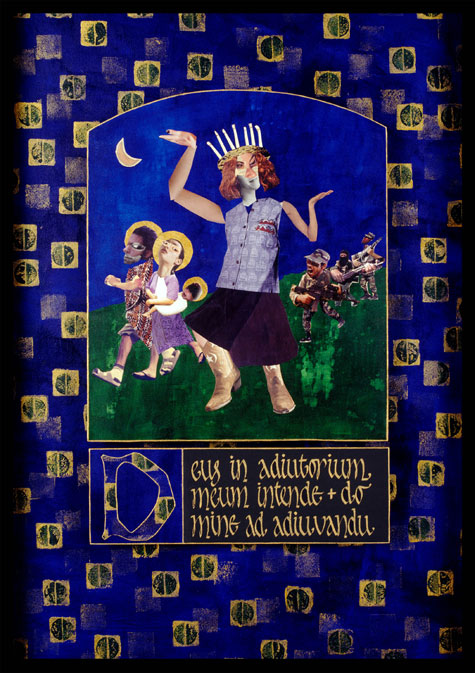
The Massacre of the Innocents appears often in medieval artwork, usually in gruesome detail and sometimes in connection with the Flight to Egypt (Mary, Joseph, and Jesus’ escape from the soldiers). The image above is from my Advent Hours series and depicts an intriguing variation on the story of the Flight to Egypt that incorporates St. Brigid, the famed Irish saint. Many ancient prayers and legends from Celtic lands refer to St. Brigid of Kildare as the foster-mother of Christ and the midwife at his birth. Even for the wonderworking Brigid, this would have been a great feat, as she was born in the fifth century. Yet in a culture in which the bond of fostering was often stronger than the bond of blood, this notion reveals something of the deep esteem that Brigid attracted, and it’s a way of describing how she helped to prepare a way for Christ as the Christian faith took root in Ireland. A particularly lovely legend tells that St. Brigid, upon seeing Herod’s soldiers enter the city to slaughter the young boys, quickly fashioned a wreath of candles. Placing it upon her head, she began to dance, distracting the soldiers and allowing the Holy Family to flee to safety.

On this feast day, Brigid’s legend and the story of the slaughter of the innocents calls me to consider what I’m doing, or need to do, to help protect those who suffer most in our world. As I rest for a bit in this Christmas season, as I linger with what the season continues to offer, how might this be a time of discernment and preparation for the work that lies ahead?

What’s stirring for you as we move through the Christmas season? What might this Twelve-Days-Feast have yet to offer you in the way of both delights and questions for your path ahead?

If you didn’t have occasion to visit The Advent Door during the past weeks, I invite you to stop by there as we move through these lingering days of Christmas. As we journey toward Epiphany, may you find in these days a continued celebration and the sustenance you need to walk in the way of Christ, the Word made flesh. Blessings and peace to you!

[To use this image, please visit this page at janrichardsonimages.com. Your use of janrichardsonimages.com helps make the ministry of The Painted Prayerbook possible. Thank you!]

Feast of the Epiphany: A Calendar of Kings

January 6, 2009

Image: Adoration of the Magi © Jan Richardson

Reading from the Gospels, Epiphany: Matthew 2.1-12

A blessed Epiphany to you! During the season that has brought us to this feast day, one of the CDs I’ve been listening to is Wolcum Yule: Celtic and British Songs and Carols by the wondrous vocal group Anonymous 4. My favorite piece on this CD is “A Calendar of Kings,” which began as a poem by George Mackay Brown, the prolific poet of Orkney (in northern Scotland) who died a dozen years ago. The poem’s musical setting was composed by Sir Peter Maxwell Davies, whose composition honors and evokes the haunting enchantment of Mackay Brown’s words. In the liner notes, Maxwell Davies comments, “From the imagery, with ice, snowdrops, and daffodils, it is clear that the journey lasts a season, and that the poet has transplanted the setting from the Middle East to his native land and seascape in Orkney, bringing the nativity home in a very vivid way.”

Here’s the text of the poem.

A Calendar of Kings

They endured a season
Of ice and silver swans.

Delicately the horses
Grazed among the snowdrops.

They traded for fish, wind
Fell upon crested waters.

Along their track
Daffodils lit a thousand tapers.

They slept among dews.
A dawn lark broke their dream.

For them, at solstice
The chalice of the sun spilled over.

The star was lost.
They rode between burnished hills.

A fiddle at a fair
Compelled the feet of harvesters.

A glim on their darkling road.
The star! It was their star.

In a sea village
Children brought apples to the horses.

They lit fires
By the carved stones of the dead.

A midwinter inn.
Here they unload their treasures.

© George Mackay Brown
from Following a Lark

The image above is from my series The Advent Hours. I wrote this to accompany the artwork:

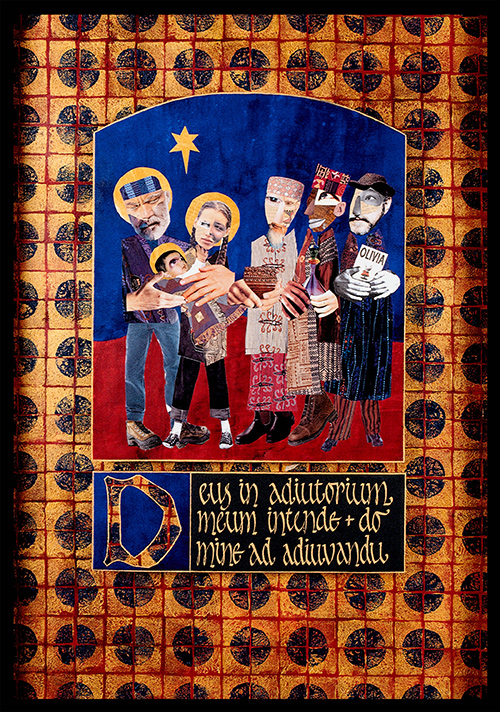
Pondering the patterns of the heavens, the wise ones found one star, one light that called to them, compelled them, set them on the road. And they came, arriving upon the star-drenched landscape where dwelled the hope of the world in the garb of a child. They stretched out their hands to him, the brilliance of the sky now shimmering in their exquisite gifts: gold, frankincense, myrrh.

I’m taking a bit of time off this week but am aiming to have a reflection on Epiphany 1/Baptism of Jesus posted within the next couple of days. In the meantime, I welcome you to visit last year’s reflection on Matthew’s version of Jesus’ baptism, Epiphany 1: Ceremony (With a Side of Cake).

I’ll send out the Epiphany edition of my e-newsletter this afternoon, so if you’d like to receive it and haven’t already subscribed, I invite you to join my mailing list here.

Merry Epiphany! For this day, for this year, may you have light for the path and, as George Mackay Brown writes of the kings, a place to unload your treasures.

[To use the image “Adoration of the Magi,” please visit this page at janrichardsonimages.com. Your use of janrichardsonimages.com helps make the ministry of The Painted Prayerbook possible. Thank you!]

Christ Among the Scraps

November 19, 2008


Christ Among the Scraps © Jan L. Richardson

Reading from the Gospels, Christ the King/Reign of Christ Sunday, Year A: Matthew 25.31-46

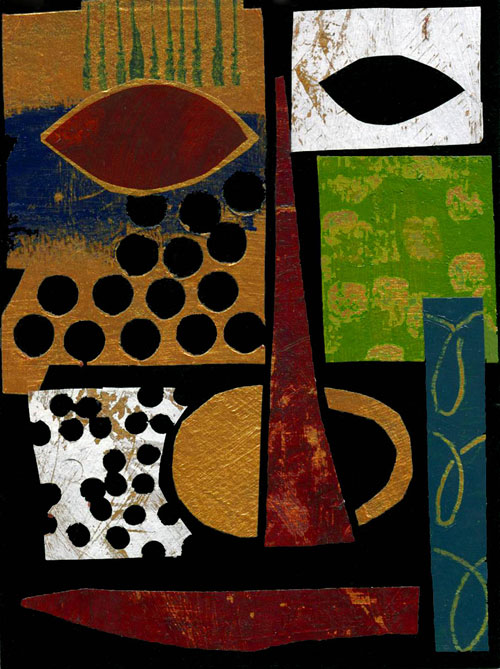
So I spent last night at the drafting table, pushing pieces of painted papers around. I had made a few sketches as I reflected on this week’s gospel lection. I sat down at the drafting table with those sketches in hand. But then a scrap caught my eye, and another scrap, and another. Owing to an intense travel schedule and natural tendencies, I probably have not cleared off my drafting table since before Ordinary Time began about six months ago. So each week, with every collage, scraps have lingered, gathering and multiplying in a brilliance of colors.

The sketches now abandoned, I played with the painted pieces, picking up, setting aside. I chose scraps that I had tried to use in earlier collages. I chose pieces from which I had previously cut shapes. I chose papers that I’d experimented with as I tried different colors or marking techniques. I chose from the leavings, the left behind. I dug my hands deep into the pile, hitting the bottom of the stack, turning over layers that hadn’t seen the light of day in months. Sorting. Sifting. Choosing.

I thought about this passage in which Jesus speaks of sorting and of sifting, how he describes a day when he will confront us with the choosing we have done: what we embraced, what we rejected. What we failed even to notice. He speaks of those who recognize him and minister to him, and those who don’t. This text from Matthew lies at the deepest core of our call as followers of Christ. And it is, perhaps, the one that most fiercely challenges us, that stretches us the farthest.

When was it that we saw you?

I turn the scraps over in my hands. Sorting, choosing. Finding the pattern. I think of how my deepest regrets—what few I allow myself—are most often attached to occasions when I didn’t see. Didn’t know how to see, didn’t yet have the eyes for seeing. The realization of it—the dawning knowledge of where my vision was lacking—is itself a kind of punishment. But an invitation, too. To learn to look more closely. To take in what I have rushed past.

When was it that we saw you?

A face begins to take shape from the scraps. My initial sketches had to do with doors, entryways—places of hospitality and welcome. But I look into these eyes and wonder what passage they offer. One eye, the crimson, was left over from the collage that I did for my reflection on John 9.1-41 during Lent. Jesus spat on the ground, John tells us, and made mud, and placed it on a man’s unseeing eyes. He told the man to go wash in the pool of Siloam, whose name means Sent. The sent man saw. And he recognized the one who sent him. Jesus tells him that he has come so that those who do not see may see.

When was it that we saw you?

I begin to glue the pieces that I have chosen from the scraps. I find myself thinking of a talk I recently heard in which the speaker seemed to think that evangelism is something that involves our taking Jesus to places he hasn’t already been. And I pray for eyes to see the ways that Christ already inhabits every place. How there is no place it hasn’t already occurred to him to visit, no space in which he isn’t already working to make a home, no person through whom he might not startle me with the blazing of his presence.

When was it that we saw you?

By his words in Matthew 25, Jesus assures us that our greatest sin lies not in having the wrong theology or refusing to believe as others would have us believe or failing to take him to a place he has never gone. Our sin lies in neglecting to recognize and respond to him where he already is.

Jesus gets awfully specific in telling us where we can find him. Each of the habitations he lists here is marked by lack: lack of food, lack of water, lack of hospitality, lack of clothing, lack of health, lack of freedom. Christ chooses these places, inhabits these spaces, waits for us to show up. Waits, too, for us to recognize those places in ourselves. He knows that if we haven’t recognized the poverty within our own souls, and how he dwells there, it’s hard to see him and serve him in others without being patronizing.

When was it that we saw you?

This Sunday is the last in Ordinary Time. Christ the King Sunday, the liturgical calendar tells us. As we prepare to cross the threshold into Advent, I wonder what Christ, this sovereign who came in such a ragged, radical guise, has in store for the season to come. How he’ll show up. Where he’ll invite me to see him.

I rinse my gluey brushes, clean off my palette, call it a night. I gaze at this unexpected face that gazes back at me. Christ among the Scraps, I’ll call it. Making his home.

When was it that we saw you?

That’s question enough for this week. Blessings.

[To use the “Christ Among the Scraps” image, please visit this page at janrichardsonimages.com. Your use of janrichardsonimages.com helps make the ministry of The Painted Prayerbook possible. Thank you!]