Archive for the ‘sacred time’ Category

On the Fourth Day of Christmas

December 28, 2009


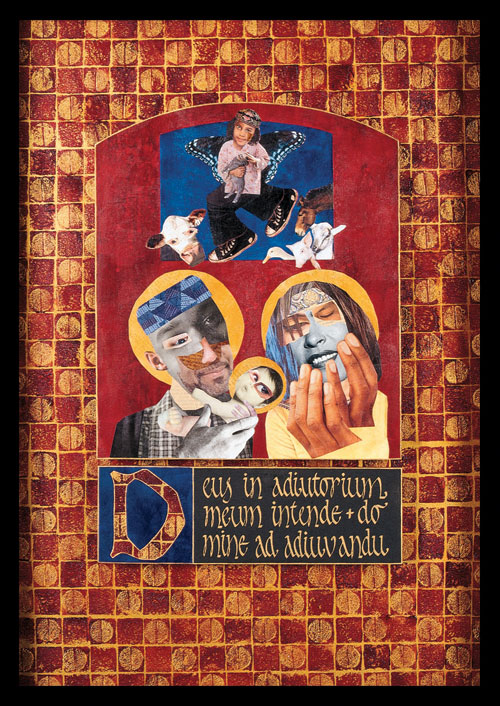
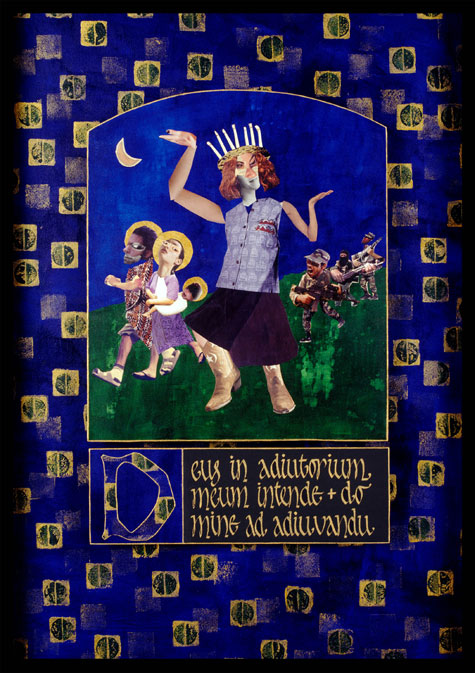
The Hour of Vespers: Flight to Egypt © Jan L. Richardson

With Advent being my busiest season of the entire year, it comes as something of a comfort to me that Christmas is not just a single day: in the rhythm of the liturgical year, Christmas lasts for twelve days. There’s some variation of opinion as to when the Twelve Days of Christmas begin; some say Christmas night, others begin the count on December 26. Regardless, the season of Christmas ends with the Feast of the Epiphany on January 6. No matter how you count it, the days of Christmas invite us not to be too hasty in bringing an end to our celebration of the Incarnation. For me, this celebration includes giving my incarnated self some rest and savoring the delights that the season yet offers to us.

The Twelve Days of Christmas include several feast days that help define the season. December 26 was the Feast of St. Stephen (featured in the carol “Good King Wenceslas”), the first Christian to die for bearing witness to the one who had come as Emmanuel, God with us. Yesterday was the feast of St. John. Today, December 28, is the Feast of the Holy Innocents—the male children slaughtered by the soldiers of King Herod, as told in Matthew 2.16-18. (The Eastern Orthodox Church observes this on December 29.) This grim feast day reminds us to acknowledge the shadow side of the Christmas season: amid our celebration of the Christ who came as the light of the world, the presence of evil persists. To truly celebrate the birth of Christ means working against the forces that perpetuate suffering.

The Massacre of the Innocents appears often in medieval artwork, usually in gruesome detail and sometimes in connection with the Flight to Egypt (Mary, Joseph, and Jesus’ escape from the soldiers). The image above is from my Advent Hours series and depicts an intriguing variation on the story of the Flight to Egypt that incorporates St. Brigid, the famed Irish saint. Many ancient prayers and legends from Celtic lands refer to St. Brigid of Kildare as the foster-mother of Christ and the midwife at his birth. Even for the wonderworking Brigid, this would have been a great feat, as she was born in the fifth century. Yet in a culture in which the bond of fostering was often stronger than the bond of blood, this notion reveals something of the deep esteem that Brigid attracted, and it’s a way of describing how she helped to prepare a way for Christ as the Christian faith took root in Ireland. A particularly lovely legend tells that St. Brigid, upon seeing Herod’s soldiers enter the city to slaughter the young boys, quickly fashioned a wreath of candles. Placing it upon her head, she began to dance, distracting the soldiers and allowing the Holy Family to flee to safety.

On this feast day, Brigid’s legend and the story of the slaughter of the innocents calls me to consider what I’m doing, or need to do, to help protect those who suffer most in our world. As I rest for a bit in this Christmas season, as I linger with what the season continues to offer, how might this be a time of discernment and preparation for the work that lies ahead?

What’s stirring for you as we move through the Christmas season? What might this Twelve-Days-Feast have yet to offer you in the way of both delights and questions for your path ahead?

If you didn’t have occasion to visit The Advent Door during the past weeks, I invite you to stop by there as we move through these lingering days of Christmas. As we journey toward Epiphany, may you find in these days a continued celebration and the sustenance you need to walk in the way of Christ, the Word made flesh. Blessings and peace to you!

[To use this image, please visit this page at janrichardsonimages.com. Your use of janrichardsonimages.com helps make the ministry of The Painted Prayerbook possible. Thank you!]

Anticipating Advent

November 9, 2009

Advent11
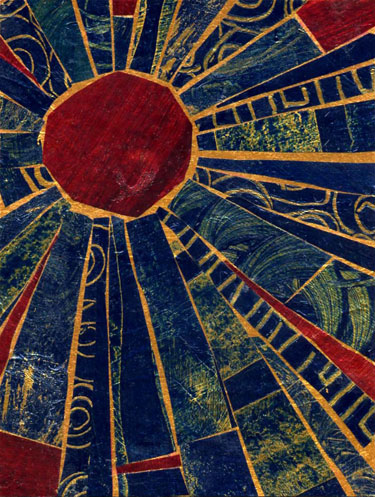
Magnificat © Jan L. Richardson

Today has found me in the studio, working on some artwork for the cover of my new book. Amid the intensity of writing, I haven’t spent a lot of time in the studio in recent months, so it was lovely to clear off my drafting table today and play amongst the paints. As I wrap up the book and begin to contemplate the coming season of Advent, I’m looking forward to creating new art and reflections for my blog The Advent Door. I just published my first post of the year over there, with a few pre-Advent thoughts; I invite you to stop by. (And don’t miss the announcement there about the festive Advent discount on annual subscriptions at janrichardsonimages.com!)

Even though I’m someone who gives a lot of thought to Advent, I still often find that it catches me unprepared and that it seems altogether too short. Especially given what an intense year this has been with working on the book, I’m trying to get a jump on things and give some thought now to how I want to enter into the coming season. I don’t have a clear plan as of yet—and Advent tends to resist too much planning anyway—but I’m starting to envision some things that invite me to linger and savor and be: a good walk, a visit with a friend over a cup of tea, a stolen afternoon with a tasty book…

How do you hope to enter Advent this year? When we arrive at Christmas, what do you want to be able to look back on? What will help you stop and savor the coming season and open your eyes to the Christ who comes to us amongst these days?

As we anticipate Advent, may we also linger well with these present hours. Blessings to you.

For All the Saints

October 26, 2009

blog-A-Gathering-of-Spirits
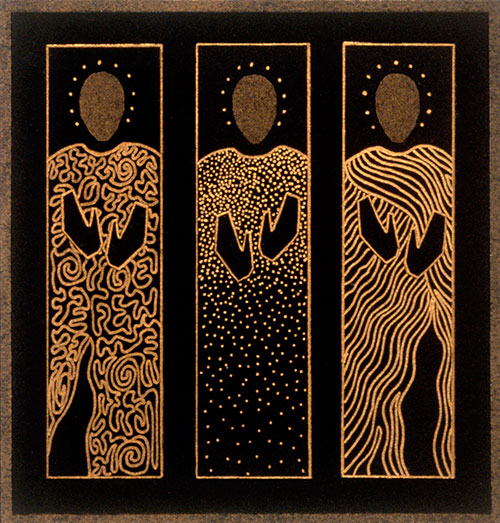
A Gathering of Spirits © Jan L. Richardson

I am coming into the home stretch of my new book, thanks be to God, and am looking forward to finishing up all the final details in time to start blogging on a more regular basis in time for Advent (over at my other blog, The Advent Door). It’s lovely also to be getting ready to celebrate my favorite trinity of days in the whole year—Halloween, the Feast of All Saints, and the Feast of All Souls. For a long while, this trio of days has been a sacred time for me—what the Celtic folk call a “thin place” in the wheel of the year. As we approach the Feast of All Saints in this year that has been particularly intense with laboring on the book, I am especially mindful of and grateful for all the sources of help, encouragement, prayer, and good cheer I have received along the way from sainted folk on both sides of the veil.

As the Feast of All Saints draws near, I invite you to visit the reflection that I wrote last year by clicking here: Feast of All Saints: A Gathering of Spirits.

Also, if you’re working with Mark 12.28-34, the gospel lection for Proper 26B/Ordinary 31B/Pentecost + 22, I invite you to visit the reflection I offered last year for Matthew’s version of this story: Crossing the Country, Thinking of Love.

Many blessings to you in these sacred days.

Of Supper and Saints

September 29, 2009

Thanks for stopping by…I’m still alive and kicking and up to my eyeballs working on the book. But we have a festive weekend coming up, and I didn’t want to let it pass without making note of a couple festivities and inviting you to stop by the reflections that I offered on them last year. The entries may be reheated, but they’re still full of flavor, so come sit for a spell and have a savory taste…

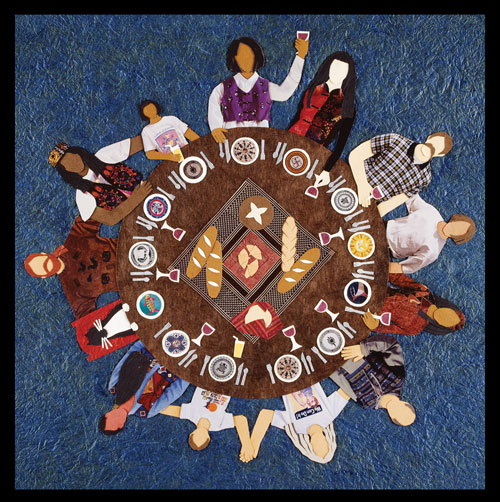
blog2008-best-supper1

This Sunday, October 4, is World Communion Sunday. For my reflection from last year, visit The Best Supper.

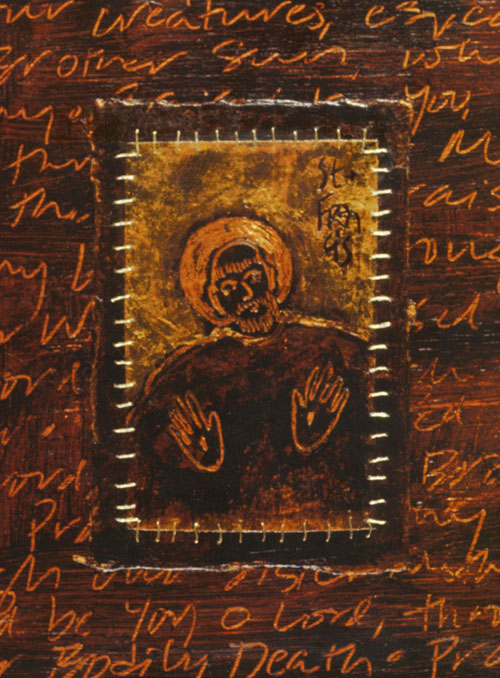
blog2008-st-francis

This Sunday also brings us the Feast of St. Francis. I invite you to visit Feast of St. Francis for my earlier reflection on one of my favorite saints.

Many blessings to you in this week of celebration!

A Toast to the Magdalene

July 20, 2009

blog-MaryMagdaleneTea
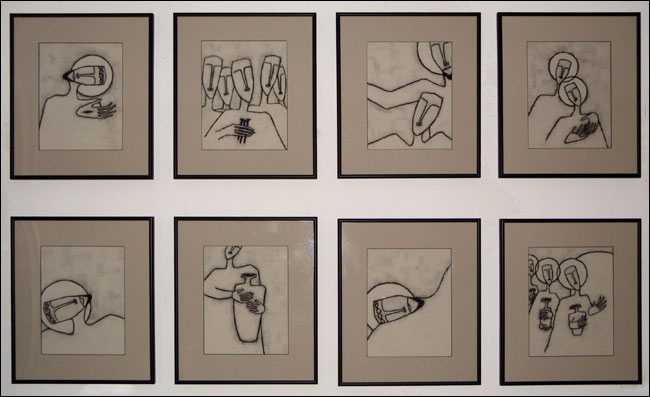
The Blessing Cups: Mary Magdalene
and Jesus at Tea
© Jan L. Richardson

So, have you finished all your shopping for the Feast of Mary Magdalene yet? Got your decorations hung and festivities planned? Only two days left…

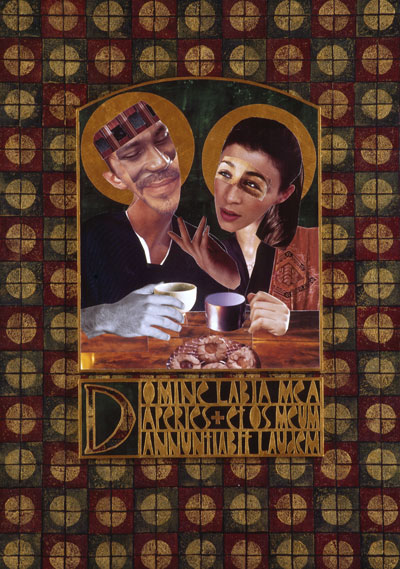
The Magdalene’s feast day falls on July 22. Here in the midst of the long stretch of Ordinary Time, it provides a good occasion to offer, if not a party, at least a toast to this follower of Jesus who continues to intrigue us two millennia later. Luke’s gospel tells us that Mary Magdalene, along with a group of other women, traveled with Jesus and provided sustenance for his ministry (Luke 8.1-3). It was to the Magdalene that Jesus entrusted the news of his resurrection, telling her to go and proclaim what she had seen.

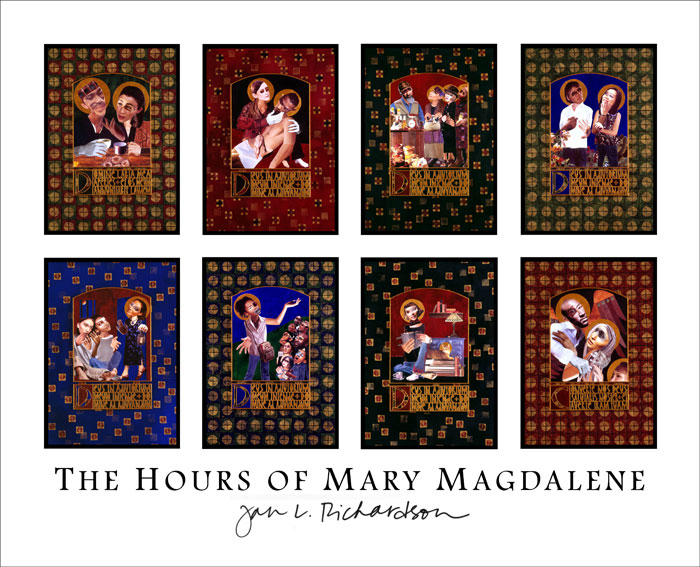
In anticipation of her festal day, I invite you to visit the reflection I wrote for her feast last year by clicking here: Feast of Mary Magdalene. The reflection includes a link to The Hours of Mary Magdalene, a series of artwork based on the life and legends of the Magdalene. The image above is from that series.

I have prints available of the images from the Magdalene series, along with a new print, released this spring, that brings together all the images in the series:

blog-hoursofmarymagprint

You can click the image above or Color Prints to see all the Magdalene prints.

Blessings and happy feast day to you!

Ascension & Coming Attractions

May 22, 2009

Happy Feast of the Ascension! As we prepare to cross into the long season of Ordinary Time, the liturgical calendar offers us a few chances for celebration. Along with today’s observance of the Ascension of the Lord (which many churches will celebrate this coming Sunday), we also have Pentecost coming up on May 31 and Trinity Sunday on June 7. As most of my creative energies are still going toward my new book, I invite you to visit the reflections I offered for this trio of celebrations last year.

Clicking the titles below the images will take you to the reflections. Clicking on the image itself, either here or at the reflection, will take you to that image’s page on my new website, janrichardsonimages.com. I’d love for you to visit this new site, which makes my artwork available to churches and other communities for use in worship, education, and other settings. As I mentioned in my previous post, I’m offering a “sneak preview” price on an annual subscription, to celebrate the launch of the site. Through May 31, a subscription will be $100 (normally $165).

Many blessings to you as we celebrate the gifts of these days!

blog2008-04-29

Ascension/Easter 7: A Blessing at Bethany

blog2008-pentecost2

Pentecost: Fire and Breath

blog2008-trinity-sunday

Trinity Sunday: A Spiral-Shaped God

Palm Sunday: The Temple by Night

March 29, 2009

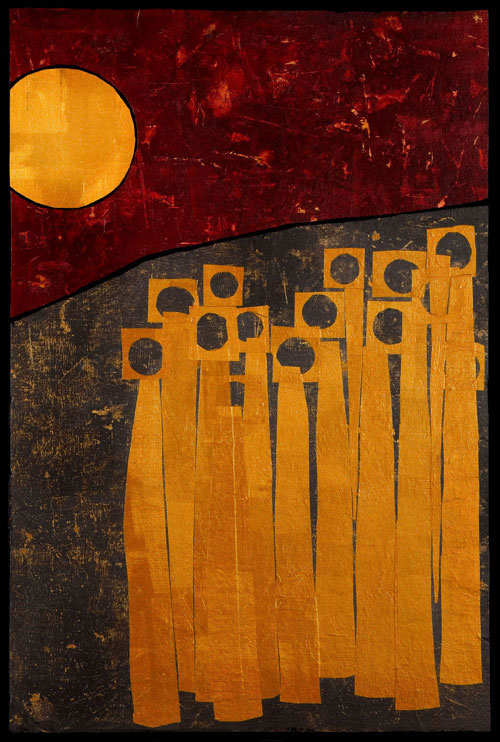
 Image: The Temple by Night © Jan Richardson

Reading from the Gospels, Palm Sunday: Mark 11.1-11

After sending for the colt.
After the procession.
After the palms.
After the cloak-strewn road.
After the hosannas.
After blessed is he who comes
in the name of the Lord.

After all this, Mark—alone of all the gospels—tells us that Jesus goes into the temple and looks around at everything.

He does not teach. He does not preach. He does not heal. He does not confront or challenge. He does not even speak; neither does he cross the path of anyone who requires his attention. Mark conveys the impression that here, in this sacred space that lies at the heart of his people, Jesus is quite alone, and that it is night.

Jesus simply looks around. What is it that he sees in the temple by night?

The gospels vary in their account of Jesus’ relationship with the temple, and how much time he has spent there. Taking together their accounts, we know Mary and Joseph took him there as an infant for the rituals that occurred forty days after a birth. He made the journey to the temple every year with his family for Passover, most memorably at the age of twelve, when his parents, missing him on the way home, went back and discovered him in conversation with the teachers. Matthew tells us that the devil took Jesus to the pinnacle of the temple, urging him to jump, that angels would catch him. John in particular emphasizes Jesus’ presence at the temple earlier in his ministry, where the temple features in such stories as Jesus’ encounter with a woman caught in adultery. It is at the temple, according to John, that Jesus proclaims himself as the river of life and as the light of the world, beginning to take into his own self, as Richard Hays has pointed out, the purpose of the temple as the focal point of the liturgy and life of the people of Israel.

This is the place that holds the memories of Jesus and the collective memory of his people. And it is to this place that Jesus returns, after the palms, after the procession, after the shouts of proclamation have vanished into the air. He will come back tomorrow, Mark tells us, and he will turn over the tables and drive out the buyers and sellers and castigate the people for turning this house of prayer into a robbers’ den. He will return yet again over the next few days to teach, to provoke, to watch a widow drop two precious coins into the offering box. And soon he will die.

But for now, for tonight, in this holy place at the heart of his people, Jesus merely looks. He peers into this sacred space that is inhabited and haunted by his own story. And perhaps it is this story he sees again this night. Perhaps he sees Mary and Joseph coming out of the shadows, carrying their infant son. Perhaps he sees Simeon gathering his young self into his arms, singing about salvation and a light for revelation, joined by the old prophet Anna, who raises her voice in praise. Perhaps Jesus sees again the twelve-year-old who conversed with the temple teachers, and the tempter who tried to lure him to fling himself from the pinnacle of this place. Perhaps a woman, once trapped and terrified, stands before him again, this time with the light of forgiveness and healing shining through her eyes.

And perhaps in this place, where Jesus is alone-but-not-alone, they gather about him, reminding him why he has come, calling him to remember, offering their blessing for the days ahead. Perhaps in this space, after the palms and before the passion, Jesus is able simply to rest. To remember. To breathe. To be between.

And you? What are you between? Where is the space that invites you to be alone but not alone, to allow the memories to gather and bless you, to offer strength for the days ahead? What is the place that beckons you to breathe, to rest, to look? What is it that you see in that space? What stirs in the shadows?

Blessings to you in the spaces between.

Resources for the Season: Looking toward Lent

[To use the image “The Temple by Night,” please visit this page at janrichardsonimages.com. Your use of janrichardsonimages.com helps make the ministry of The Painted Prayerbook possible. Thank you!]

Coming Attractions

March 15, 2009

We have a richness of special days coming up this week, so I wanted to give a quick nod to them and offer some resources for their contemplation and celebration.

March 17, of course, marks the Feast of St. Patrick, patron saint of Ireland. For my reflection from last year, visit Feast of Saint Patrick.

blog-nativity1

March 19 gives us the Feast of Saint Joseph, the remarkable man who listened to angels and took both Mary and Jesus into his care. Joseph has made a number of appearances in my artwork; I invite you to stop by and see him at The Advent Hours and The Advent and Christmas Series.

blog2008-autumnal-equinox

This year, the vernal equinox (also called the spring equinox—in the Northern Hemisphere—or the March equinox) falls on March 20. I posted a reflection on the autumnal equinox here last year; the sentiments apply in springtime as well. Just turn the image upside down for the vernal version!

May you have a festive week!

The Artful Ashes

February 22, 2009

blog-2009-ash-wednesday-2Image: Ash Wednesday © Jan Richardson

Readings for Ash Wednesday: Joel 2:1-2, 12-17; Psalm 51:1-17;
2 Corinthians 5:20b – 6:10
; Matthew 6:1-6, 16-21

When I received the invitation to do the artwork for Peter Storey’s book Listening at Golgotha, a series of reflections on the Seven Last Words of Jesus (featured in Friday’s post), it came as a lovely bit of synchronicity. His editor, who had been the editor for my first book, wasn’t aware that Peter and I were acquainted, having crossed paths on a few occasions when he was visiting the U.S. from his native South Africa. The catch was that the artwork had to be in black and white. With my having worked primarily in paper collage, black and white was not exactly my first language, artistically speaking. I so wanted to work on Peter’s book that I told the editor yes. Then I set about to figure out what kind of black and white medium I could manage.

I tried doing collages in black and white, but made little headway. After several other experiments, I picked up a piece of charcoal. And fell in love.

Beginning to work with charcoal was like learning a new language, with the delights and challenges that come in such a process of discovery. Most of my early sketches were a mess. I could sense that a style was stirring, but in the beginning stages it appeared so raw and unformed that I began to despair of having anything ready in time for Peter’s book.

On the verge of calling the editor to do an embarrassing backing-out dance (an awkward jig that I try hard to avoid), I instead called my artist friend Peg to ask if she could either collaborate with me or counsel me on the project. Peg told me to bring her all the sketches I’d done: the good, the bad, and the ugly. To my eye they were mostly bad and ugly. But Peg took the smudgy, ashy papers, spread them out, and pondered them. In a fashion that struck me as being something like lectio divina, she followed their tangled lines until she began to perceive something that had the beginnings of coherence and form. Moving through what I had perceived as chaos, Peg showed me what she saw, and she offered suggestions on how to pursue and develop the path that had been obscure to me. Not only did this help make it possible to complete the project, but it also began to open creative doors within and beyond me in ways I never would have imagined.

In large part, what I came to love about working in charcoal was the dramatic contrast it offered to my colorful, often intricate collage work. Where collage involves a process of accumulation and addition as the papers are layered together, charcoal invites me to an opposite experience. When I do a charcoal drawing, my goal is to find the fewest number of lines necessary to convey the scene. It is a medium of subtraction, involving little more than a piece of blank paper, a stick of charcoal, and an eraser to smudge and then smooth away all that is extraneous. What remains on the page—the dark, ashen lines—is spare, stark, sufficient.

For every artist, one of the most crucial habits to develop is staying open to what shows up. In the process of cultivating a unique vision, with all the consuming focus that involves, we have to learn, at the same time, how to keep an eye open for the creative surprises and invitations that can lead us to new pathways or deepen existing ones. If I stay too attached to a favorite medium or familiar technique, I risk shutting myself off to possibilities that can take me to whole new places in my work and in my own soul.

Taking up a new medium, entering a different way of working, diving or tiptoeing into a new approach: all this can be complex, unsettling, disorienting, discombobulating. Launching into the unknown and untried confronts us with what is undeveloped within us. It compels us to see where we are not adept, where we lack skill, where we possess little gracefulness. Yet what may seem like inadequacy—as I felt in my early attempts with charcoal—becomes fantastic fodder for the creative process, and for life. Allowing ourselves to be present to the messiness provides an amazing way to sort through what is essential and to clear a path through the chaos. To borrow the words of the writer of the Psalm 51, the psalm for Ash Wednesday, it creates a clean heart within us.

Ash Wednesday beckons us to cross over the threshold into a season that’s all about working through the chaos to discover what is essential. The ashes that lead us into this season remind us where we have come from. They beckon us to consider what is most basic to us, what is elemental, what survives after all that is extraneous is burned away. With its images of ashes and wilderness, Lent challenges us to reflect on what we have filled our lives with, and to see if there are habits, practices, possessions, and ways of being that have accumulated, encroached, invaded, accreted, layer upon layer, becoming a pattern of chaos that threatens to insulate us and dull us to the presence of God.

Each of the scripture texts for this day invites us to ponder the practices that we have given ourselves to, and the practices to which God calls us, both individually and in community. The prophet, the psalmist, the apostle, and Jesus himself all urge us, in these readings, to pay attention to the rhythms of our lives so that we may discern which rhythms draw us closer to God and which ones pull us away.

Where do these sacred texts find you as we cross into the season of Lent? What is the state of your heart? What has taken up residence there over the past weeks, months, years? Are there habits and ways of being that you are so invested in, so attached to, that it has become difficult to discern new directions in which God might be inviting you to move? Who can help you ponder the patterns present in your life—the good, the bad, the ugly—and help you see where new life is stirring, and where a new path might be opening? What are the most basic, elemental, crucial things in your life, and how might God be challenging you to give your attention to them in this season?

The gospel for Ash Wednesday tells us that where our treasure is, there our hearts will be also. On this day, and throughout the coming days, may we see clearly where our treasure lies, and have hearts clear and open enough to recognize the surprising forms that such treasure can take. On this day of ashes, blessings to you.

[For last year’s reflection on Ash Wednesday, visit Ash Wednesday, Almost.]

[To use the “Ash Wednesday” image, please visit this page at janrichardsonimages.com. Your use of the Jan Richardson Images site helps make the ministry of The Painted Prayerbook possible. Thank you!]

Transfiguration Sunday: Show and (Don’t) Tell

February 15, 2009

Image: Transfiguration © Jan Richardson

Reading from the Gospels, Transfiguration Sunday, Year B:
Mark 9.2-9

One of the greatest challenges in being a writer—or an artist or a preacher, for that matter—is discerning what to reveal and what to conceal. It’s a tricky thing, figuring out how much of our own experience should make its way into our work in an obvious fashion. There’s no well-defined line, though I find that my gut tends to sound the alert when it senses that something I’m reading or viewing or listening to has tilted toward providing Too Much Information.

The TMI syndrome doesn’t simply involve an overabundance of content; sometimes it’s a matter of timing. I read a book some years ago that the author crafted around a profound experience that had taken place not all that long before she began to write about it. I remember wishing she had waited a while. Clearly the act of telling the story was an integral part of how she processed the experience, but it struck me that both she and the story would have benefited from giving herself more time and space before offering that experience to the public. I find myself wondering what the story feels like to her years later, how the experience of sitting with it, pondering it, reading it over time might have honed and deepened her telling of it.

I’ve been thinking about that elusive line between revelation and concealment as I’ve pondered the gospel lection for next Sunday. It seems we’ve only recently tidied up from Christmas and Epiphany, and we’re already approaching Transfiguration Sunday and the threshold of Lent. Next Sunday’s reading beckons us to pause and gather ourselves for a moment in this space between the seasons of Epiphany and Lent, and to give thought to the questions this passage poses. Mark does the transfigurative honors for us this year with his account of this strange journey that Jesus takes with a trio of his disciples.

The transfiguring of Jesus provides a dazzling, dizzying experience for those who have accompanied him up the mountain. One can well understand that Peter, James, and John would desire to find a form for their experience, some kind of container to help them absorb and define what has taken place. We perceive this in Peter’s impulse to construct dwellings for Jesus, Moses, and Elijah. Faced with an event of overwhelming spiritual import, he responds at a physical level: Let me build something.

Peter’s offer is still on his lips when a bright cloud envelops them, a voice from within it speaking words akin to those that came from heaven at the moment of Jesus’ baptism: “This is my Son, the Beloved; with him I am well pleased; listen to him!” The word for what the cloud does is overshadow, from the Greek word episkiazo. We’ve seen this word before. It appears in the angel Gabriel’s conversation with Mary, when he responds to her question about how it will be possible for her to give birth to the child whom he has asked her to bear. “The Holy Spirit will come upon you,” he tells her, “and the power of the Most High will overshadow you” (Luke 1.35).

In the gospels, the Annunciation is the only occasion besides the Transfiguration that this word appears. The gospel writers’ use of the word draws our attention to the resonance between the story of the Annunciation to Mary and the story of the Transfiguration. Each tale reminds us that we cannot contain or confine God within man-made structures. When God shows up, God often appears in and through people: God goes not for architecture but for anatomy. Or, rather, God makes architecture of our anatomy: God seeks to make of us a dwelling, a habitation for the holy.

This business of being host to the divine is no easy thing, God (literally) knows. So it’s interesting that the soon-to-be-mother Mary and the flat-on-their-faces disciples each receive precisely the same assurance: Do not be afraid. And each goes on their way, carrying something they had not previously known.

In the absence of being able to build physical dwellings, the disciples would have wanted, I suspect, to construct a story about their mountaintop experience: a container of words, at least, that would help them hold and convey what had happened to Jesus and to themselves. Perhaps anticipating this, Jesus enjoins them not to tell what has transpired until after his resurrection. It’s one of the only times that Jesus, a man of action, urges them to wait. This is not for revealing, he tells them; this is for you to carry within you, to ponder, to conceal until the fullness of time.

Perhaps like Mary with the child in her womb.

It was important that Peter, James, and John have that mountaintop experience. It wasn’t important for them to tell the story, not yet; that wasn’t the point of their outing. But the experience would work on them, shape them, and continue to transform and perhaps even transfigure them. The knowledge they carried would alter every future encounter: with Jesus, with their fellow disciples, and with those to whom they ministered.

The story of the Transfiguration calls me to remember that there are times for revealing and times for concealing. There are seasons to tell our story. And there are seasons to hold the story within us so that we can absorb it, reflect on it, and let it (and us) grow into a form that will foster the telling.

As a writer and artist and preacher, I don’t claim to handle that line between revelation and concealment with consistent finesse. But I’ve figured out that one of the core questions in discerning whether to share an experience is this: Whom does the story serve? Does my telling it help you reflect on your life and how God is stirring within it? Or does it merely provide information I think you should know about my own life because I hope it will impress you and induce a response that serves me more than it does you?

How do you discern what and where to share about your life? Whom do your stories serve? Do you have a story of transformation that could help someone else? Is it time to tell it? Is there work that God still needs to do within you so that you can tell the story in the way it needs telling? Whether revealing or concealing, how are you continuing to become a dwelling for the presence of the God who transforms us?

Blessings to you in these threshold days.

[To use the image “Transfiguration,” please visit this page at janrichardsonimages.com. Your use of janrichardsonimages.com helps make the ministry of The Painted Prayerbook possible. Thank you!]